
Share with your CMO
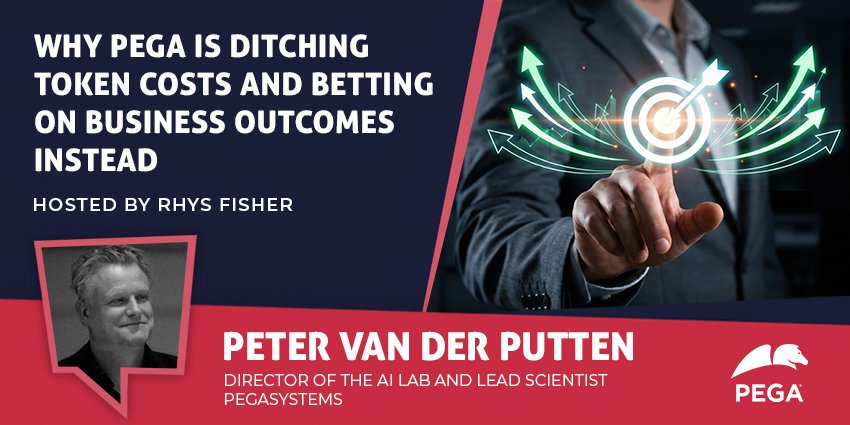
Pegasystems is betting that the real constraint on personalization at scale isn’t AI decisioning power, it’s the speed of feeding that engine with fresh content and actions. The company’s newly launched Customer Engagement Studio layers a governed agentic workspace on top of its Customer Decision Hub, coordinating specialized agents across marketing strategy, creative, compliance, and data science through a single conversational interface. The pitch is brief-to-live-campaign in minutes. Wells Fargo already runs six billion next-best-action decisions monthly through the underlying platform, each resolved in under 250 milliseconds.
What this means for your business
If your organization has invested in a decisioning or personalization platform and still struggles to push enough campaigns through it, Pega’s diagnosis is probably accurate even if their solution is self-serving. The content-and-action bottleneck is real: marketing teams routinely sit upstream of a capable engine, manually assembling the creative, compliance sign-offs, and data inputs that feed it. Whether you’re a Pega customer or not, the question this product forces is whether your current workflow is the actual ceiling on personalization output, because if it is, the AI you already own is underperforming.
Gartner’s prediction that more than 40 percent of agentic AI projects will be canceled deserves more weight than vendor commentary usually gives it. Van der Putten attributes failure to “magical thinking,” which is fair as far as it goes, but Pega (a vendor with a governed, structured approach to AI orchestration) has an obvious interest in framing the lesson as “you need guardrails and orchestration,” rather than “you need a different use case entirely.” The more precise failure pattern is organizations deploying agents against open-ended, judgment-heavy tasks where success criteria are undefined. Governed orchestration helps, but only when the underlying task is actually automatable.
Pega’s move to outcome-based pricing, charging on business results rather than token consumption, is the most structurally significant signal in this piece. It shifts AI cost from an infrastructure line item to a performance variable, which is a different budget conversation entirely. If that model spreads, CMOs who’ve been insulated from AI infrastructure costs will find themselves directly accountable for whether the personalization spend actually converts. That’s not a vendor story, it’s a P&L reallocation, and the renewal decision you’re signing next quarter may already be pricing it in.
Concept deep-dive: Agentic orchestration
Agentic orchestration means coordinating multiple specialized AI agents, each handling a distinct task like creative generation, compliance review, or performance analysis, so they work in sequence or in parallel toward a shared goal, similar to a project team where each member owns one function but a coordinator keeps them aligned. The business case is speed and throughput: tasks that required human hand-offs across departments can run concurrently, with governance rules enforced automatically rather than by committee.
Based on reporting from Pega: Agentic AI, Orchestration & Why Projects Fail, originally published 2026-06-16 06:37:00.