
Share with your CEO
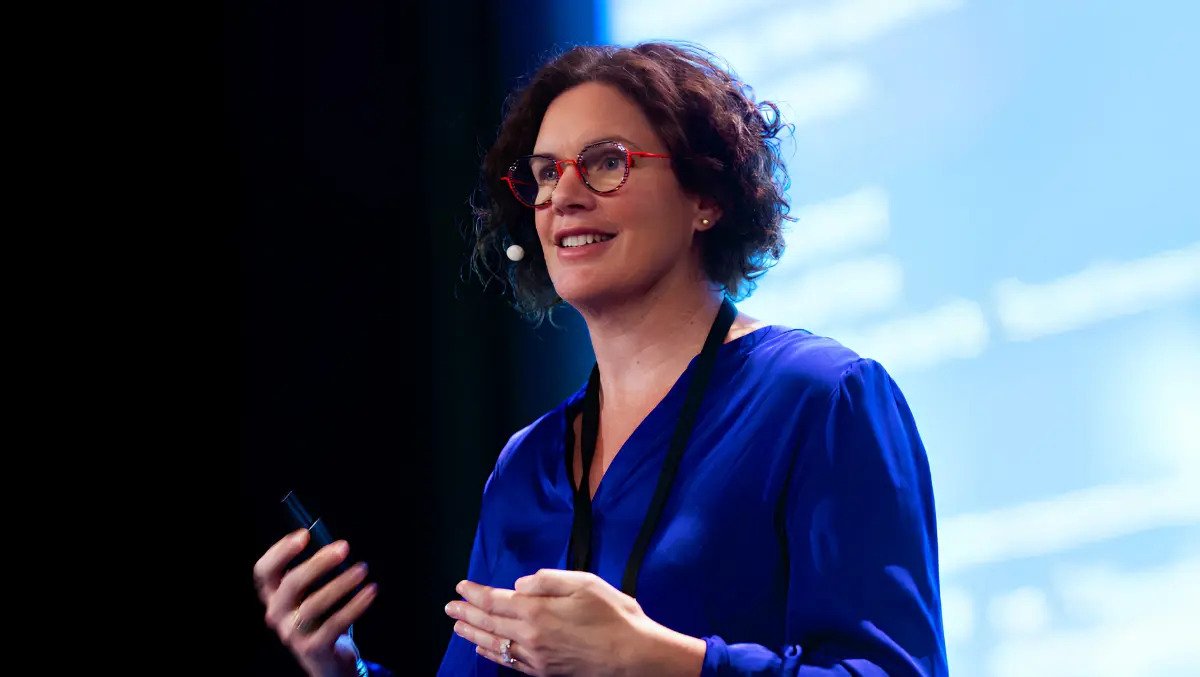
Professor Cori Stewart, founder and CEO of ARM Hub, a not-for-profit industrial AI and robotics centre, has won the Actuaries Institute Women Leaders in AI and Data Science Scholarship, now in its fourth year and run jointly with Chief Executive Women. The award funds attendance at Stanford GSB’s Executive Leadership Program. Stewart has worked with hundreds of manufacturers on applied AI and robotics projects, sits on the Prime Minister-appointed board of Industry Innovation and Science Australia, and has set a public target of lifting Australian manufacturing to 8% of GDP, up roughly 40% from current levels.
What this means for your business
The story that matters here isn’t the award itself. It’s what Stewart’s framing of industrial AI reveals about where the credible leadership on enterprise AI adoption is actually forming in Australia. If your organisation still treats AI as a technology investment owned by IT, the emerging policy and industry-body consensus, shaped by figures like Stewart sitting on national advisory boards, is moving toward productivity-and-output metrics as the standard by which AI programs will be judged from the outside.
Stewart’s argument that AI’s economic value depends on adoption in established industrial sectors, not on frontier applications, is a direct challenge to the “pilot forever” posture that many large organisations have quietly settled into. Manufacturing is her testing ground, but the logic applies to any sector with existing operational scale. The question her work implicitly poses for any executive running an AI program is whether the initiative maps to something measurable in output terms, not just efficiency claims that never reach the P&L.
Australia’s industrial AI conversation is consolidating around a small group of operators who now hold both practitioner credibility and policy access simultaneously. That combination tends to shape procurement standards, grant conditions, and regulatory framing faster than most enterprise planning cycles anticipate. If your AI roadmap depends on assumptions about what “responsible AI” or “sovereign capability” will require in three years, the people defining those terms are being identified and empowered right now, and Stewart is one of them. I’d revise this read if the Stanford cohort she joins produces no durable policy or cross-sector partnership output within 18 months.
Based on reporting from Professor Cori Stewart wins AI leadership scholarship, originally published 2026-06-21 18:30:00.