Share with your CDO
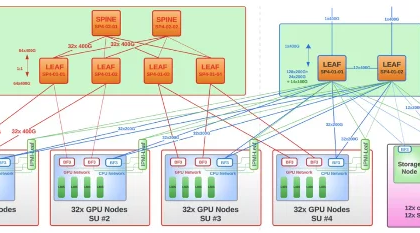
Cloudera and VAST Data are betting that the biggest bottleneck in enterprise AI isn’t model quality or GPU supply, it’s the data pipeline connecting raw enterprise data to the models consuming it. Their joint AI factory architecture combines Cloudera’s containerized lakehouse services with VAST’s high-performance storage and vector database layer, built on NVIDIA’s AI Data Platform reference design. The combined customer base spans 60 exabytes of managed data. The solution targets on-premises, private cloud, and public cloud deployments simultaneously, with particular emphasis on regulated industries demanding sovereign AI environments.
What this means for your business
GPU starvation, where accelerator clusters sit idle waiting for data to arrive, is the failure mode this partnership is explicitly designed to fix. If your organization has already committed capital to GPU infrastructure and is watching utilization numbers disappoint, this architecture is aimed squarely at you. If you’re still in early AI experimentation with modest compute investments, the urgency is lower, but the architectural choice you make now will either constrain or enable the production systems you build in 18 months.
The more interesting strategic signal here is VAST’s positioning. VAST is calling itself an “AI Operating System company,” which is a deliberate attempt to move up the stack from storage vendor to foundational platform. Partnering with Cloudera gives VAST an enterprise data governance and analytics layer it doesn’t build natively, while Cloudera gains a high-throughput storage substrate that its existing architecture wasn’t designed around. Both companies are filling holes the other can’t easily close alone, which is what makes this more than a marketing alliance. The NVIDIA AI Data Platform reference design underneath both validates the architecture and ties them tightly to NVIDIA’s preferred deployment pattern.
The private and sovereign AI angle deserves weight here. Regulated industries, financial services, healthcare, defense contractors, have largely sat out the cloud-native AI wave because their data can’t leave controlled environments. A validated “silicon-to-application” stack that runs consistently on-premises changes that calculation. The CDO at a regulated enterprise who has been fielding pressure from business units to ship AI products, while simultaneously fielding pressure from compliance to keep data on-prem, now has a reference architecture to point at. I’d revise this assessment downward if the joint validated deployments don’t materialize publicly by Q1 2027, because reference designs without named production customers are still just blueprints.
Concept deep-dive: GPU starvation
GPU starvation occurs when AI training or inference workloads can’t feed data to graphics processors fast enough to keep them computing continuously. GPUs are optimized to process enormous volumes of data in parallel, but if the storage and data pipeline layer can’t deliver data at matching throughput, the GPU sits idle mid-batch, the equivalent of a factory assembly line faster than its supply chain. At hundreds of thousands of dollars per GPU cluster, even modest idle time destroys the ROI case that justified the capital investment.
Based on reporting from Cloudera and VAST Data Announce Strategic Partnership to Deliver AI Data Platform Anywhere, originally published 2026-07-14 09:41:00.