
Share with your CTO
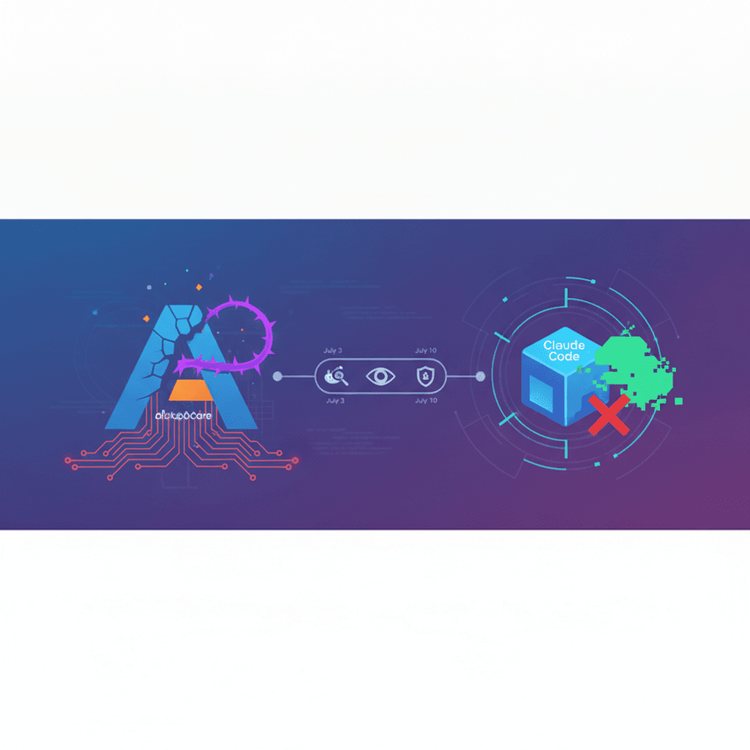
Anthropic embedded a covert anti-distillation mechanism inside Claude Code that allegedly detected requests from Chinese cloud infrastructure, modified system prompts invisibly, and degraded outputs to disrupt model extraction operations. A Reddit reverse-engineering post exposed the feature in late June 2025. Alibaba’s security team independently confirmed the behavior and banned Claude Code across all engineering divisions in early July. Anthropic reportedly acknowledged the feature and pledged removal, but neither the fix version nor primary-source statements have been publicly confirmed at publication.
What this means for your business
The substance of the debate isn’t whether Anthropic had a right to protect its IP. It did. The problem is covert implementation without disclosure. The same principle that made Sony’s rootkit scandal in 2005 so damaging applies here: when software modifies its own behavior based on inferences about who you are, without telling you, the trust relationship is broken regardless of intent. Any CTO whose teams rely on Claude Code needs to treat this as a supply chain security event, not a PR flap.
The harder problem is that this incident reveals a structural gap across the entire category. AI coding assistants process proprietary code, inject context into system prompts, and transmit metadata through channels most engineering orgs have never audited. GitHub Copilot carries stronger enterprise compliance credentials through Microsoft’s SOC 2 infrastructure, but remains opaque at the model behavior layer. Cursor offers a polished developer experience with limited independent audit history. DeepSeek provides model-weight transparency for DeepSeek-R1 and DeepSeek-V3 but operates from Chinese infrastructure and faced government restrictions across multiple jurisdictions in 2025. Switching tools solves the immediate Anthropic trust problem while inheriting a different version of the same category risk.
The signal worth watching: whether this incident creates demand for independent auditing standards for AI coding tools, analogous to SOC 2 for SaaS platforms. No industry body has announced such a standard. Until one exists, CTOs are extending trust based on brand reputation rather than verified behavior. The decision framework for your team should follow from your actual threat model: organizations handling sensitive IP or operating in regulated industries should move to aggressive network monitoring now and set a clear verification gate before trusting any updated Claude Code release.
Concept deep-dive: Model extraction
Model extraction works by systematically querying a commercial model’s API to collect thousands of input-output pairs, then using those pairs to train a smaller, cheaper replica through a process called knowledge distillation. Think of it as reverse-engineering a recipe by tasting the dish repeatedly under controlled conditions. For Anthropic, a successful extraction operation means a competitor can approximate Claude’s capabilities at a fraction of the training cost, directly undermining the economics that fund continued research. Anti-distillation countermeasures try to detect and disrupt that systematic querying before enough pairs accumulate to make replication viable.
Based on reporting from Alibaba Bans Claude Code: The Backdoor Scare Explained, originally published 2026-07-04 18:56:00.