
Share with your CTO
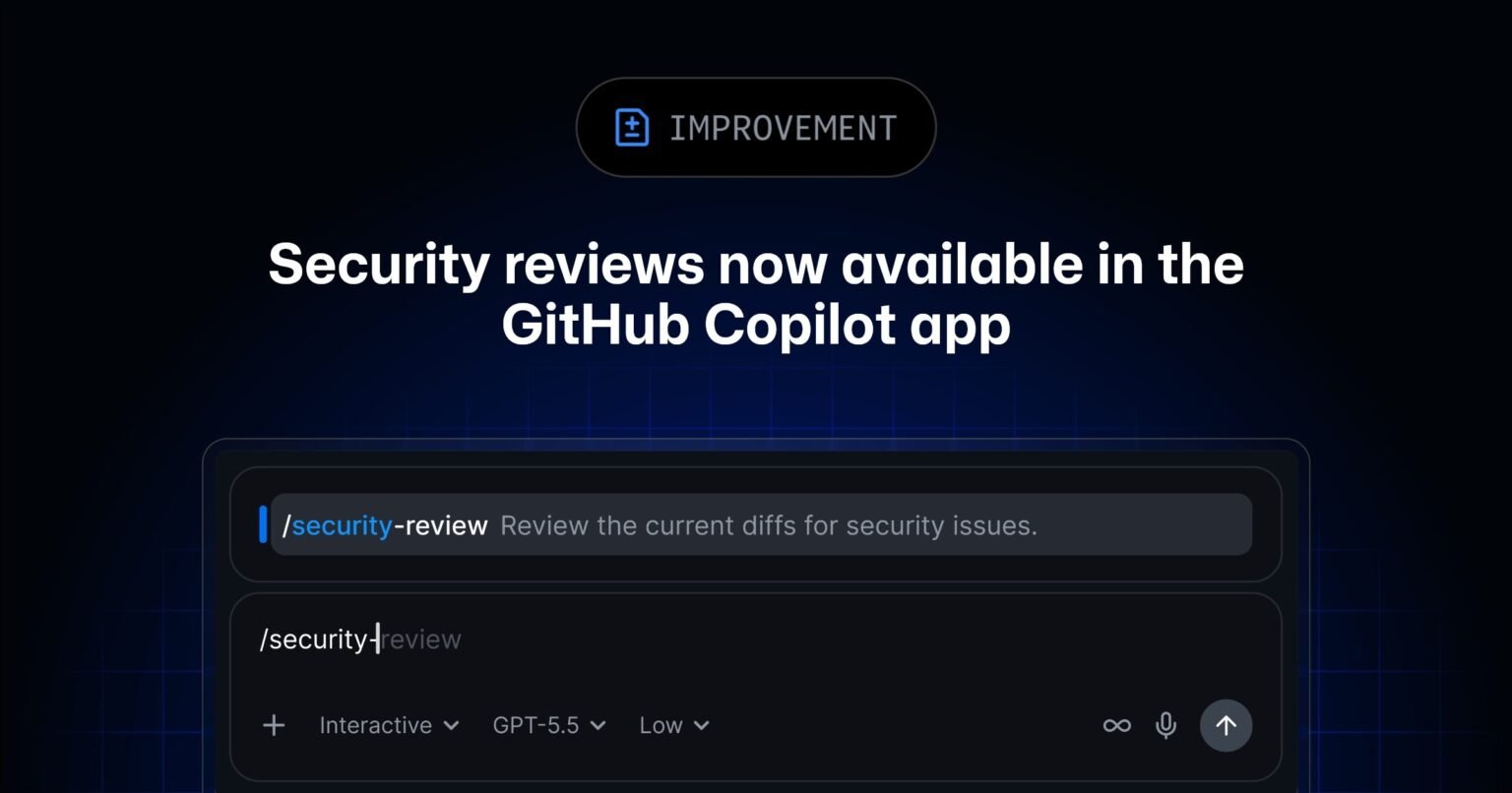
GitHub is pushing security left, hard. The new /security-review command in the GitHub Copilot app puts AI-driven vulnerability scanning directly inside the coding environment, available in public preview to all Copilot tiers including Free. Developers run a slash command against in-flight changes and get severity-scored findings covering injection flaws, cross-site scripting, path traversal, insecure data handling, and weak cryptography, with suggested fixes they can apply and re-verify without switching tools.
What this means for your business
The cost of remediating a vulnerability found in production is measured in days of engineering time, incident response, and in regulated industries, potential disclosure obligations. A scan that fires before a pull request exists changes that math entirely. The concrete scenario: a developer writing a database query gets flagged for a SQL injection pattern before the code ever reaches a reviewer. That’s not a security tool. That’s a ratchet on the development process itself.
The deeper claim here is about workflow gravity. GitHub is not building a better SAST tool (static application security testing, which scans source code for known vulnerability patterns). It’s making security review a reflex baked into the same surface where code gets written. Once developers habitually run /security-review before pushing, the institutional expectation shifts. Security teams stop being the last checkpoint and start being the group that calibrated the model. That’s a meaningful transfer of operational leverage from AppSec to the developer org, and your security architecture needs to account for it.
The signal worth watching: this feature is available to Copilot Free users, which means GitHub is seeding the behavior at the individual developer level before enterprises formally adopt it. By the time a CTO standardizes on Copilot Enterprise, the workflow habit is already installed. The question isn’t whether to evaluate this. It’s whether your AppSec team is involved in how its findings get interpreted before the habit calcifies without them.
Concept deep-dive: Shift-left security
Shift-left means moving security checks earlier in the software development lifecycle, closer to where code is written rather than where it’s deployed. It exists because vulnerabilities found late are expensive: a flaw caught in production requires a hotfix, regression testing, and often a security advisory. The same flaw caught while a developer is still typing costs a one-line edit. Think of it as the difference between catching a typo while drafting versus after the contract is signed. The business connection is direct: fewer critical vulnerabilities reaching production means lower remediation cost and reduced exposure window.
Based on reporting from Security reviews now available in the GitHub Copilot app, originally published 2026-07-14 08:54:00.