
Share with your CTO
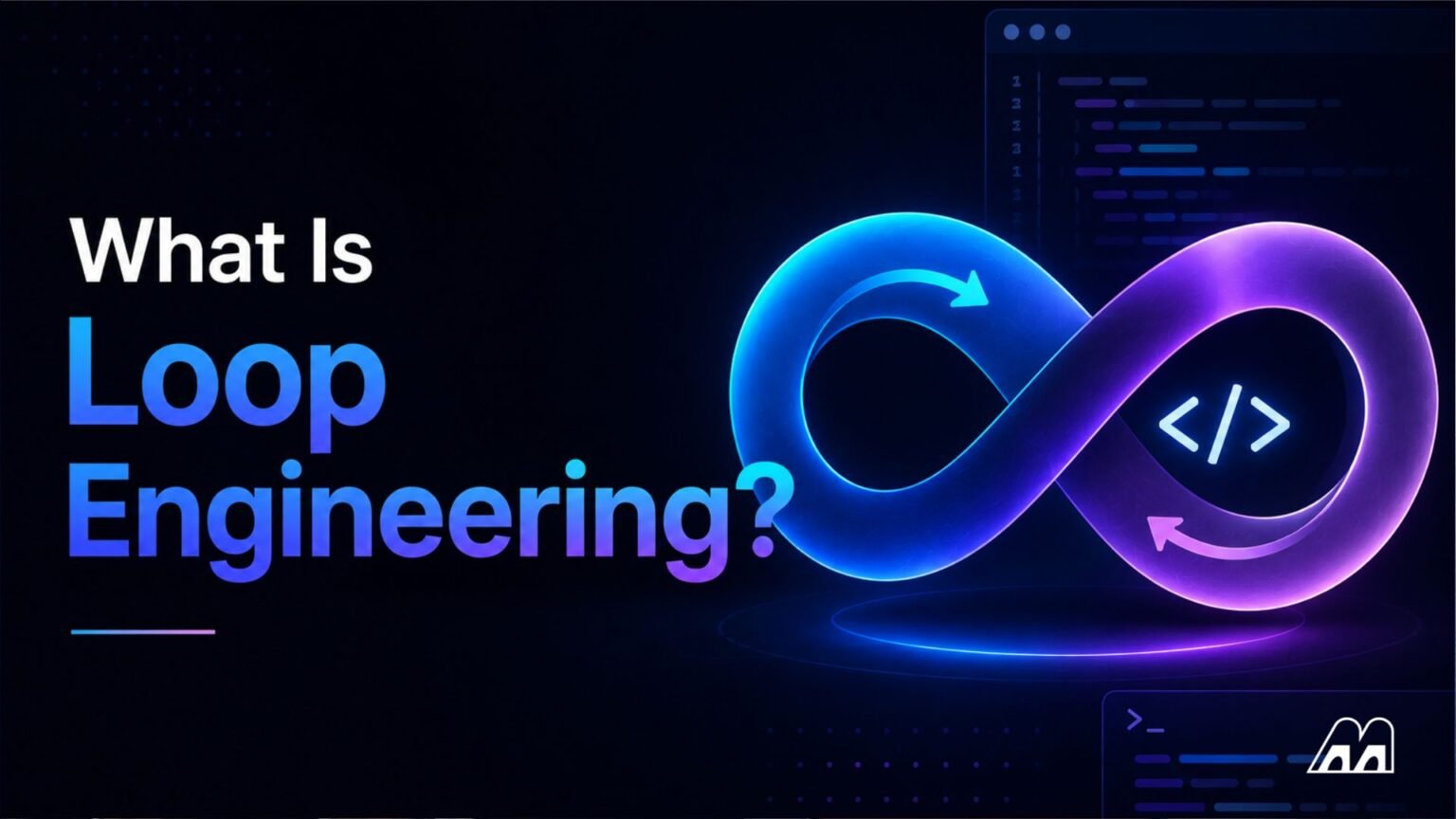
Loop engineering, a practice formally named by Google Cloud engineer Addy Osmani in June 2026, shifts the developer’s job from typing prompts to designing systems that prompt AI coding agents automatically, verify their output, and iterate until defined criteria are met. The concept crystallized when three engineers at OpenAI, Anthropic, and Google independently described the same workflow within days of each other. PostHog’s team used a loop-based agent run to find a three-year-old ClickHouse bug overnight, cutting granules scanned by 62% with no human intervention. The risks are real: one OpenAI engineer ran up $1.3 million in token costs over 30 days.
What this means for your business
Your engineering org is about to split into two productivity tiers. Teams that design reliable loops, with strong verification gates and persistent state, will ship features at a pace that manual-prompting teams can’t match. Teams that adopt loops without disciplined exit conditions will burn API budget, accumulate compounding agent drift, and spend more time reverting mistakes than they saved on prompting. The PostHog result and the $1.3 million bill aren’t contradictory outcomes. They’re the same technique applied with and without a quality verification step.
The hiring and tooling implications follow directly. Claude Code’s built-in /goal and /loop commands, Codex’s Automations tab, and third-party orchestration layers are all early-stage. Right now, building a reliable loop requires engineers who can design test suites rigorous enough to serve as autonomous exit conditions, manage isolated worktrees for parallel agent runs, and wire external connectors through protocols like MCP (Model Context Protocol, the emerging standard for linking agents to GitHub, Slack, and CI systems). That’s a distinct skill set from writing good prompts, and it’s not widely distributed yet.
The signal worth watching is token cost trajectory. Loop-based workflows consume tokens at 4x the rate of single-agent use and 15x for multi-agent setups, by current community estimates. Teams paying their own API bills face a fundamentally different ROI calculation than the labs building the tools. If token pricing drops another order of magnitude in 18 months, the economics flip and broad adoption follows almost automatically. If it doesn’t, loop engineering stays a power-user technique confined to teams with the budget and risk tolerance to absorb the verification overhead.
Concept deep-dive: Loop engineering
Loop engineering is the practice of automating the full prompt-execute-verify cycle for AI coding agents, so the developer designs the system rather than driving each step. It exists because multi-step software tasks, debugging, refactoring, performance optimization, exceed what a single agent call can reliably complete. The analogy is a quality control line: one station produces output, the next inspects it, and the line keeps running until the part passes spec. For a CTO, the business connection is direct. Autonomous loops running overnight against a benchmark can find bugs that human-led code review misses, as PostHog demonstrated, but only if the inspection station is built well.
Based on reporting from What Is Loop Engineering? The New AI Coding Shift Explained, originally published 2026-07-21 22:32:00.