
Share with your CIO
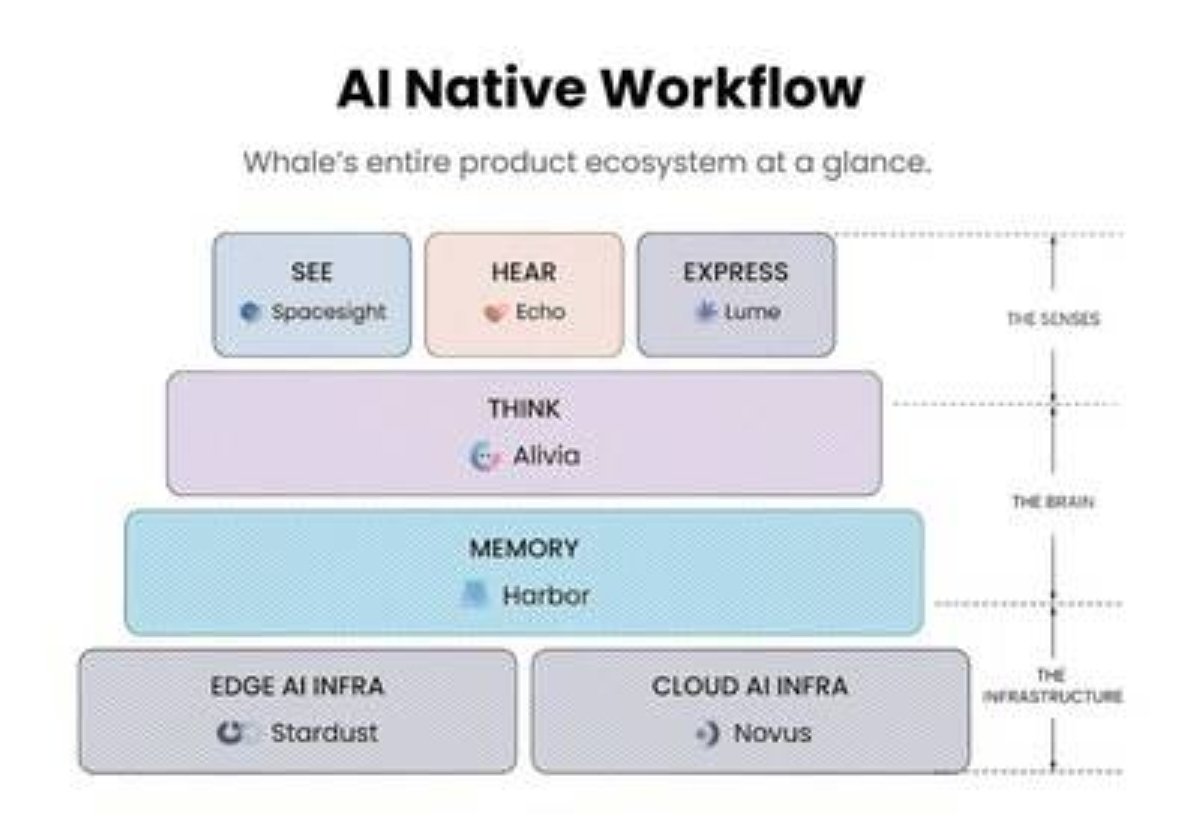
Singapore-based Whale is betting that physical-world AI infrastructure, not another SaaS layer, is where enterprise operations consolidate next. The company closed a $40 million Series C3 extension, bringing its total Series C to $100 million, with lead checks from CMB International and SMBC’s corporate venture fund, plus participation from Hyundai Motor Group and Krungsri Finnovate. Whale claims 1,600-plus enterprise customers across 45 countries and 600,000 edge AI nodes under management, positioning its AI Operating System as the connective tissue between store floors, factory lines, and back-office decisions.
What this means for your business
The investor mix here is the tell. Banking groups from Japan, Thailand, and China writing venture checks into an operational AI platform is not a financial bet on a startup, it is a distribution play. SMBC, MUFG, and CMB collectively touch thousands of enterprise clients across Asia-Pacific who need exactly the kind of camera, sensor, and voice intelligence Whale sells. If you are a CIO at a retailer, manufacturer, or automotive group operating across APAC, the question is less whether Whale’s technology works and more whether your regional banking relationships are quietly becoming a vendor pipeline running toward this platform.
Whale’s core architectural claim deserves scrutiny. The Business World Model, their term for an AI system that reads physical-environment signals the way large language models read text, is a plausible framing for multimodal AI applied to edge data from cameras and sensors. The skeptical read, and it is worth holding, is that this framing papers over a genuinely hard integration problem. Six hundred thousand edge nodes across 45 countries is a logistics and reliability challenge as much as a software one. The press release, written to attract the next funding round as much as to inform buyers, offers no attrition rate, no uptime data, and no named anchor customers to calibrate those claims against. That does not make the platform weak, it means due diligence needs to fill the gap the announcement leaves open.
The real pressure this creates is on incumbents. Palantir, C3.ai, and the operational AI modules inside SAP and Salesforce have all claimed the “intelligence layer for enterprise operations” position. Whale’s angle, physical sensing plus language-layer analysis plus workflow execution as a single stack, is differentiated enough that a CIO renewing a point-solution contract for store analytics or sales coaching should at minimum run a competitive evaluation. The vendors most exposed are those selling single-function tools in retail footfall measurement or call coaching, because Whale’s pitch is that bundling those into one model-driven platform cuts the integration cost that makes those point solutions painful to scale. I would revise that call if Whale’s named customer base turns out to be heavily concentrated in SMB-tier accounts rather than the global enterprises its investor framing implies.
Concept deep-dive: Edge AI nodes
An edge AI node is a computing device, think a camera, a sensor hub, or a small on-site server, that runs AI inference locally rather than sending raw data to a central cloud. The analogy is a smart thermostat versus a dumb one: the smart version decides locally, without waiting for instructions from headquarters. For enterprise operations, this matters because retail floors and factory lines generate far more data than is practical to stream, and decisions like “is this queue too long” need to resolve in seconds, not after a round trip to a data center.
Based on reporting from Whale Raises $40M Series C3 Extension, Bringing Total Series C to $100M, to Scale Global Enterprise AI Operations, originally published 2026-07-15 22:31:00.