
Share with your CTO
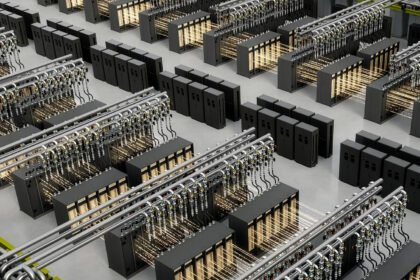
Three optical and networking component suppliers, Coherent, Extreme Networks, and Fabrinet, are positioned as direct beneficiaries of hyperscaler data center build-outs, according to this AI infrastructure stock screen from Simply Wall St. Coherent supplies the optical transceivers and laser systems that move data inside AI clusters, backed by a multi-year backlog and an NVIDIA partnership. Fabrinet manufactures the high-precision optical components those same clusters depend on, with analysts projecting a 24.3% return on equity. Extreme Networks plays the enterprise edge, selling AI-managed networking gear into stadiums, campuses, and government facilities.
What this means for your business
The companies profiled here aren’t the familiar hyperscaler names dominating AI headlines. They’re the picks-and-shovels layer, the optical interconnect and precision manufacturing suppliers whose revenue depends almost entirely on whether the data center capex wave keeps accelerating. If your infrastructure roadmap includes GPU cluster expansion or high-bandwidth data center interconnect, the financial health of suppliers like Coherent and Fabrinet directly affects your vendor options, lead times, and pricing leverage over the next 18 to 24 months.
The concentration risk buried in each company’s profile deserves more attention than the article gives it. Fabrinet’s revenue leans heavily on NVIDIA and Cisco. Coherent’s CHIPS Act-backed Texas expansion is strategically sound, but it also signals that domestic optical manufacturing capacity is still thin enough to require government subsidy. These aren’t disqualifying facts, but they mean that a single hyperscaler budget pause, or a shift from optical to co-packaged optics architectures inside the GPU package itself, hits these suppliers before it hits anyone’s earnings call.
The framing here, written by a platform that sells stock screening subscriptions, tilts toward opportunity rather than structural risk, which is worth noting when evaluating how cautiously the customer concentration and debt loads are characterized. The sharper read is this: if co-packaged optics, where the photonics sits directly on the chip rather than in a separate transceiver module, matures faster than expected, it compresses the addressable market for standalone optical component suppliers. That’s the technology bet hiding inside what looks like a straightforward infrastructure spend story, and it’s the variable a CTO sourcing optical interconnect should be tracking, not the P/E ratio.
Concept deep-dive: Co-packaged optics
Co-packaged optics integrates optical transceivers, the components that convert electrical signals to light for high-speed data transmission, directly onto the same package as a switch or GPU, rather than as separate pluggable modules. Think of it as moving the fiber connection from the wall jack to inside the device itself. It reduces power consumption and latency, but it also shrinks the market for discrete transceiver suppliers like Coherent and Fabrinet, making the timing of its adoption the central uncertainty in the optical infrastructure investment case.
Based on reporting from 3 AI Infrastructure Stocks Backed By Data Center Spending, originally published 2026-07-21 17:36:00.