
Share with your CTO
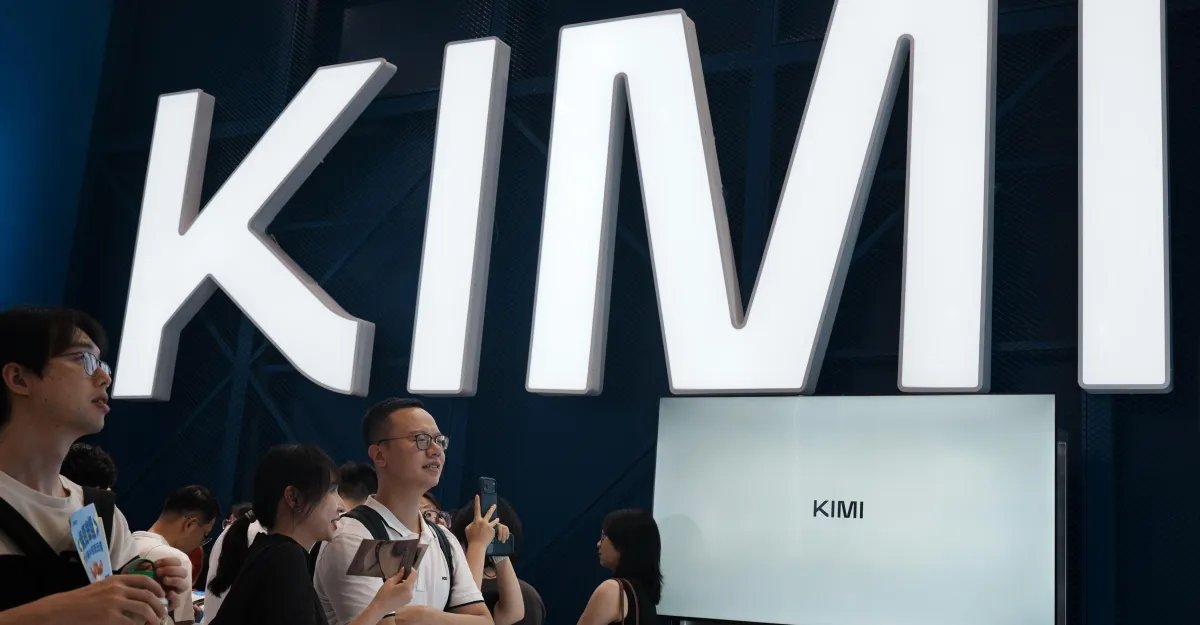
China’s AI labs have stopped trailing and started competing, and the response from Western markets keeps treating each new release as a surprise. Moonshot AI’s Kimi K3 claims to outperform nearly every US model at roughly half the price of GPT-5.6 Sol and a third of Anthropic’s Fable 5. Alibaba’s Qwen3.8 followed days later with similar positioning. Both plan open-weight releases, meaning developers can download and modify the underlying models freely, a direct contrast to the closed approach from OpenAI, Anthropic, and Google. The pattern of manufactured shock has now repeated often enough to be its own story.
What this means for your business
Six of the top ten models on OpenRouter’s consumption leaderboard are already Chinese. Any CTO still treating US frontier labs as the only credible vendor tier is working from a map that expired months ago. The question isn’t whether Chinese models have arrived; it’s whether your procurement process and vendor governance framework have caught up to a world where the capability gap is closing and the price gap is already real. Companies with tight AI budgets are switching now, not waiting for the geopolitical dust to settle.
The open-weight angle deserves its own read. When Moonshot and Alibaba release their weights publicly, any developer can fine-tune and self-host those models, bypassing US export controls and the usage restrictions that American labs impose. The security implication cuts in two directions. Your red teams gain access to powerful tools that US providers won’t touch due to safety guardrails, which is an operational advantage. But so does every threat actor without those guardrails. Reports have already surfaced of Kimi K3 identifying and fixing cyber vulnerabilities that OpenAI’s Codex and Anthropic’s Fable refused to engage, because of those same guardrails. The open-weight release transforms a geopolitical competition into an infrastructure decision your security team now owns.
The price signal also deserves skepticism before it becomes a budget argument. Tokens aren’t equivalent across models, a cheaper model that requires more of them to complete the same task isn’t actually cheaper, and inference subsidies routinely distort published API pricing. The real cost comparison is task-completion cost at your workload volumes, not list price per million tokens. If your teams haven’t run that analysis against at least one Chinese provider, the “50 percent savings” number circulating in finance will land before the nuance does, and you’ll be defending a vendor decision you haven’t actually made yet.
The Sputnik framing keeps returning because it does real rhetorical work, but the analogy is now broken by repetition. A genuine Sputnik moment is singular; the third one in eighteen months is a trend. The falsification condition for optimism about US dominance is straightforward: if Anthropic and OpenAI’s upcoming IPO valuations hold above one trillion dollars each while US startups demonstrably migrate to cheaper Chinese alternatives, the market is pricing a gap between perception and reality that eventually closes badly. Your infrastructure bets on American AI dominance are the thing to weigh, not whether to panic about this specific release.
Concept deep-dive: Open-weight models
A closed AI model gives you access through an API, think of it like renting compute time on someone else’s locked engine. An open-weight model releases the trained numerical parameters themselves, so anyone can download, modify, and host the model on their own hardware. Open-weight releases matter strategically because they eliminate vendor lock-in, bypass export restrictions, and allow fine-tuning for specialized tasks. The business risk is that safety guardrails built into closed models are stripped away or ignored entirely by downstream users.
Based on reporting from America needs to stop getting shocked by Chinese AI, originally published 2026-07-21 07:08:00.