
Share with your CEO
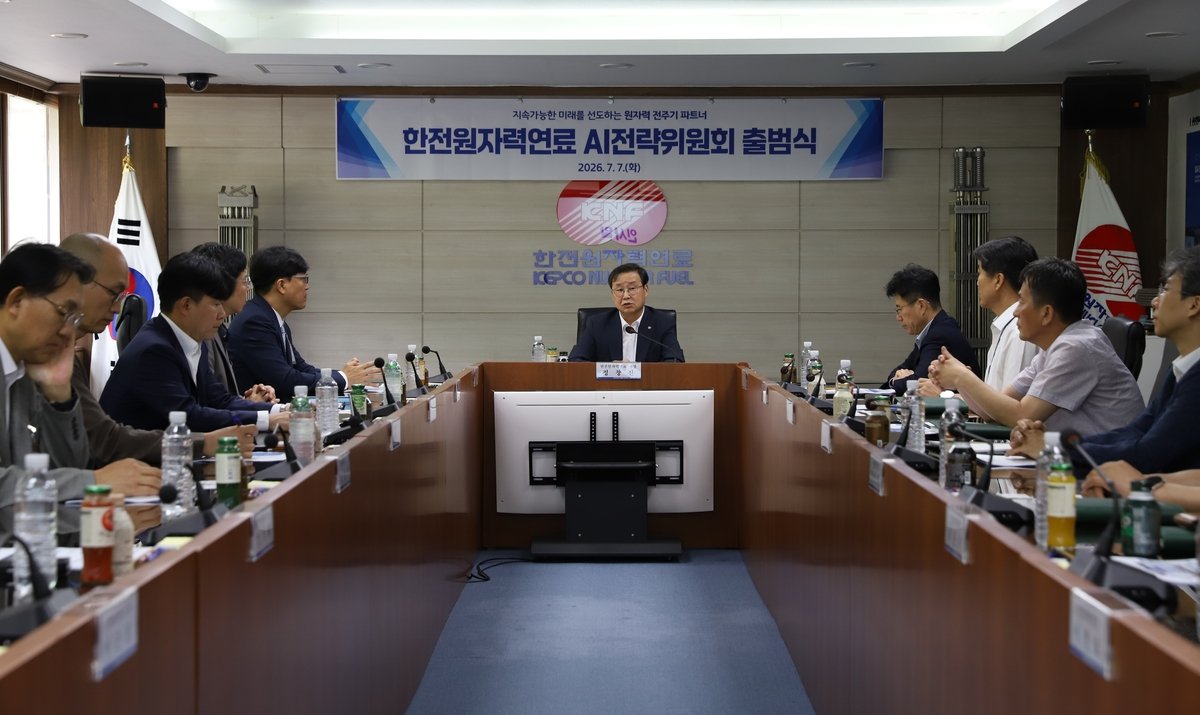
KEPCO Nuclear Fuel is betting that CEO-led AI governance, not a delegated task force, is the mechanism that actually moves generative AI from pilot to operations in a regulated industrial setting. The South Korean state-owned fuel manufacturer has launched an AI Strategy Committee chaired personally by President Jeong Chang-jin, combining internal staff with outside experts. The committee’s first session covered strategy formulation, field deployment, and security and ethics risk, with priority use cases to be selected in a follow-on phase.
What this means for your business
The structural decision here is the story. Most enterprise AI committees fail not because of bad technology choices but because they sit one or two levels below the authority needed to override entrenched workflows and procurement habits. A CEO chair changes the political economy of adoption inside the organization: middle managers who would quietly deprioritize AI rollout in favor of existing KPIs now face a governance body whose escalation path goes directly to the top. If your own AI initiative is stalled at the pilot stage, the question worth asking is whether the person chairing oversight actually controls the budget and the headcount.
The nuclear fuel context makes this structurally interesting beyond the headline. KEPCO Nuclear Fuel operates in one of the most heavily regulated, safety-critical industrial environments that exists, where the cost of an AI-induced error is categorically different from, say, a misconfigured marketing automation tool. The explicit mention of security and ethics risk in the very first committee meeting signals that Jeong is treating governance not as a compliance checkbox to clear before deployment but as a design constraint baked into strategy from day one. That sequencing, governance architecture before use-case selection, is the opposite of how most enterprises have approached it.
The leading indicator to watch is whether the “priority tasks” the committee selects stay inside administrative and back-office functions or reach into plant operations and fuel fabrication processes. If they stay administrative, this is a credentialing exercise. If they touch operational technology, the safety and liability frameworks KEPCO Nuclear Fuel builds will become a reference model that other industrial operators in regulated sectors, energy, defense, pharmaceuticals, will be quietly borrowing within 18 months. I’d revise that call only if the committee’s membership turns out to be entirely drawn from IT and strategy functions, with no operational or safety engineering representation.
Based on reporting from KEPCO Nuclear Fuel CEO to Lead New AI Strategy Committee, originally published 2026-07-07 01:34:00.