
Share with your CTO
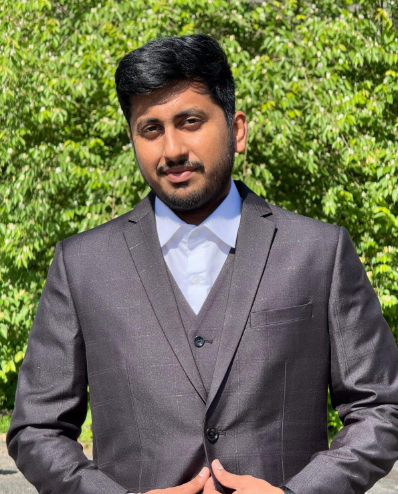
Microsoft SRE Harish Chamarthi is betting that AI-driven compliance and reliability automation can absorb the operational overhead that’s quietly strangling enterprise engineering teams. Working on Microsoft’s IDEAs Intelligence Platform across Azure Data Factory, Synapse Analytics, and Microsoft Fabric, Chamarthi claims an 85 to 90 percent reduction in manual GDPR compliance work, translating to more than 100 saved engineering hours per month. His published research puts AI-assisted cloud optimization at 30 to 45 percent energy reduction alongside 25 to 40 percent lower carbon emissions, without degrading service-level objectives.
What this means for your business
The profile is essentially a practitioner’s argument that SRE, the discipline of applying software engineering to keep large systems reliably running, has hit an inflection point where AI isn’t a feature added on top of infrastructure but the thing that makes modern infrastructure governable at all. Whether this argument applies to your organization depends on one variable: how much of your engineering headcount is currently absorbed by compliance monitoring, incident triage, and pipeline maintenance rather than building. If that ratio is climbing, you’re inside this story. If it isn’t, you probably haven’t scaled your AI workloads far enough to feel the pressure yet.
The honest caveat here is that the article is a profile piece on a single practitioner, and the headline figures, 85 to 90 percent manual effort reduction, come from Chamarthi’s own account of his own initiative. TechBullion publishes this kind of career-spotlight content as a visibility vehicle, which gives the claimed numbers no independent verification. That doesn’t make them wrong. An 85 percent reduction in compliance busywork is exactly what well-scoped automation against repetitive, rule-based GDPR tasks should produce. But CTOs treating this as a benchmark for their own tooling evaluations should want a second data point before anchoring to it.
The more durable signal isn’t the specific percentages; it’s the role shape Chamarthi represents. The hybrid SRE-plus-AI-engineer profile, someone who can design a reliability architecture and also build the ML-assisted monitoring layer on top of it, is genuinely scarce and genuinely valuable. Organizations still staffing these as separate functions, one team owns reliability, another owns AI/ML tooling, are going to find incident response slower and automation coverage thinner than competitors who’ve merged the functions. The budget question worth revisiting isn’t whether to buy more observability tooling; it’s whether the people operating that tooling have the ML fluency to do something with the signal it generates.
Based on reporting from From Solutions Architecture to Site Reliability Engineering: Harish Chamarthi’s Vision for the Future of AI-Driven Cloud Infrastructure, originally published 2026-08-22 00:27:00.