
Share with your CTO
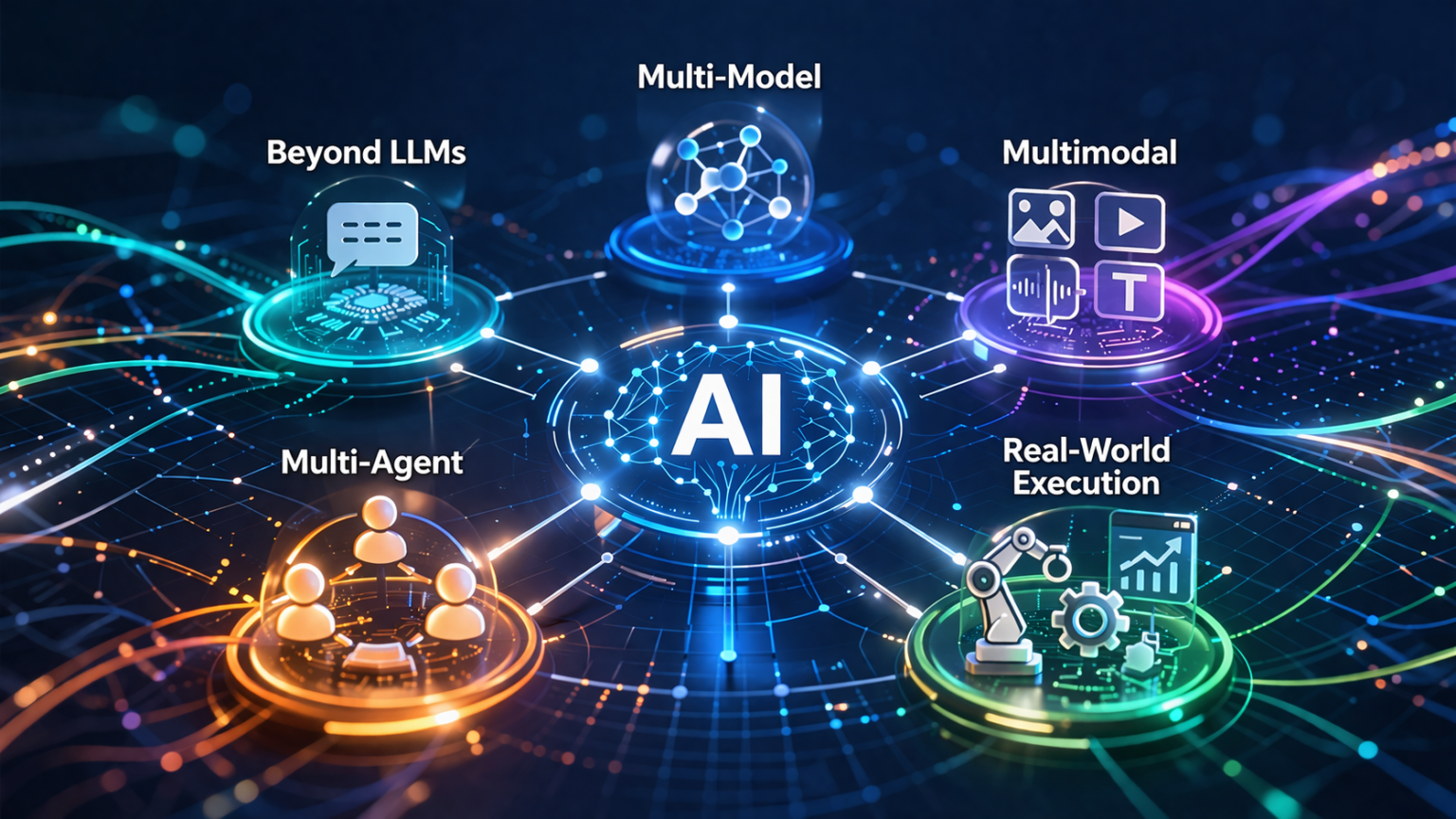
The single-model AI era is ending faster than most enterprise roadmaps acknowledge. IDC analysts Tim Law and Zhenshan Zhong argue that the winning AI architecture is now a coordinated portfolio of specialized models rather than one general-purpose LLM doing everything. The landscape they describe spans reasoning models, vision-language systems, small edge-optimized models, domain-specific variants, and autonomous agents, each selected for the specific problem shape it solves best. The strategic implication is that model selection and orchestration become standing enterprise capabilities, not one-time vendor decisions.
What this means for your business
Most enterprise AI programs were architected around a single flagship model, typically GPT-4 or Claude, deployed broadly with the assumption that capability gaps would close over time. That assumption is getting expensive to hold. The organizations that will feel this first are those running diverse workloads under one model contract: a general LLM handling customer support transcripts, financial forecasting inputs, and image-based quality inspection simultaneously will hit a ceiling on all three faster than a portfolio of purpose-fit models hitting the ceiling on any one.
The core analytical claim here is that model selection is becoming a continuous operational discipline, analogous to cloud cost optimization, not a procurement event. That comparison is worth taking seriously. Cloud FinOps took most enterprises four to six years to staff and systematize after multicloud became standard. The model proliferation IDC describes is moving faster than multicloud did, which means the organizational lag will be more costly. Enterprises without a model evaluation function, including clear benchmarking criteria and dynamic routing logic to send tasks to the right model at runtime, are accumulating architectural debt today, not in 2027.
IDC’s frame here is worth noting. The firm sells advisory services and research subscriptions to the enterprises it advises, which tends to produce recommendations that favor broad platform investments over narrower, harder prioritization calls. The “constellation of models” framing is directionally correct, but it risks encouraging portfolio sprawl before governance catches up. The sharper version of this argument is simpler: identify your two or three highest-volume, highest-stakes AI workloads, determine whether a general LLM is actually the right fit for each, and let that audit drive model diversification rather than a top-down architectural mandate. If that audit reveals your current model is fine for all three, the portfolio thesis doesn’t apply to you yet.
The decision this reframes isn’t about which models to buy. It’s about whether your next model contract renewal includes the flexibility to route workloads away from that vendor when a specialist outperforms it. Vendor lock-in has always carried a switching cost, but in a single-model world the cost was theoretical. In a multi-model world, a rigid contract is a tax on performance. That’s the clause worth renegotiating now, before the portfolio complexity makes renegotiation feel impossible.
Concept deep-dive: Model orchestration
Model orchestration is the coordination layer that routes tasks to the right AI model at the right moment, the way an air traffic controller assigns runways based on aircraft type, weather, and traffic rather than sending every flight to the same strip. It exists because no single model excels at every task type, so something has to decide which model handles which request. For enterprises, this is the infrastructure investment that makes a multi-model portfolio usable rather than just theoretically appealing.
Based on reporting from Multi-Model AI Strategy Beyond LLMs for Enterprises, originally published 2026-04-13 03:00:00.