
Share with your CTO
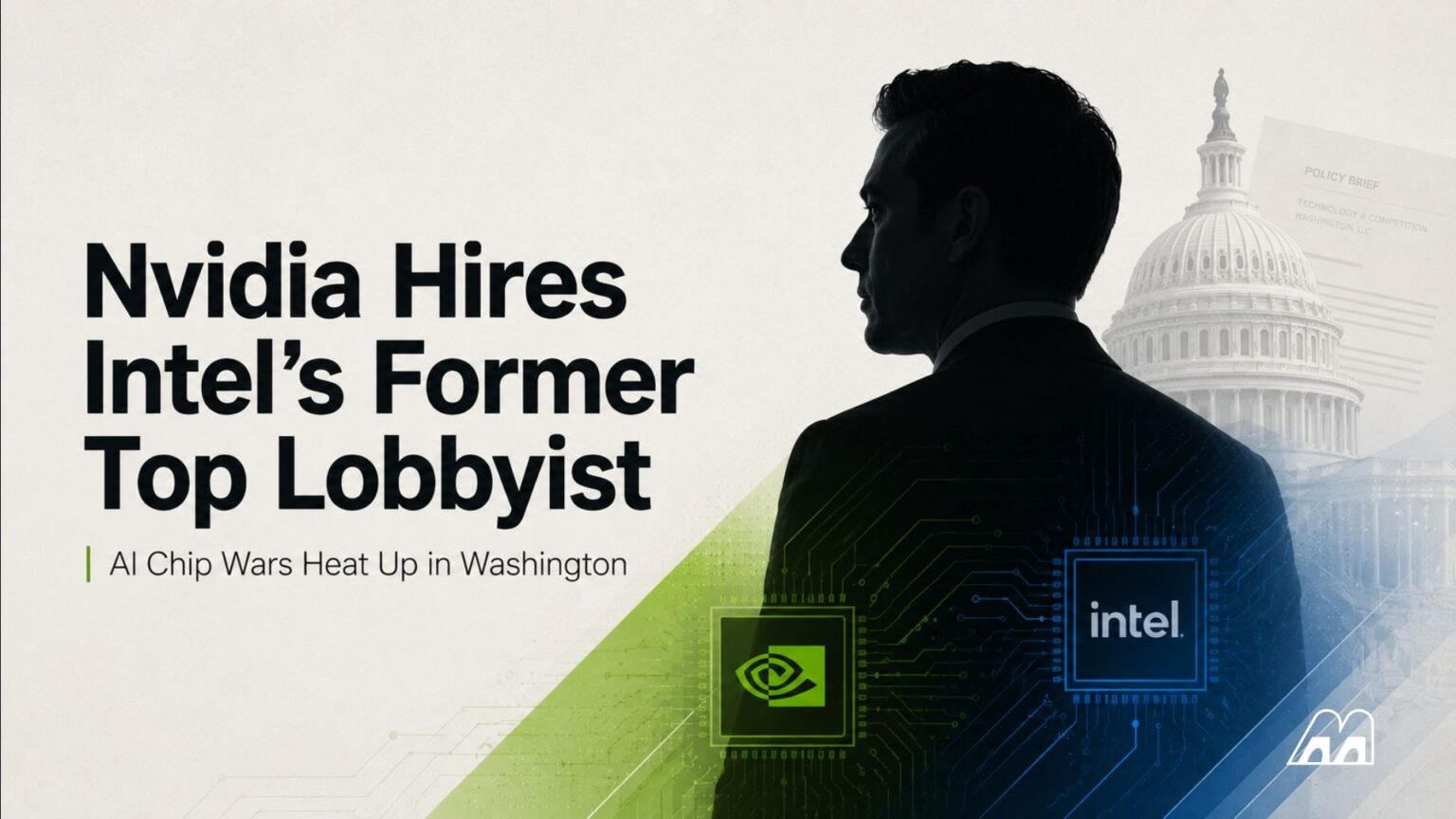
Nvidia is treating Washington as a second product line. The company hired Bruce Andrews, Intel’s former top government affairs executive and ex-Deputy Secretary of Commerce, as its new Chief External Affairs Officer, reporting directly to General Counsel Tim Teter. The backdrop is a chip export regime that keeps shifting: limited H200 sales to China were permitted in January 2026, then tightened in June when the Commerce Department extended restrictions to all Chinese subsidiaries globally. Nvidia has H200 export licenses but has collected zero revenue from the program so far, and the GAIN AI Act, which Nvidia blocked in December, is expected to return.
What this means for your business
Any CTO whose infrastructure roadmap depends on Nvidia silicon, whether H100s today or Vera Rubin next year, should treat US export policy as a supply chain variable, not a political backdrop. The June 2026 Commerce Department guidance closing the offshore-subsidiary loophole is the tell: enforcement is tightening alongside the licensing, which means procurement timelines for China-adjacent deployments are genuinely unpredictable. Companies building out AI capacity in Southeast Asia or the Middle East may face unexpected scrutiny if ownership chains touch Chinese entities.
Andrews’ hire signals that Nvidia views regulatory risk as a board-level revenue problem, not a compliance checkbox. Lobbying spend went from $640,000 in 2024 to nearly $5 million in 2025, a 670 percent increase, and the Andrews appointment suggests 2026 will push higher still. What that acceleration actually buys is influence over the rules that govern chip allocation and export licensing. For enterprise buyers, this matters because a company with sophisticated Washington access can shape the terms under which its own products are sold. That’s a structural advantage over AMD and Intel, both of which are scrambling to build comparable government affairs capacity.
The GAIN AI Act, if it passes in a future session, would require Nvidia to satisfy US buyers before exporting its most advanced processors. For enterprises currently in procurement conversations, that’s a latent priority queue that doesn’t exist yet but could materialize mid-contract cycle. The leading indicator to watch isn’t the lobbying dollar figure; it’s whether Andrews can keep the Act out of the next defense appropriations bill. If it attaches, every enterprise customer outside the US effectively moves to the back of the line.
Concept deep-dive: Export Control Licensing
Export control licensing is the government permission slip a chip company must obtain before shipping advanced semiconductors to restricted countries, roughly analogous to a zoning variance that must be renewed under changing rules. Licenses can be granted, revoked, or narrowed mid-cycle, which is why Nvidia holds approved H200 licenses but has booked no China revenue: a license permits the sale but doesn’t guarantee the logistics or political conditions will cooperate. For enterprise procurement, it means vendor availability isn’t just a supply chain question; it’s a foreign policy question.
Based on reporting from Nvidia Hires Intel’s Former Top Lobbyist as AI Chip Wars Heat Up in Washington, originally published 2026-06-14 22:15:00.