
Share with your CTO
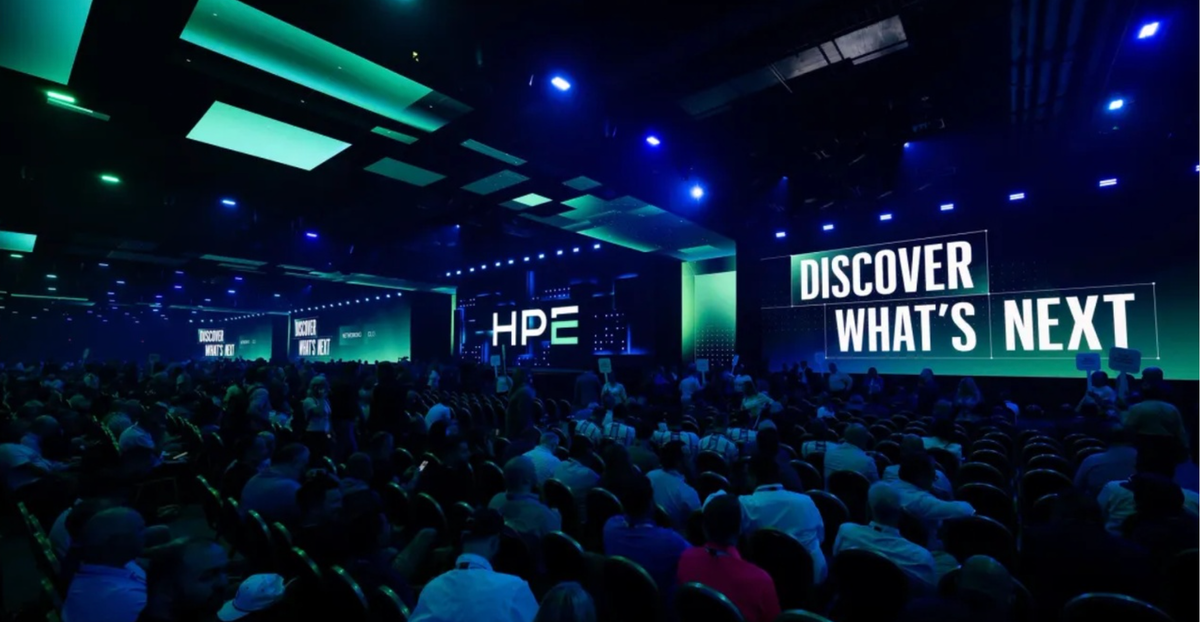
HPE is betting that the bottleneck in enterprise AI isn’t model quality, it’s the stack required to run agents reliably at production scale. At HPE Discover Las Vegas 2026, the company announced a significant expansion of its AI Factory ecosystem, pulling in TCS, Wipro, NVIDIA, and Digital Realty as deployment and validation partners. New capabilities include confidential computing for regulated workloads, Zerto-based rollback for rogue agent containment, and deeper Juniper networking integration across the compute-to-edge stack. The direction is clear: HPE wants to own the infrastructure layer beneath every enterprise AI agent.
What this means for your business
Whether this announcement is relevant to you depends almost entirely on one question: has your organization already committed to a private or hybrid cloud AI architecture, or are you still running pilots on hyperscaler APIs? HPE’s AI Factory play is designed for the former. If your AI workloads are still largely cloud-native and vendor-agnostic, this is peripheral. If you’re building a private inference layer, particularly in a regulated industry, the confidential computing and governance tooling announced here lands directly on decisions you’re likely already deferring.
The TCS and Wipro integrations are the more telling signal, and not for the reasons HPE’s announcement frames them. Large system integrators don’t embed a vendor’s infrastructure into their flagship platforms unless they expect to resell it at volume. TCS selecting HPE CloudOps for its Enterprise Private Cloud Platform means HPE gets distribution through TCS’s enterprise client base without having to win each deal independently. Wipro folding HPE Private Cloud AI into WINGS does the same. For any organization currently engaged with either integrator on an AI modernization program, HPE infrastructure may already be on the shortlist whether you’ve evaluated it directly or not.
HPE is also making a specific architectural argument that deserves scrutiny. The company is positioning a tightly integrated compute-networking-storage stack, spanning Juniper switches through to GPU nodes, as the right foundation for agentic AI. The implied claim is that loosely assembled multi-vendor environments will struggle with the latency, observability, and governance demands of autonomous agents running in production. That argument is credible for high-throughput training environments, but it’s less proven for inference-heavy agentic workloads where the bottleneck is often orchestration logic, not raw interconnect bandwidth. HPE is getting ahead of customer pain that may not have fully materialized yet.
The Zerto integration, enabling rollback to a known-good state after a rogue agent action, is the detail most CTOs should sit with. Autonomous agents that can modify environments, call external APIs, or trigger workflows create a class of operational risk that traditional backup and recovery tools weren’t designed to address. If your organization is moving agents into production this year, the absence of that recovery capability isn’t a gap you’ll notice until something goes wrong. The vendor renewal to weigh differently isn’t HPE’s, it’s your current data protection platform’s ability to handle state recovery in an agentic environment.
Concept deep-dive: Confidential computing
Confidential computing protects data while it’s actively being processed, not just when stored or in transit, by running workloads inside a hardware-isolated enclave that even the infrastructure operator can’t access. Think of it as a locked room inside the server where computation happens invisibly. For AI specifically, it means model weights and training data can be cryptographically verified and shielded during inference, which is what makes it relevant to sovereign AI mandates and regulated industries where data residency and access controls are non-negotiable.
Based on reporting from HPE expands AI factory ecosystem to accelerate agentic AI adoption, originally published 2026-06-17 11:16:00.