
Share with your CHRO
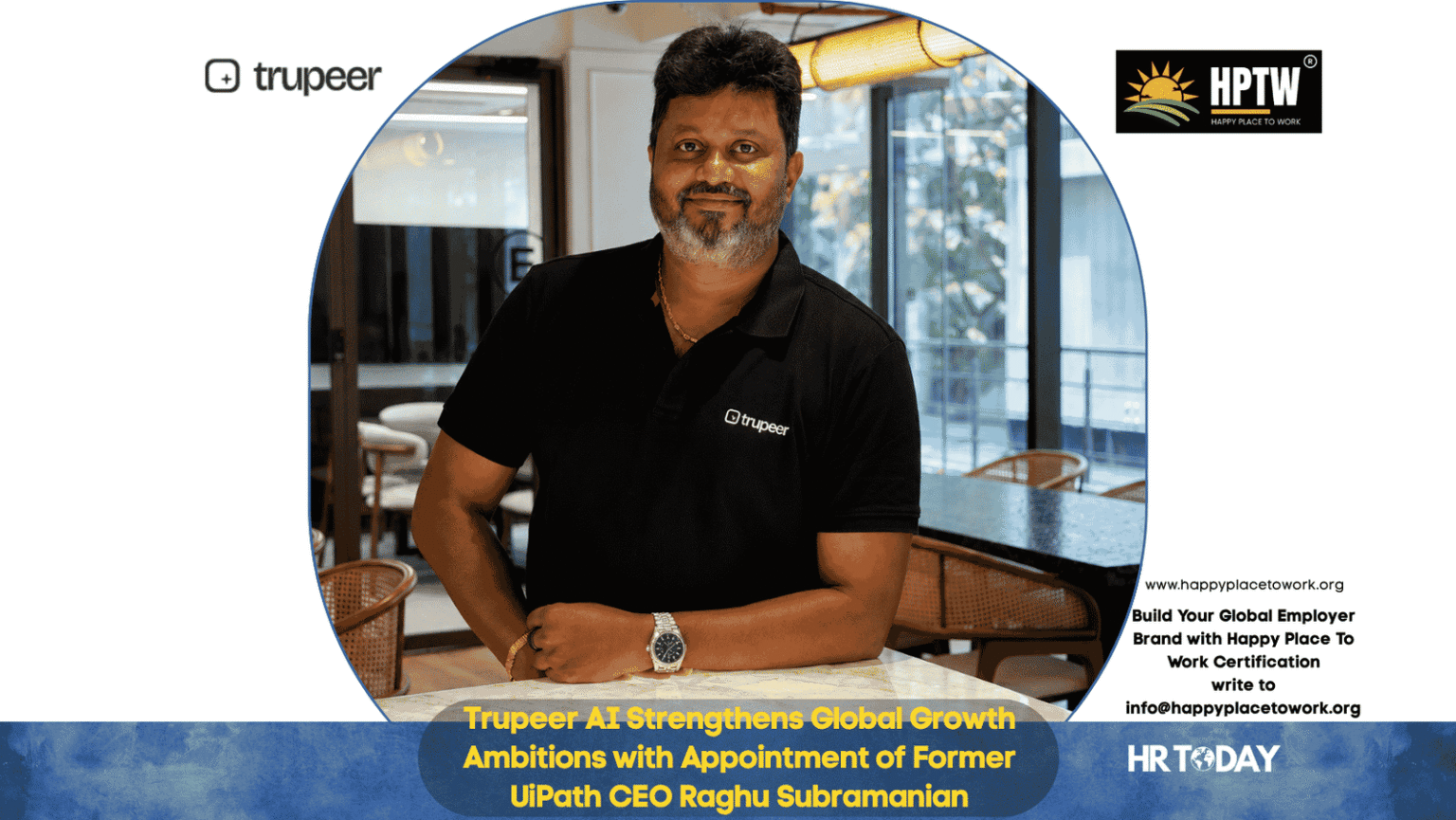
Trupeer AI is betting that the binding constraint on enterprise AI isn’t the model, it’s the knowledge layer underneath it. The Bengaluru-based startup, backed by RTP Global and Salesforce Ventures and active across 50,000 teams in 100 countries, has hired Raghu Subramanian as President and Chief Business Officer to drive that argument into Fortune 500 accounts. Subramanian helped build UiPath from early-stage to a $35 billion NYSE listing, running India and APAC operations. His mandate at Trupeer’s global expansion push is to close what the company calls the context gap for enterprise AI agents.
What this means for your business
The hire lands squarely in CHRO territory because the problem Trupeer is selling against, institutional knowledge trapped in people’s heads and scattered across tools, is a workforce problem before it’s a technology problem. If your organization is running AI agents on top of messy, undocumented operational knowledge, you’re not facing a model quality issue. You’re facing a knowledge infrastructure issue that sits in your lane. The question isn’t whether your company has this problem; it almost certainly does. The question is whether HR owns the fix or cedes it to IT.
Subramanian’s UiPath pedigree matters analytically, not just as a credential signal. UiPath won enterprise automation by selling to operations and IT while quietly becoming indispensable to every business unit that touched a process. Trupeer appears to be running the same playbook one layer up, targeting the knowledge that feeds those processes rather than the automation sitting on top. The Gartner figure the company cites, that 60% of AI projects get abandoned due to poor data and knowledge infrastructure, is doing real rhetorical work here. Trupeer is positioning itself as the reason your AI initiative doesn’t become a statistic.
The CHRO who ignores this will find the budget conversation happening without them. When AI agent rollouts stall because no one captured how the Manila GCC actually runs claims processing, or how the London team handles escalations differently from the Singapore team, someone will get the call. Historically that call goes to IT. Trupeer’s pitch, turning workflow capture and multilingual SOP generation into a continuous operation rather than a one-time documentation project, is an argument that knowledge transfer is an HR function with a technology substrate, not a technology function with an HR afterthought. I’d revise that view if Trupeer’s primary buyer turns out to be the CIO in practice, but Subramanian’s mandate to target Global Capability Centers and business services companies suggests the entry point is operational, not infrastructural.
Concept deep-dive: Context gap
The context gap is the distance between what an AI agent is asked to do and the documented, structured knowledge it needs to do it reliably. Think of it as the difference between hiring an expert and giving them a blank desk versus a desk stacked with every relevant policy, process, and exception your team has learned over five years. Agents inherit whatever context you feed them. If that context is thin or fragmented, the agent fails in ways that look like AI failure but are actually knowledge failure.
Based on reporting from Trupeer AI Strengthens Global Growth Ambitions with Appointment of Former UiPath CEO Raghu Subramanian, originally published 2026-06-18 03:42:00.