
Share with your CTO
The four major hyperscalers are collectively targeting roughly $725 billion in capital expenditure for 2026, a 77% year-over-year jump, and their stock reactions after earnings suggest investors aren’t convinced the returns justify that pace. The smarter money is rotating into the AI infrastructure supply chain upstream: high-bandwidth memory, power generation, advanced cooling, and grid equipment. SK Hynix, Constellation Energy, Vertiv, and Eaton are among the names capturing that demand, with HBM alone projected as a $54.6 billion market in 2026.
What this means for your business
Your vendor landscape is about to get more constrained, not less. The companies supplying the physical substrate of AI, memory fabs, transformer manufacturers, cooling system vendors, are reporting multi-year order backlogs and sold-out capacity through at least the end of 2026. Whether your organization is building internal AI infrastructure or procuring cloud capacity, you’re downstream of these bottlenecks. The question isn’t whether this affects your roadmap; it’s whether you’ve priced the constraint into your planning horizon.
High-bandwidth memory is the sharpest pinch point. HBM, the specialized chip-stacking architecture that lets GPUs process data fast enough to run large AI models, is consuming so much fab capacity that conventional DRAM supply is tightening alongside it. With SK Hynix holding over half the HBM market and all three major suppliers sold out, any CTO negotiating GPU cluster access or cloud AI capacity is effectively competing for a constrained upstream resource. Lead times on the hardware your models run on are being set by decisions made in Korean fabs right now.
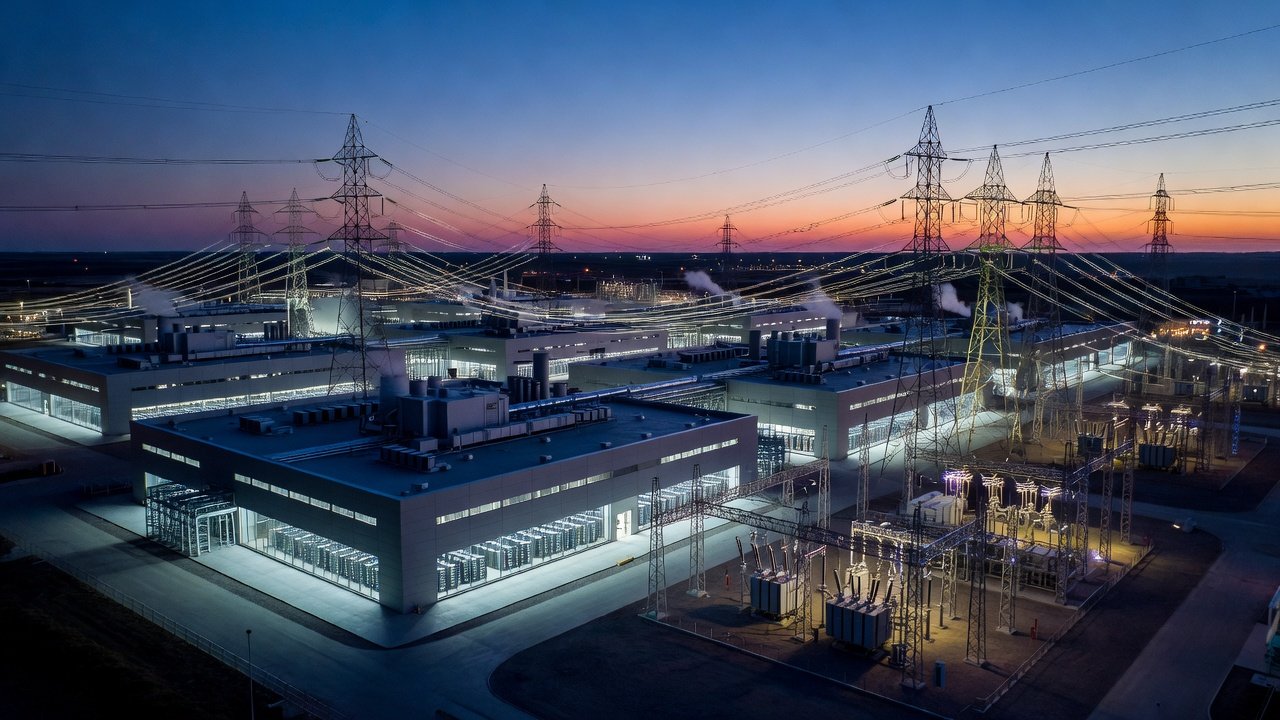
Power is the second constraint that most enterprise technology plans still treat as someone else’s problem. Data center electricity consumption is projected to hit 565 terawatt hours globally in 2026, up 26% in a single year, and regional grids in Virginia, Texas, and the Midwest are already reporting multi-year connection backlogs. If your colocation or cloud provider hasn’t locked in power procurement, their capacity expansion promises are softer than their contracts suggest. The leading indicator to watch isn’t their marketing, it’s whether they’ve announced signed power purchase agreements in the specific regions where you need capacity.
Concept deep-dive: High-Bandwidth Memory (HBM)
HBM stacks multiple memory chips directly on top of or beside a processor using microscopic vertical connections, the way a parking garage fits more cars on a small footprint by going up rather than out. This dramatically increases how fast data moves into the GPU, which is the binding constraint for AI training and inference. Because building one bit of HBM displaces several bits of conventional memory from the same fab line, HBM scarcity ripples outward into every part of the memory market.
Based on reporting from AI Infrastructure Supply Chain Investing Beyond Hyperscalers 2026, originally published 2026-07-10 02:46:00.