
Share with your CISO
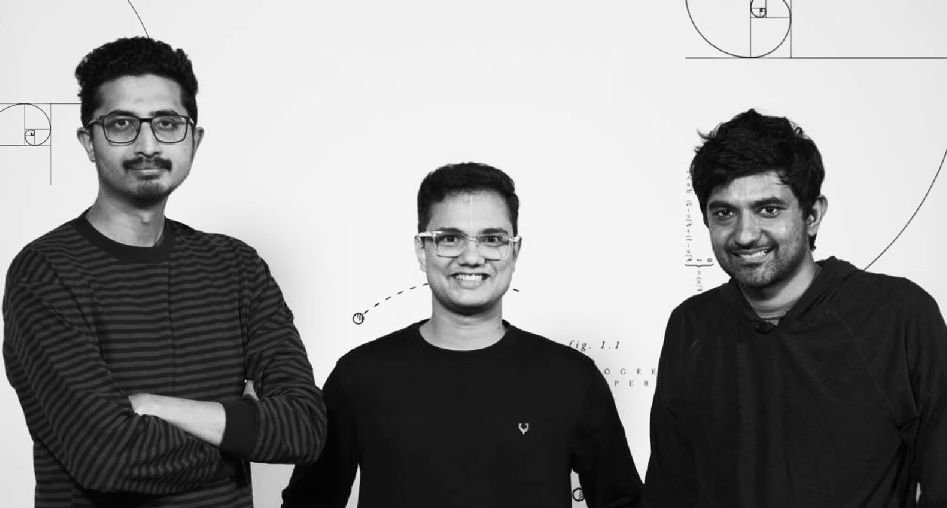
Pramaana Labs, a 2025-founded Indian AI startup, has closed a $27 million seed round led by Khosla Ventures, with Accel and Nexus Venture Partners among the co-investors. The company’s core claim is that it can convert regulatory and compliance knowledge, think the US tax code or clinical protocols, into formal mathematical logic that a proof engine can verify before returning any answer. If it can’t prove the answer, it refuses to respond. The round will fund model training, AI research hiring, and expansion across tax, cybersecurity, and financial compliance verticals.
What this means for your business
The organizations most exposed to this bet are the ones currently defending AI-assisted compliance decisions to regulators, auditors, or legal counsel. If your team is already using large language models to interpret policy, flag risk, or generate compliance summaries, the attack surface isn’t just accuracy, it’s auditability. Pramaana’s architecture, which produces a machine-checkable proof trace rather than a confident-sounding paragraph, speaks directly to the gap between what your AI says and what you can show a regulator it did.
The technical architecture here matters more than the funding headline. Most enterprise AI systems running in compliance contexts today are probabilistic, meaning they produce statistically likely answers without any built-in mechanism to distinguish a correct conclusion from a plausible-sounding wrong one. Formal verification, the approach Pramaana is commercializing, works the way a mathematical proof does: the system either derives the answer from first principles using codified rules, or it fails explicitly. The failure mode is silence rather than hallucination. For a CISO defending an AI-assisted audit workflow, that’s a structurally different risk posture than any confidence-score threshold on a standard model.
The serious question isn’t whether formal verification works in theory, it does, it’s whether Pramaana can encode enough of the actual regulatory surface area to be useful in production. Tax codes change. Clinical protocols get updated. Cybersecurity frameworks like NIST or ISO 27001 issue revisions. A proof engine is only as current as the rules it has formalized, which means the real competitive moat isn’t the prover model itself but the network of domain experts the company is now paying to maintain. That’s a labor-intensive, continuously depreciating asset, and $27 million at seed buys a narrow runway to prove it scales. I’d revise this outlook if Pramaana lands a named regulated-industry customer willing to put their compliance workflow on record before the next funding round.
Concept deep-dive: Formal verification
Formal verification is the practice of proving that a system’s output is correct by deriving it step-by-step from a set of explicitly stated rules, the same way a mathematical proof works rather than the way a spell-checker does. Unlike statistical AI, which learns patterns from data and generates likely answers, a formal verifier either produces a checkable proof chain or halts. In regulated enterprise contexts, that distinction matters because a proof is auditable by design, not reconstructed after the fact.
Based on reporting from Indian AI startup Pramaana Labs raises $27m funding led by Khosla Ventures, originally published 2026-06-18 03:00:00.