
Share with your CTO
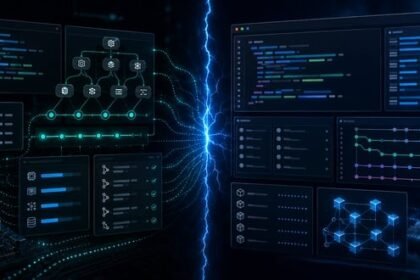
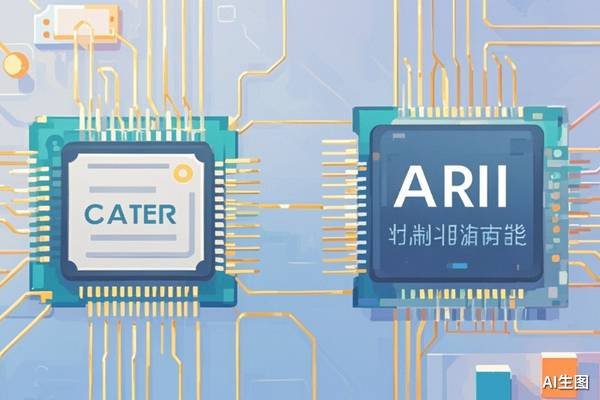
OpenAI didn’t try to pull developers away from Claude Code. Instead, it built a plugin that drops Codex directly into Anthropic’s environment, creating a dual-model coding workflow where Claude handles task breakdown and review while Codex writes the actual code. By June, both companies had upgraded their respective models (Fable 5 for Claude, GPT-5.6-Sol for Codex), deepening the integration. The bet: owning the code generation layer inside a competitor’s orchestration environment is worth more than winning the benchmark war outright.
What this means for your business
Your developers are already making toolchain decisions that will be expensive to reverse. When a team anchors to a particular orchestration environment, whether Claude Code, GitHub Copilot Workspace, or Cursor, the code generation model underneath becomes almost interchangeable. The orchestration layer is sticky. The generation layer is not. If you haven’t mapped which AI coding tools your engineering org is actually using day-to-day, you’re already behind on this distinction.
The pattern here is what you might call ecosystem parasitism: entering a competitor’s workflow as a module rather than fighting for top-level adoption. Microsoft ran this playbook in the 1980s, shipping Word and Excel for Macintosh before eventually making Windows the platform everyone else depended on. OpenAI is conceding the workspace layer to Anthropic while colonizing the generation layer. That’s a viable long-term position only if Codex becomes the default engine developers reach for, not just the one that happens to be available. The continuous model upgrades since June suggest OpenAI is actively working to make that habit stick.
The signal worth watching: whether Anthropic responds by building its own competitive code generation capability or doubles down on orchestration depth. If Anthropic’s value proposition narrows to “the thing that manages AI that writes code,” it’s exposed the moment OpenAI ships a credible orchestration layer of its own. Anthropic accepted this plugin knowing that risk. The question is whether the short-term capability gain justifies handing a competitor a permanent seat inside its ecosystem.
Concept deep-dive: AI toolchain layer separation
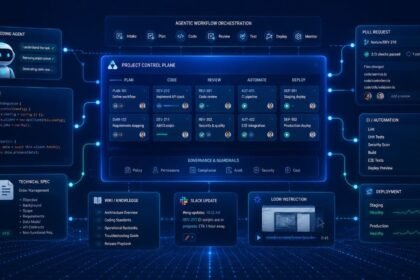
In AI coding environments, “orchestration” and “generation” are distinct functions. Orchestration handles the surrounding workflow: understanding a codebase, breaking a feature request into tasks, invoking tools, reviewing diffs. Generation is the act of writing code itself. They require different strengths and increasingly run on different models. The analogy is a general contractor and a framing crew: the contractor manages the project, the crew swings the hammers. Separating these layers matters for CTOs because it means vendor lock-in now operates at two independent levels, not one.
Based on reporting from The Shifting Value of AI Coding: From “Who Has a More Powerful Model” to “Who Offers a More Comprehensive Toolchain”, originally published 2026-07-15 05:45:00.