
Share with your CTO
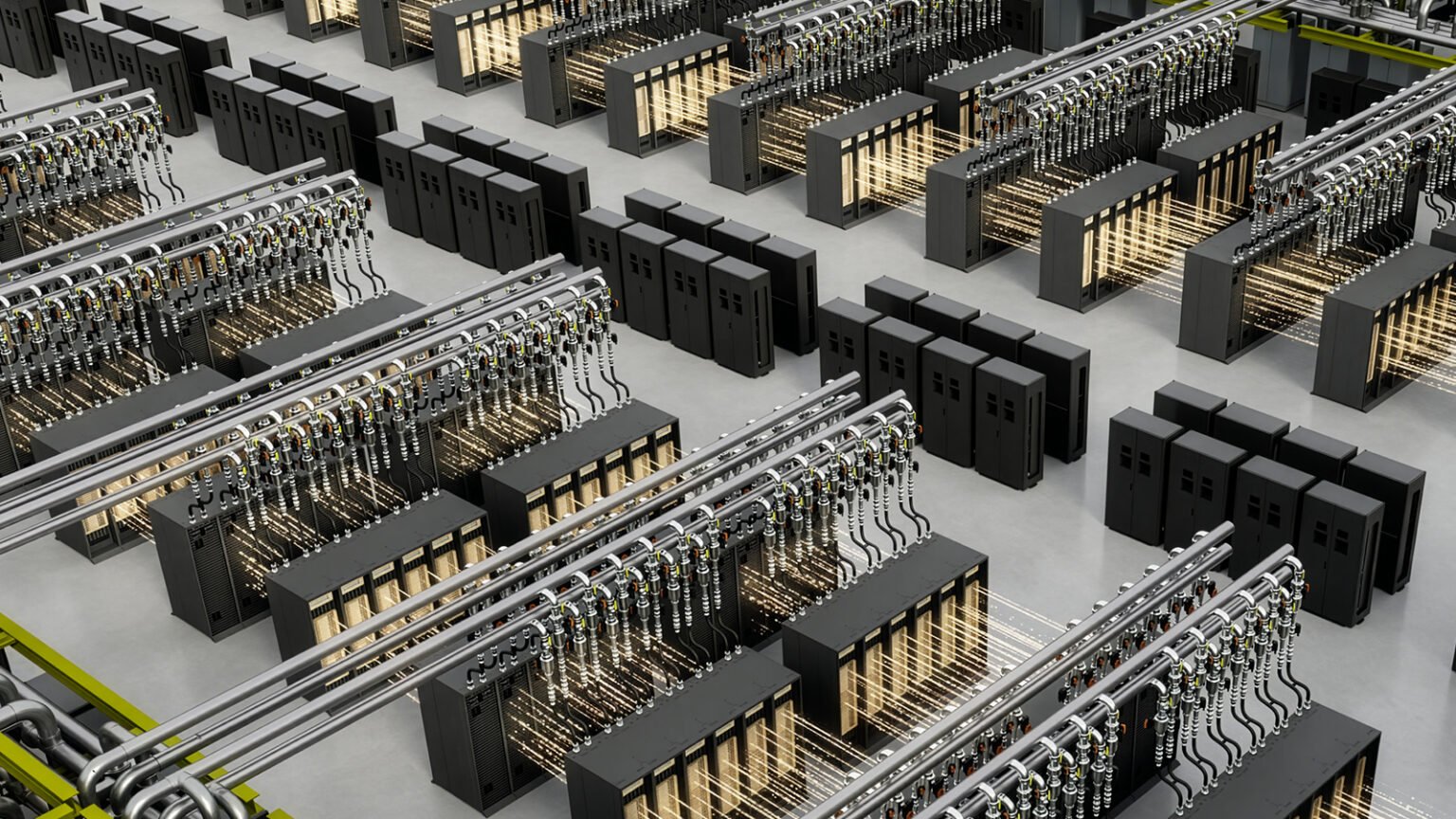
Japan is making a sovereign bet on physical AI, and NVIDIA is the infrastructure layer it’s building on. Through a new entity called Noetra Corp., backed by Japan’s Ministry of Economy, Trade and Industry, the country is standing up what it’s calling the world’s first national physical AI infrastructure — 13,750 Vera CPUs, 27,500 Rubin GPUs, 140 megawatts of data center capacity. The goal is open multimodal foundation models powering robotics, digital twins, and industrial automation across manufacturing, logistics, and healthcare. Japan’s stated target: capture 30% of the global AI robotics market by 2040, a segment currently valued at roughly $133 billion.
What this means for your business
If your infrastructure roadmap still treats AI compute as a procurement decision you revisit annually, Japan just signaled that the competitive window for physical AI is compressing faster than that cycle allows. The organizations most exposed here aren’t the ones without GPU clusters — they’re the ones in manufacturing, logistics, or industrial automation who assumed they’d wait for the technology to mature before committing. Japan’s move treats the foundation model training phase as the moat, not the applications that run on top of it.
The architectural choice embedded in this announcement deserves attention. Japan isn’t building a general-purpose cloud. It’s purpose-built for physical AI, meaning models trained to operate in the real world — controlling robots, reading sensor data, managing factory floors — rather than generating text or images. NVIDIA’s DSX platform functions as a reference architecture for this class of workload, tightly integrating silicon, networking via Spectrum-X Ethernet, and software libraries like Cosmos and Isaac GR00T. That vertical integration is NVIDIA’s actual pitch here, and a government co-signing it as a national standard dramatically narrows the vendor optionality for any enterprise that wants to plug into the FRONTia ecosystem.
The pretrained model weights Noetra produces will be made broadly available to Japanese enterprises and developers, which is the structural move worth watching. Open weights distributed at national scale create a gravitational pull — domestic companies build on the local stack, their data flywheel reinforces it, and foreign competitors arrive to find a model ecosystem already tuned to Japanese industrial conditions. Any CTO at a global manufacturer competing in Japanese markets should be asking whether their AI infrastructure strategy accounts for a world where the most relevant foundation models for factory automation are Japanese-origin and NVIDIA-native.
Concept deep-dive: Physical AI
Physical AI refers to models trained to perceive and act in the real world rather than in purely digital environments — think of it as the difference between a model that answers questions about a factory and one that actually runs the robot inside it. It requires training on sensor data, video, and spatial information at scales that dwarf typical language model workloads. The business stakes are highest wherever machines must make real-time decisions: logistics, surgical robotics, autonomous vehicles, and industrial assembly.
Based on reporting from Japan Government, Industrial Leaders and NVIDIA Launch the World’s First National AI Infrastructure, originally published 2026-07-16 04:25:00.