
Share with your CTO
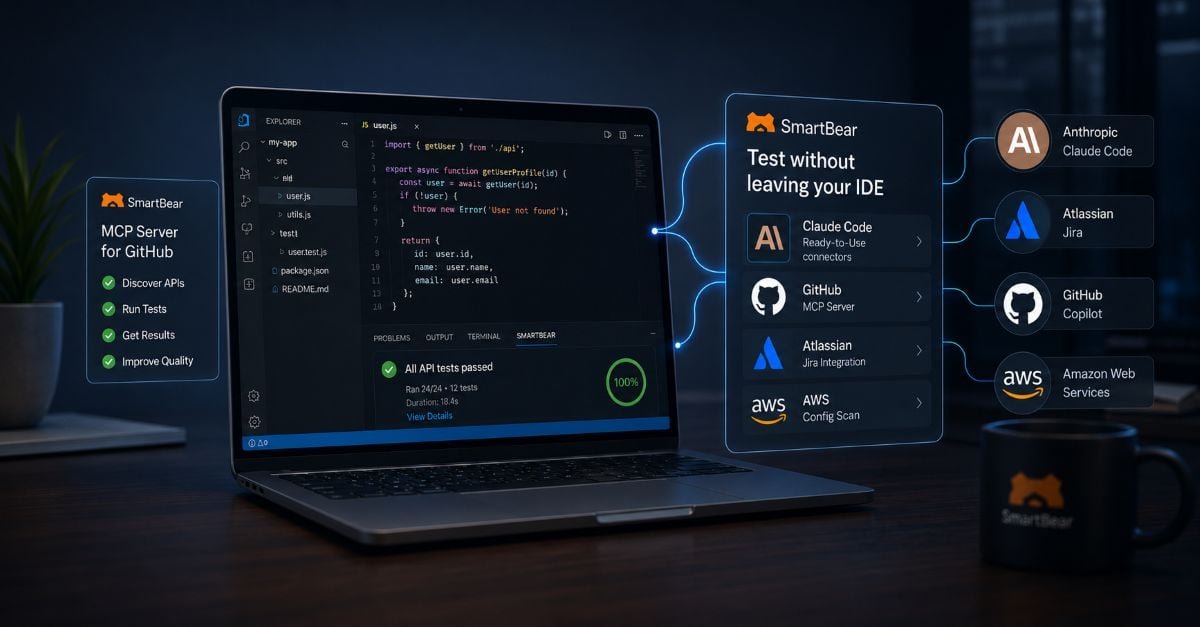
SmartBear is betting that AI-generated code has outpaced the testing infrastructure built to catch its failures. The company announced integrations with AI coding tools from Anthropic, Atlassian, GitHub, and AWS, pulling testing directly into the developer environment rather than leaving it downstream in the pipeline. Specific additions include a Model Context Protocol server for GitHub and connectors to ReadyAPI and Swagger for Claude Code users. The practical goal: validate code at the same cadence it’s being generated, before verification debt compounds into something structurally unmanageable.
What this means for your business
AI coding tools have created a volume problem that most engineering organizations haven’t honestly priced in. When a developer ships ten times the code but reviews it at the same rate as before, quality gates don’t scale, they collapse. SmartBear’s move recognizes that testing can’t live outside the agent loop anymore. The Futurum Group puts AI-assisted testing adoption at 37% of organizations, which means the majority are still running legacy QA workflows against AI-generated output. That gap is where technical debt accumulates silently, then surfaces loudly during a production incident.
The insight worth holding is this: asking an AI coding assistant to test its own output is the software equivalent of asking an auditor to sign off on their own books. SmartBear’s architecture addresses this by keeping test agents separate from code-generation agents, ideally running on different underlying models. That separation isn’t a product flourish, it’s the entire premise. One LLM’s blind spots will predictably overlap with another instance of the same model’s blind spots. Independent verification requires genuine independence, not just a different prompt.
The signal worth watching is whether this integration pattern gets absorbed by hyperscalers before it becomes a durable business for SmartBear. Microsoft already owns the IDE, the model, and the pipeline with GitHub Copilot and Azure DevOps. If testing becomes a native feature of Copilot Workspace rather than a connectable service, SmartBear’s integration story becomes a temporary on-ramp. The tradeoff is real: tight integrations build adoption, but in platform markets, adoption sometimes travels faster than business model durability.
Concept deep-dive: Model Context Protocol (MCP)
MCP is an open standard, originally developed by Anthropic, that lets AI coding agents communicate with external tools and data sources using a shared protocol rather than custom one-off integrations. It exists because every AI assistant was otherwise building proprietary connectors that couldn’t interoperate. Think of it as USB-C for AI tool integrations: one standard port, many devices. For engineering organizations, the business relevance is that MCP-compatible testing tools can plug into multiple AI coding environments without re-engineering the connection each time a new assistant enters the stack.
Based on reporting from SmartBear Tightens Integration Between AI Coding and Testing Tools, originally published 2026-07-16 11:50:00.