
Share with your CIO
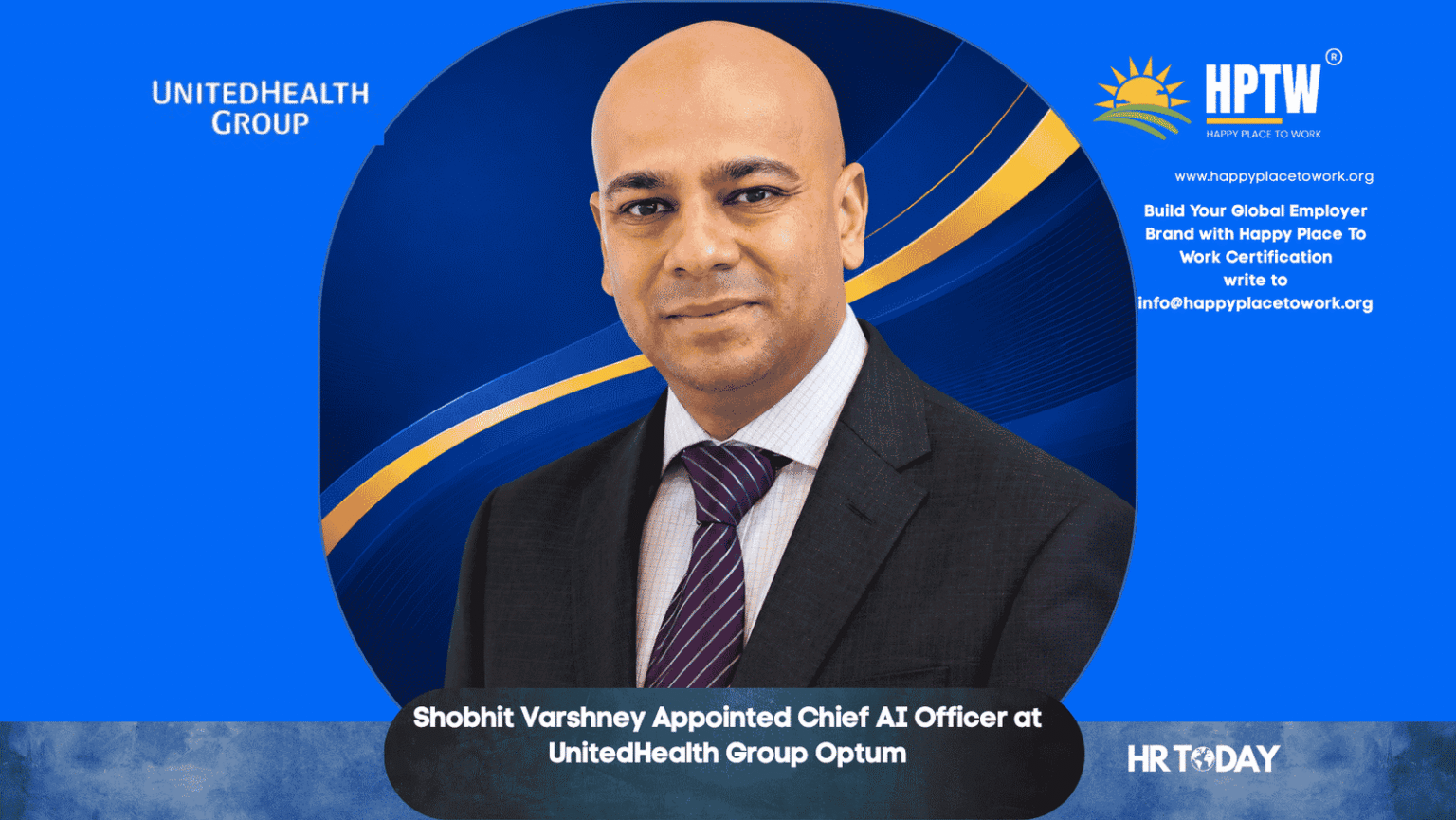
UnitedHealth Group is consolidating its AI strategy, enterprise platform, and AI delivery under a single executive for the first time, appointing Shobhit Varshney as Chief AI Officer at Optum. Varshney arrives from Citi, where he ran the bank’s enterprise-wide AI agenda and built what the company called an AI Command Center for lifecycle and risk management. Before Citi, he spent 13 years at IBM Consulting leading AI transformations for companies including PepsiCo, CVS Health, and Merck. The hire spans governance, agentic AI deployment, and responsible AI oversight across a system serving 147 million people.
What this means for your business
The structural tell here isn’t the hire itself, it’s what the title unifies. Optum has been running AI initiatives across its pharmacy, care delivery, and data businesses in ways that almost certainly produced redundant platforms and inconsistent governance standards. Creating a CAIO role that explicitly owns strategy, platform, and delivery together is a consolidation move, not an exploration move. CIOs at large health systems and payers watching this should ask whether their own AI organization has the same fragmentation problem, because Optum is signaling that fragmentation has a measurable cost.
Varshney’s background is the sharpest part of this appointment. His Citi role wasn’t a lab or innovation title, it reported to the COO and owned regulatory compliance across the AI lifecycle. That’s a governed, operational orientation, not a research one. In healthcare, where AI decisions touch clinical workflows and insurance coverage determinations, that distinction matters enormously. The recurring failure mode in enterprise healthcare AI is a proof-of-concept that works technically but can’t survive a compliance audit or a CMS scrutiny cycle. Someone who built regulatory infrastructure at a systemically important bank is a different kind of hire than a model-builder.
If you’re a technology vendor selling into Optum or the broader UnitedHealth Group ecosystem, this appointment likely tightens procurement standards around responsible AI documentation and lifecycle governance. Varshney’s fingerprints at Citi included building the framework through which AI systems were reviewed before deployment and monitored afterward. Expect that discipline to land at Optum within the next two to three budget cycles. Vendors without explainability tooling and audit trails won’t lose deals today, but they’ll lose renewals in 2026 and 2027.
Concept deep-dive: Agentic AI
Agentic AI refers to systems that don’t just respond to a prompt but take multi-step actions autonomously to complete a goal, closer to a junior analyst running a task than a search engine answering a question. The governance challenge scales with the autonomy: an agent that can schedule referrals or flag claims for denial needs oversight infrastructure that static AI models don’t require. Varshney’s explicit mandate includes agentic AI deployment, which is why the governance architecture he built at Citi is the relevant credential here, not his IBM consulting work.
Based on reporting from Shobhit Varshney Appointed Chief AI Officer at UnitedHealth Group Optum, originally published 2026-07-17 05:10:00.