
Share with your CIO
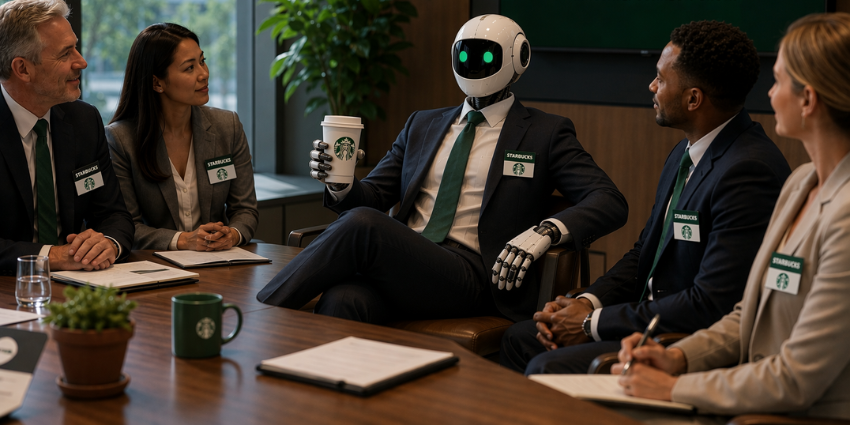
Starbucks is treating AI as a software procurement weapon. Facing $400 million in annual software spend and a $2 billion cost-reduction mandate under CEO Brian Niccol, the company is reportedly building internal AI tools to replace selected enterprise applications from vendors including Microsoft and IBM, with some replacements potentially live by end of next year. The market read the signal immediately: ServiceNow dropped 3.5 percent, Salesforce slid 4 percent, IBM fell roughly 3 percent in premarket trading after Bloomberg’s report. This Starbucks AI build-versus-buy story reframes enterprise AI from a feature investment into a contract negotiation.
What this means for your business
Whether this story is about you depends on one number: the gap between what your enterprise applications cost and what your teams actually use. Organizations running large, partially-fitted software estates, where employees maintain shadow spreadsheets, manual handoffs, and workarounds around official platforms, are the ones Starbucks is speaking to directly. AI-assisted development, the practice of using AI coding tools to dramatically compress the time and cost of writing custom software, has quietly made the “too expensive and slow to build” objection weaker than it was 24 months ago. If your CTO hasn’t revised that assumption recently, the renewal math your procurement team is using is probably wrong.
The deeper structural claim here is that AI shifts power at the application layer specifically. Infrastructure, identity, compliance, and data governance remain genuinely hard to replicate internally, and vendors with depth in those areas have durable cover. The exposed tier is what you might call the workflow wrapper: expensive packaged applications whose primary function is presenting a process interface that fits 70 percent of the actual job and charges for 100 percent of the license. That tier was always vulnerable in theory; AI-assisted development makes it vulnerable in practice. Starbucks gives enterprise procurement teams a named, public precedent to wave in renewal conversations, and that alone changes the negotiation dynamic even when no one actually builds anything.
The falsification condition for this entire thesis is engineering capacity. Starbucks has the scale and internal talent to own the governance, security review, integration maintenance, and model monitoring that custom AI tools require. Most mid-market enterprises don’t, which means the real beneficiaries of this moment may not be the builders but the challengers, companies that use the credible threat of building to extract better pricing, better workflow fit, and cleaner exit terms from vendors who until now assumed renewal was automatic. That’s the contract renewal on your calendar you should be weighting differently.
Based on reporting from Why Starbucks’ AI Strategy Worries App Vendors, originally published 2026-07-21 11:02:00.