
Share with your CISO
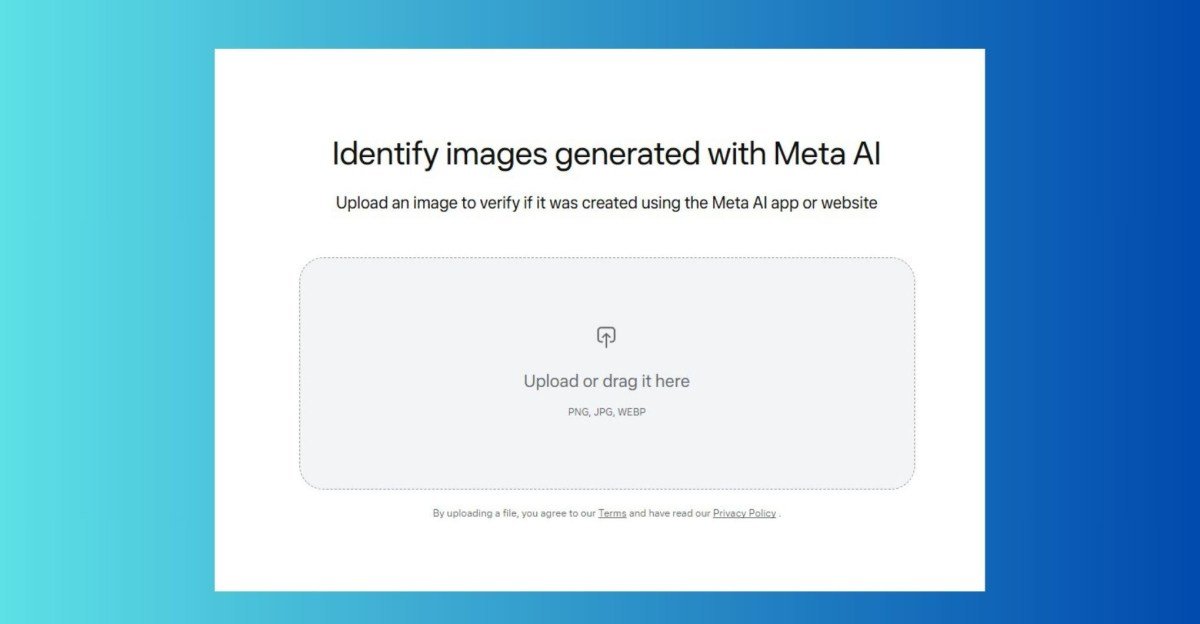
Meta launched Content Seal, a proprietary invisible watermarking system for AI-generated images, as a buried footnote inside its July Muse model announcement, arriving years after comparable systems already existed. The system only covers Muse-generated images, omits video entirely, requires a separate web tool to verify (no in-product detection), and according to Reuters testing, fails to detect more than half of cropped Muse images. Google’s SynthID, which OpenAI has already adopted, does the same thing with broader ecosystem support. Meta’s own AI content detection gap now spans three years of generated output it cannot retroactively identify.
What this means for your business
Any organization running brand safety, compliance, or disinformation monitoring programs that depend on platform-level AI labeling infrastructure should treat Content Seal’s launch as evidence of fragmentation, not progress. The practical consequence is that an image generated by Meta’s own Muse model today is invisible to Google’s Gemini detection and to the C2PA verification portal, the two detection surfaces most enterprise trust-and-safety workflows currently rely on. If your threat model includes synthetic media circulating on Facebook or Instagram, Meta’s detection coverage just got narrower than it was last week.
The deeper problem is what this reveals about the AI provenance landscape broadly. When platforms build proprietary watermarking rather than adopting shared standards, detection becomes a game of asking each platform’s own tool whether its own content is fake, a closed loop with obvious incentive problems. Google’s SynthID is not a neutral public good either, since it embeds Google’s detection infrastructure as the de facto verification layer for non-Google platforms, but at least OpenAI’s adoption of SynthID creates cross-platform coverage. Meta’s decision to build separately, while simultaneously sitting on the C2PA steering committee, is the classic standards-participation-plus-go-it-alone posture that tends to indicate a company wants influence over the standard without being bound by it.
The leading indicator to watch is whether Meta integrates Content Seal detection into its own platforms’ content moderation APIs before the end of 2025. If it does not, the gap between Meta’s stated commitment to AI transparency and its actual detection architecture becomes a board-level disclosure risk, particularly for any enterprise advertiser trying to represent to regulators or clients that its paid content appears alongside verified, non-synthetic media. The vendor to pressure here is not Google. It is Meta, specifically on whether Content Seal watermarks will be readable by third-party platforms and detection tools without requiring a separate integration agreement.
Concept deep-dive: Invisible watermarking
Invisible watermarking embeds a hidden signal directly into an image’s pixel data at generation time, analogous to a serial number stamped into the paper a banknote is printed on rather than printed on top of it. The signal survives common edits like cropping and compression. A detection tool reads the signal and confirms whether the image came from a specific AI system. The business relevance is that watermarking operates at the generation layer, meaning it only covers content a platform itself creates, not AI-generated content uploaded from outside sources.
Based on reporting from Meta made its own AI detection system. It should have just used Google’s, originally published 2026-07-22 07:00:00.