
Share with your CTO
AMD is repositioning itself from chip supplier to full-stack systems vendor, betting that the next competitive frontier in AI infrastructure isn’t a faster GPU but a better-integrated rack. After spending $60 billion in acquisitions including the $49 billion Xilinx deal, AMD has stitched together compute, adaptive silicon (FPGAs, which let chips be reconfigured after manufacture), networking, and software into a unified platform narrative. The strategic goal, as analyst Dave Vellante frames it, is not to displace Nvidia but to become the indispensable second-source in enterprise AI infrastructure.
What this means for your business
The companies most exposed to this shift are the ones still treating AI infrastructure as a GPU procurement question. If your current architecture defaults every inference workload to top-tier accelerators regardless of task complexity, you are almost certainly overspending and building a cost structure that becomes harder to defend as agentic workloads scale. The emerging pattern here is workload-tiering: routing simple or low-priority inference to cheaper compute and reserving expensive silicon for tasks that actually require it. Whether your stack can do that routing today is the real diagnostic.
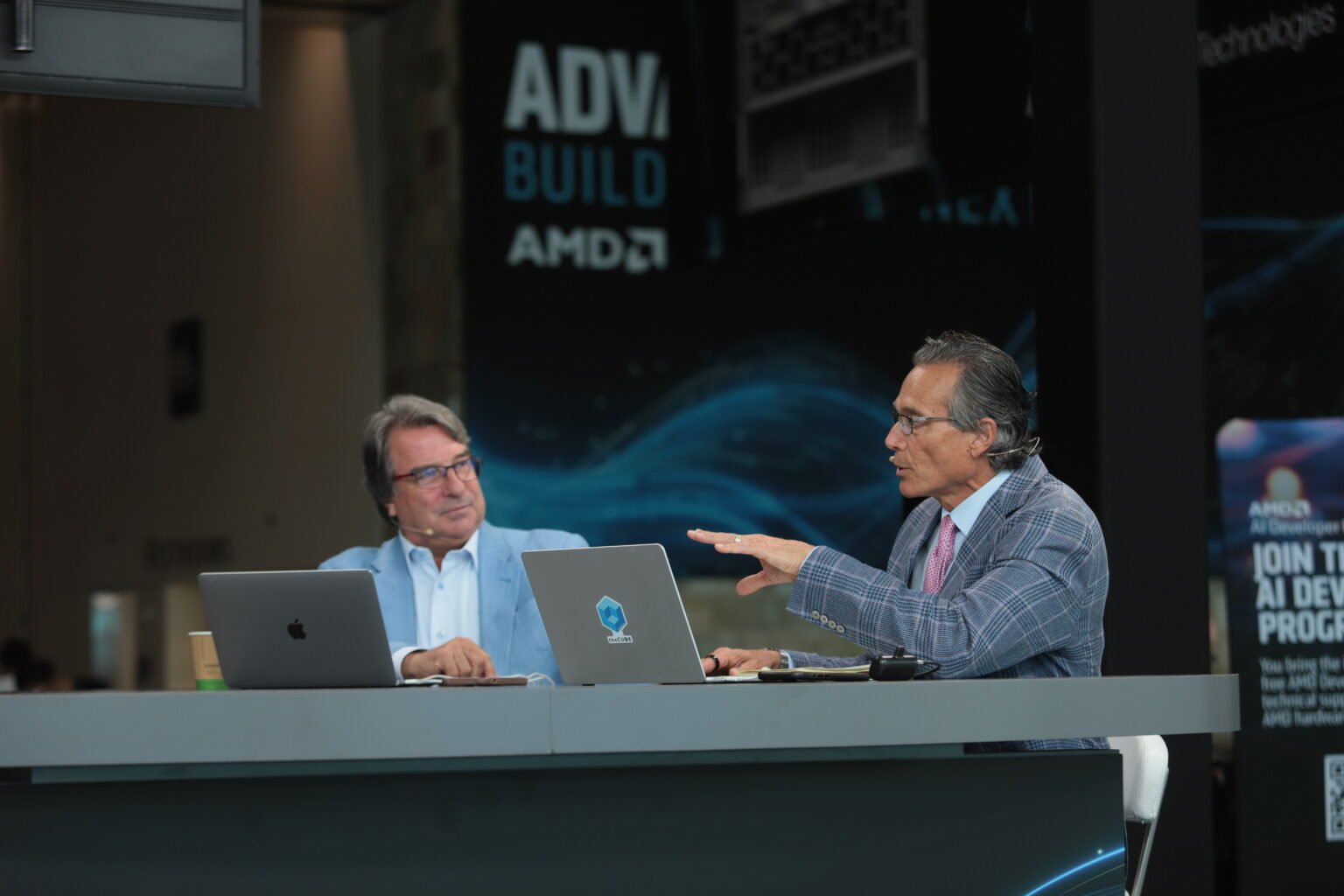
AMD’s argument that it can close a 15-year gap in five years deserves scrutiny, and the source matters here. SiliconANGLE covered this during a paid AMD event, which doesn’t invalidate the analysis but does tilt the framing toward AMD’s timeline looking credible and its ecosystem looking more complete than it may be in practice. The harder test is software. Nvidia’s CUDA ecosystem took a decade to embed itself into every ML framework, research workflow, and enterprise deployment pipeline. ROCm, AMD’s software answer, has improved but still requires meaningful porting effort for teams running Nvidia-optimized workloads. The systems narrative is coherent; the switching cost is real.
The strategic read for infrastructure leaders is not “bet on AMD over Nvidia” but “stop treating this as a binary.” If AMD credibly holds the second-source position, enterprises gain negotiating leverage they haven’t had in this market. A vendor renewal with Nvidia looks different when a qualified alternative exists at rack scale. The signal to watch is whether hyperscalers and Tier 1 OEMs start qualifying AMD rack systems at volume, not just in benchmarks. That’s the validation step that converts AMD’s M&A narrative into actual procurement optionality for your team.
Concept deep-dive: Rack-scale integration
Rack-scale integration means treating an entire server rack as a single engineered system rather than a collection of independently sourced components. Think of it like the difference between building a PC from parts versus buying a purpose-built workstation: the latter trades configurability for performance tuned to a specific workload. In AI infrastructure, tight co-design across compute, memory, and networking within the rack reduces the bottlenecks that appear when those layers are sourced separately and reduces the software overhead required to coordinate them.
Based on reporting from AI infrastructure systems power enterprise tech, originally published 2026-07-23 10:26:00.