
Share with your CRO
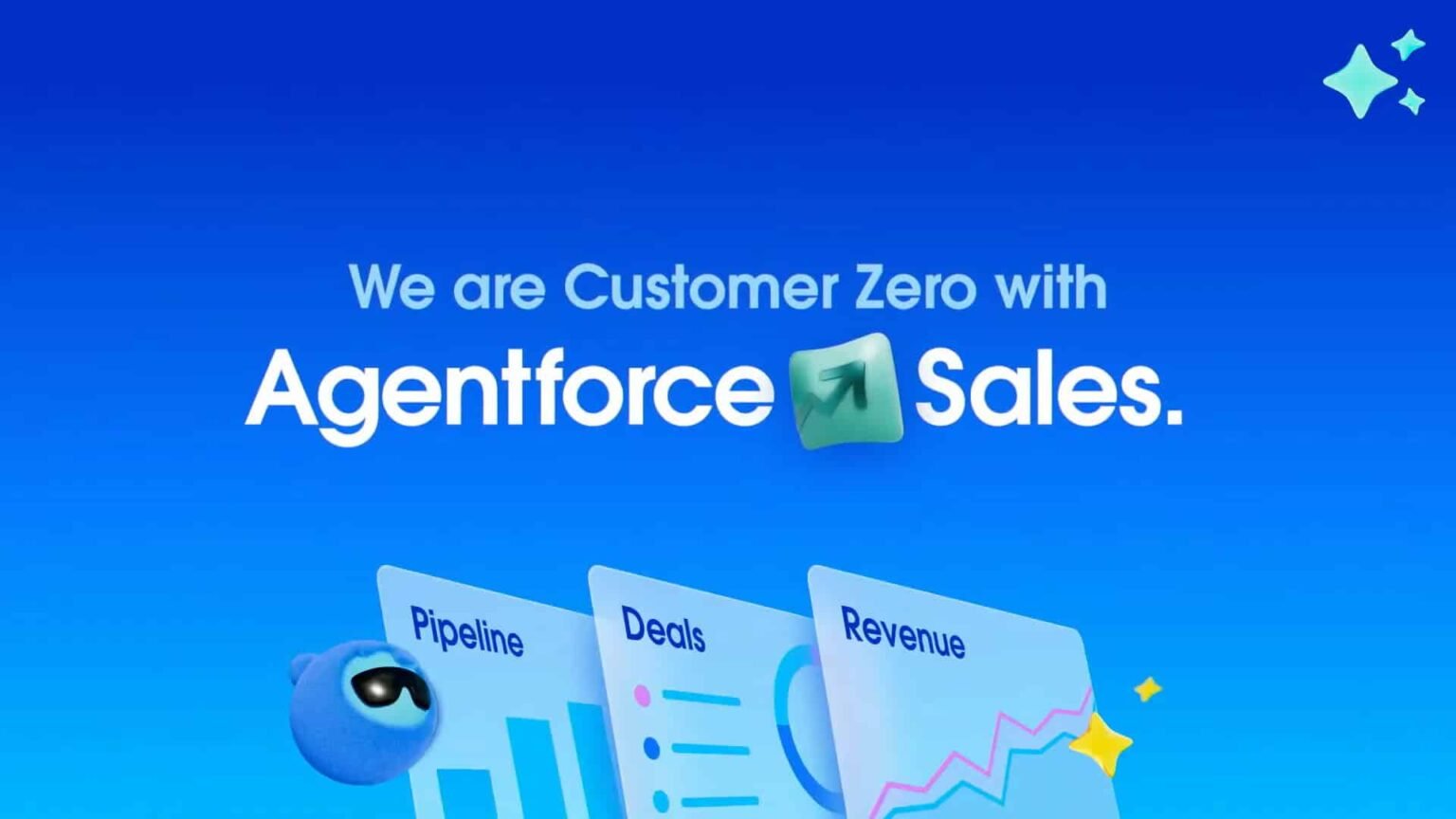
Salesforce is making a direct argument that autonomous AI agents, not copilots or workflow bots, are the future of enterprise sales, and it’s pricing that argument at $125 to $550 per user per month with Agentforce Sales. The platform embeds agents directly into Sales Cloud to handle lead qualification, pipeline management, and proposal generation around the clock without human hand-holding. Futurum Group’s 1H 2026 survey of 830 enterprise software decision-makers finds 79.3% already platform-oriented, but only 41% actively consolidating, which is the tension Salesforce is betting it can resolve in its favor.
What this means for your business
The sharpest question this raises isn’t whether agentic AI works in theory. It’s whether your current Salesforce contract renewal lands before or after independent ROI validation does. Enterprises sitting on Sales Cloud with upcoming renewal windows are being asked to pay a meaningful premium for a capability that, by Futurum’s own data, only 38.8% of buyers have seen deliver the ROI they expected from recent software purchases. That gap isn’t a footnote; it’s the entire adoption risk compressed into a single statistic.
Salesforce’s structural advantage here is real but fragile. Embedding agents natively into the CRM means the agents see deal history, contact data, and pipeline context that a bolted-on tool from a smaller vendor simply can’t match. That data depth is the honest differentiator, and competitors like Microsoft and SAP are still catching up on native CRM signal. The fragility is that Salesforce is asking enterprises to delegate actual revenue-generating interactions, not back-office tasks, to autonomous agents before the trust infrastructure for that delegation is established. When an AI agent mishandles a late-stage enterprise deal, the cost isn’t a delayed invoice; it’s a churned account.
The data point worth sitting with is that 63.3% of enterprises allocate 10% or less of their technology budget to AI initiatives, even as 44.2% list GenAI capabilities as a top future evaluation criterion. That’s a conviction gap, and it tells you most buyers are still in the testing posture, not the committing posture. If you’re a CRO evaluating Agentforce Sales, the decision this actually reframes isn’t whether to adopt agentic AI. It’s whether your organization has the governance layer, the audit trail, and the fallback escalation paths to make autonomous sales delegation defensible to your CEO when something goes wrong, because something will.
Concept deep-dive: Agentic AI
Agentic AI refers to software that doesn’t just answer questions or suggest next steps but takes multi-step actions autonomously on a user’s behalf, deciding what to do, doing it, and adapting based on results. Think of it as the difference between a GPS giving directions and a self-driving car executing the route. In a sales context, that means the system doesn’t flag a stale lead for a rep to follow up on; it drafts the outreach, sends it, logs the response, and updates the forecast without a human in the loop.
Based on reporting from Can Agentforce Sales Redefine AI Sales?, originally published 2026-03-20 03:00:00.