
Share with your CTO
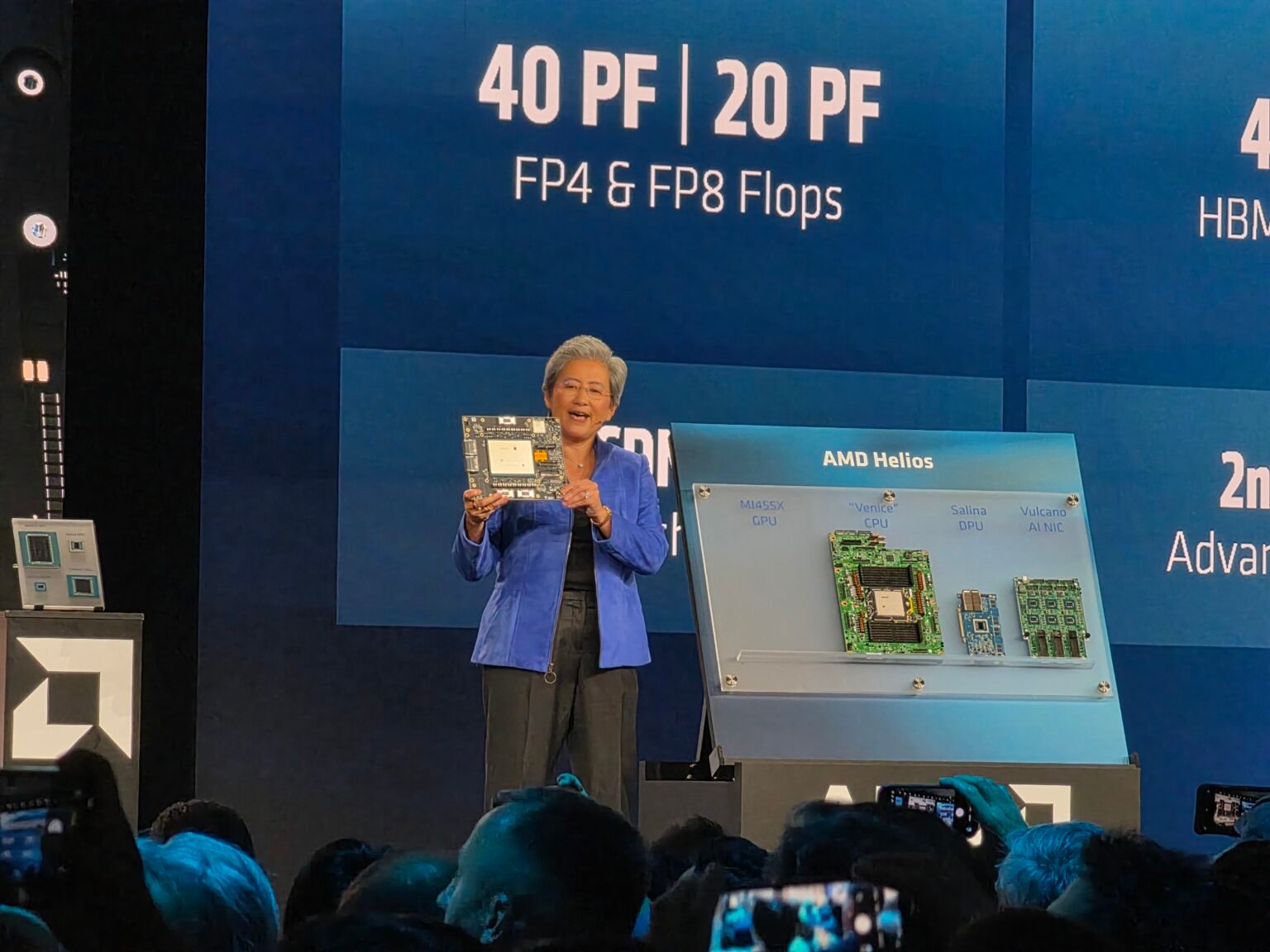
Embedded LLM is betting that the next AI cloud product isn’t raw GPU compute, it’s a governed execution environment where agents can actually run. At AMD’s Advancing AI 2026 conference, the company launched TokenVisor Spaces, pairing AMD EPYC CPU-based agent execution with AMD Instinct GPU inference under a policy and metering layer. The technical anchor is KV-cache reuse on NVMe storage, validated on MI355X hardware, delivering 3.31x lower warm-turn median latency versus the HBM baseline. Red Hat OpenShift provides the container layer; VAST Data and Tensormesh round out the storage and caching stack.
What this means for your business
The architectural question this announcement forces isn’t whether your organization will run agents, it’s whether your current infrastructure stack can govern them once you do. CTOs sitting on NVIDIA-heavy GPU fleets should read this less as an AMD pitch and more as a signal that the governance and metering layer above the GPU is becoming the differentiated product. If your AI infrastructure roadmap treats compute procurement and agent governance as separate conversations, that separation is about to cost you.
The KV-cache result deserves scrutiny before it drives a procurement call. The 3.31x latency improvement comes from a specific synthetic benchmark, 24 session families at concurrency two, with full cache retrievals and zero fallback I/O observed. Real agentic workloads are messier, cache miss rates vary, and NVMe throughput under contention behaves differently than a clean benchmark. But the directional claim holds regardless. Across 1.5 million Claude Code requests, SemiAnalysis found 95% of tokens were cache reads, slashing prompt costs by 84%. Once agents run for hours rather than single turns, the memory hierarchy, where context lives between turns, becomes the dominant cost and latency variable. That’s not a benchmark artifact, it’s a structural feature of long-horizon agentic work.
The company whose position this most threatens isn’t AMD’s primary GPU competitor. It’s any cloud provider currently selling GPU hours as the base unit of AI value. Embedded LLM is packaging what comes above the GPU, policy enforcement, audit trails, human approval workflows, persistent workspaces, into a product layer that cloud operators don’t currently offer. The CTO whose renewal decision this reframes is the one choosing between a hyperscaler’s raw compute and a managed agentic runtime. Those are no longer the same product category, and pricing them as if they were is the comparison a vendor will exploit the moment your next contract comes up.
Concept deep-dive: KV-cache
A KV-cache stores the intermediate computations an AI model produces while reading a long prompt, so subsequent turns of a conversation don’t reprocess text the model has already seen. Think of it as the model’s working memory between exchanges. Without it, every agent turn pays the full cost of re-reading the entire conversation history. As agents run longer and accumulate more context, cache hit rates determine economics as directly as GPU clock speed does, which is why where the cache lives (fast HBM memory versus slower but larger NVMe storage) is now a genuine infrastructure architecture decision.
Based on reporting from Agentic AI Runs Where Enterprise Software Runs: Embedded, originally published 2026-07-23 14:52:00.