
Share with your CTO
UOB is positioning itself as the connective tissue of Southeast Asia’s AI infrastructure build-out, arguing that regional banks are as important to the AI stack as the compute itself. Speaking at the ASEAN Conference 2026, UOB’s Edmund Leong framed the bank as a “superconnector” that mobilizes loans, bonds, and equity across borders for data centre projects spanning Malaysia, Indonesia, Vietnam, and Thailand. He pegged potential regional energy investment at US$150 billion over five years, and named chip shortages and power grid gaps as the two constraints that determine how fast that build-out actually moves.
What this means for your business
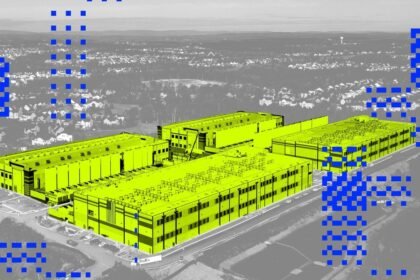
If your organization is evaluating data centre capacity in Southeast Asia, the rate-limiting factor right now is not willingness to spend, it’s power and silicon. Leong’s two-constraint framework maps cleanly to what hyperscaler procurement teams are already experiencing: sites in Johor are operational, but grid connections lag construction timelines, and GPU allocations remain tight enough that delivery dates slip. Whether your exposure is direct (you’re building or co-locating) or indirect (you depend on a cloud provider whose regional capacity is constrained), the supply picture touches your roadmap.
The “superconnector” framing deserves scrutiny. UOB, which sells cross-border financing to the very operators it’s describing, has an obvious interest in portraying regional banks as indispensable intermediaries rather than one funding option among several. The tilt shows up in the implicit suggestion that navigating multi-market capital flows requires a relationship bank, when in practice the largest hyperscalers and data centre REITs raise directly in global bond markets with no regional intermediary. The argument is strongest for mid-tier operators, the ones without investment-grade ratings or global investor relationships, and weakest as a general claim about how AI infrastructure gets financed.
AWS’s John Kain made the more durable point: organizations scaling AI successfully start from business outcomes, not from infrastructure capacity. That sequencing matters for budget defense. A CTO who locked in cloud commitments ahead of a clear use-case roadmap now owns a cost structure that’s hard to justify to the CFO when utilization is low. The leading indicator to watch is whether Southeast Asian governments accelerate renewable energy grid permitting in 2025 and 2026; that single variable will determine whether Leong’s US$150 billion estimate lands on a five-year or a ten-year timeline, and it will reprice every capacity contract currently under negotiation.
Based on reporting from AI infrastructure can lead South-east Asia’s next growth story: UOB, originally published 2026-08-05 19:00:00.