
Share with your CMO
Only 29% of technology leaders say their enterprise data meets the quality, accessibility, and security standards needed to scale generative AI, according to IBM Institute for Business Value. Adobe’s guidance on training data for custom AI models makes the case that creative and marketing teams cannot simply feed a brand’s existing asset library into a custom model and expect on-brand outputs. The argument turns on four dimensions, quality, quantity, preparation, and governance, and frames data readiness as a prerequisite for any custom generative AI initiative, not an afterthought.
What this means for your business
Marketing leaders sitting on large digital asset libraries may be closer to a custom AI model deployment than they think, or further, depending on a distinction that rarely shows up in vendor pitches. A digital asset management system is built to make finished creative findable and distributable. A training dataset has a different job: it teaches a model which visual patterns to reproduce. Brands that conflate the two will burn compute budget training models on outdated packaging, retired campaigns, and stock imagery with licensing terms that predate generative AI entirely.
The governance gap is the sharpest risk here. Adobe, writing with obvious interest in selling Firefly Custom Models into this workflow, still surfaces a genuinely underappreciated point: rights clearance for campaign distribution and rights clearance for AI model training are legally distinct, and most enterprise contracts were not written with the latter in mind. Stock agreements, agency-produced creative, talent releases, and licensed artwork all carry restrictions that teams are currently treating as a procurement footnote rather than a training blocker. The brands that discover this after training begins will face harder conversations than the ones auditing now.
The phased approach the piece recommends, starting with a curated high-confidence subset, training an initial model, then diagnosing output gaps, is the right instinct and also the one that reveals how thin most enterprise asset libraries actually are once quality and rights filters are applied. If your brand’s usable training corpus turns out to be a few hundred near-identical product shots, no amount of model sophistication fixes that. The honest budget question for 2025 is not what the model costs, it’s what it will cost to produce the training data the model actually needs.
Concept deep-dive: Custom model fine-tuning
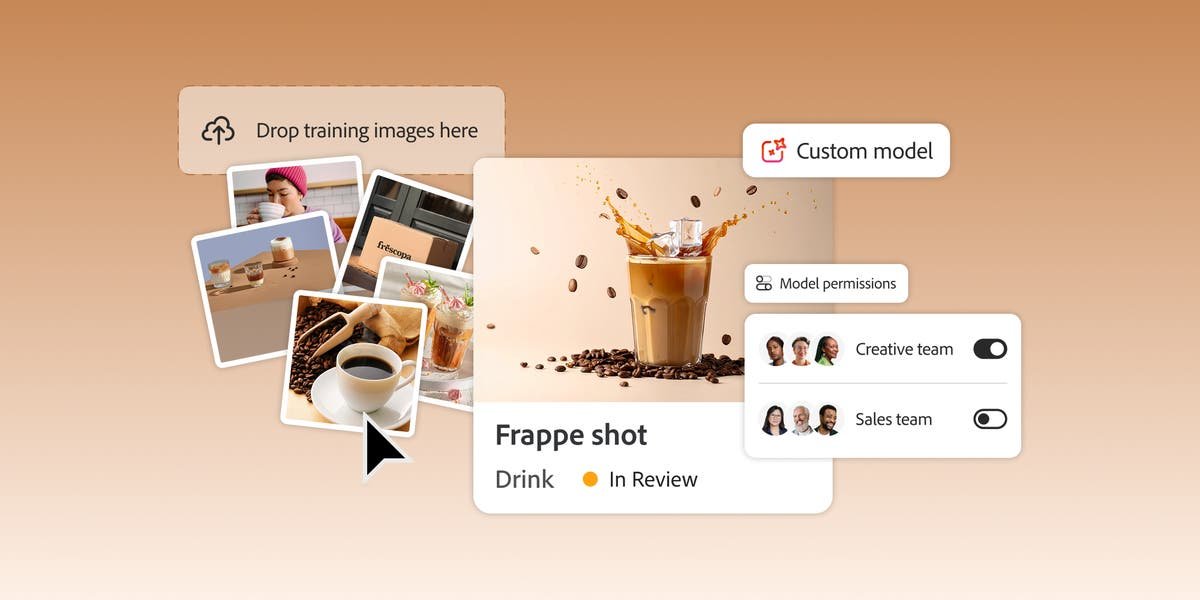
A foundation model, think of it as a generalist who has absorbed enormous amounts of visual and textual information, can generate plausible images but has no knowledge of your brand. Fine-tuning takes that generalist and runs additional training on a focused dataset of brand-approved assets, teaching it your specific color palette, product style, and visual conventions. The business payoff is faster creative production with fewer brand-compliance corrections, but only if the training data is tight enough to teach the right patterns rather than averaging across everything the brand has ever made.
Based on reporting from Is Your Enterprise Data Ready for AI Model Training?, originally published 2026-08-05 17:40:00.