
Share with your CIO
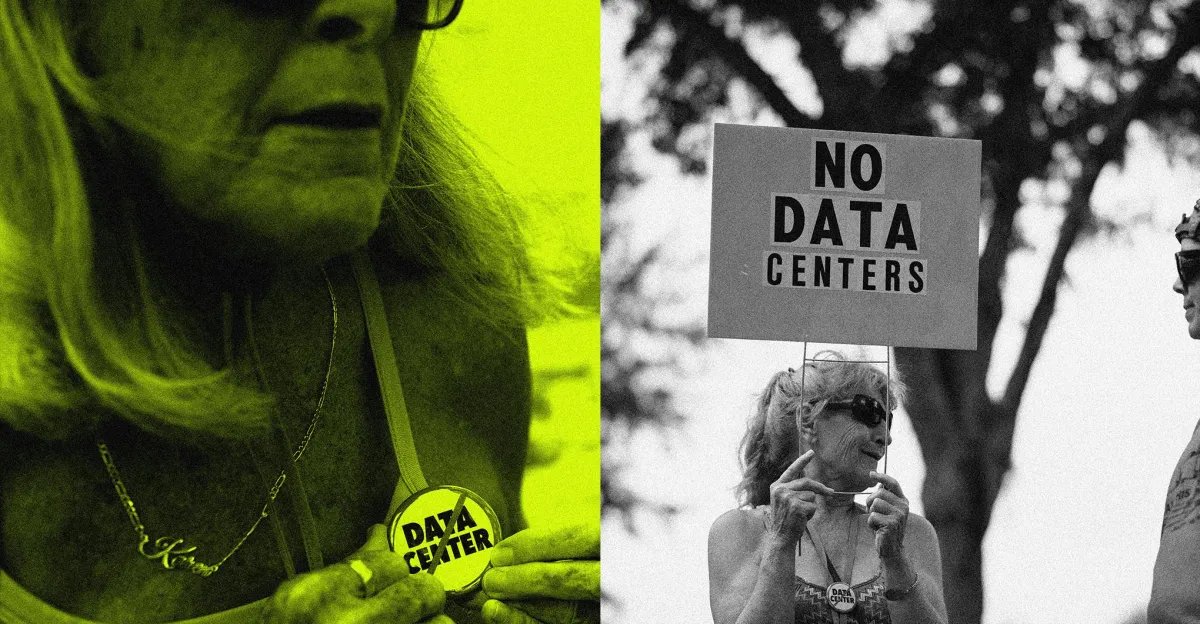
A bipartisan grassroots movement against data center construction is gaining real political weight, with Hernando County, Florida unanimously passing a yearlong moratorium on new builds. The Verge’s Gaby Del Valle reports that the backlash spans diehard Trump voters and progressive activists alike, united by groundwater fears, noise pollution, job promises that never materialize, and a broader hostility toward AI outputs flooding daily life. The Florida governor’s race is now a live test of whether anti-data-center sentiment can beat a Trump-endorsed frontrunner who took significant money from the industry.
What this means for your business
The companies most exposed here aren’t the hyperscalers defending their own campuses. They’re the enterprise technology buyers whose multi-year AI infrastructure commitments depend on a build-out that is running directly into a new form of local political resistance. If you signed capacity agreements with cloud providers or co-location operators in Sun Belt markets, the permitting timelines those agreements assumed are now optimistic. The relevant question isn’t whether your vendor gets blocked; it’s whether delivery slippage on GPU capacity or cooling infrastructure quietly reprices your roadmap.
What makes this movement harder to dismiss than standard NIMBY opposition is its structural similarity to the Tea Party’s early organizing: decentralized, locally actionable, and detached from the usual partisan machinery that enterprise government-affairs teams know how to navigate. A conservative woman in Hernando County figured out from a Facebook group that her county commission could pass a moratorium, attended a meeting, and it happened. The organizing playbook is spreading to Arizona, Georgia, and Utah. Tech companies that assumed state-level Republican support would insulate their projects are discovering that the relevant vote is at the county commission, not the statehouse.
The deeper problem is that AI hasn’t produced a visible public benefit that counterweights the visible public costs. Factories make things people can point to; data centers make noise, draw water, and enrich people already wealthy enough to be resented. Until AI products generate the kind of broad consumer affection that made broadband build-outs politically untouchable, every new hyperscale facility is a target. CIOs pushing aggressive infrastructure expansion plans should track whether the Florida governor’s primary produces an upset, because a Trump-endorsed candidate losing on this issue specifically would accelerate moratorium legislation across every state where AI infrastructure is in the permitting queue.
Concept deep-dive: Hyperscale data center
A hyperscale data center is a facility typically exceeding 100 megawatts of power capacity, purpose-built to run AI training workloads or massive cloud services at a scale no ordinary corporate server room approaches. Think of it as the difference between a neighborhood power substation and a regional generating plant. The distinction matters politically because local residents and even some legislators explicitly accept smaller legacy facilities while targeting hyperscale projects, which means “data center” opposition is more precise than it first appears.
Based on reporting from Why everyone is turning on data centers, originally published 2026-08-06 10:00:00.