

Share with your CIO
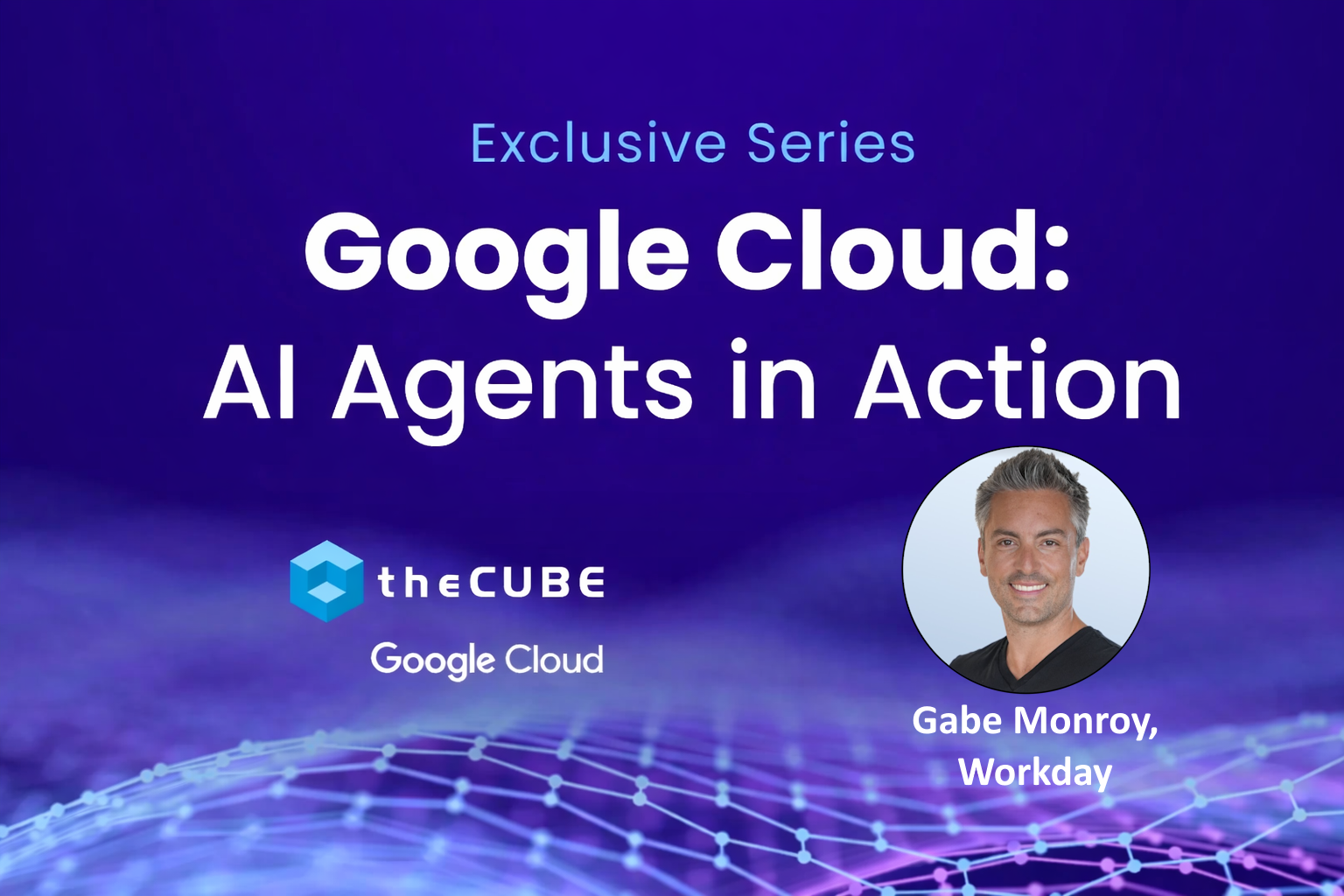
Workday is betting that the next generation of enterprise resource planning looks nothing like the current one. Speaking at the Google Cloud AI Agents in Action Series, Workday CTO Gabe Monroy demonstrated how AI agents embedded in Gmail can complete performance reviews and employee onboarding by pulling live data from Workday’s backend, without requiring users to leave Google Workspace. The partnership surfaces a specific architectural claim worth taking seriously: that enterprise AI agents only behave safely when they run on top of a system of record, not alongside one.
What this means for your business
The story splits cleanly along one fault line: whether your organization’s AI agent strategy is anchored to a system of record or floating above it. Monroy’s live demonstration of a “lawless” agent completing an onboarding request without triggering compensation limits or background check workflows was pointed. Most DIY agent builds today look exactly like that first demo, goal-seeking in a vacuum, and the gap only becomes visible after something goes wrong in payroll, hiring, or a compliance audit.
The architectural argument Workday is making, that probabilistic AI reasoning needs deterministic guardrails baked into a platform’s runtime rather than bolted on afterward, is genuinely correct and strategically self-serving in equal measure. The correctness part: context management, permissions, and policy enforcement are unsolved problems every internal AI team is reinventing independently, badly and slowly. The self-serving part: Workday, which has obvious incentive to keep customers inside its platform rather than migrating workflows to custom-built agents, frames “running on the system of record” as a technical necessity when it is also a lock-in mechanism. Both things are true. The question for a CIO isn’t whether Workday is right about the risk; they are. The question is whether Workday’s platform is the only way to solve it, or just the fastest one available today.
The Google Workspace integration is the sharper competitive move than it first appears. Workday is not competing with Gmail; it is colonizing the surface where employees actually spend their day and making Workday’s data layer invisible infrastructure underneath. Any vendor in your stack that cannot extend into the productivity layer your employees already use is about to feel friction. If your organization is mid-cycle on an HCM or ERP renewal, the evaluation criterion that matters most is not feature parity but where each vendor’s agents actually run, and whether that runtime has audit trails your CISO can sign off on.
Concept deep-dive: Deterministic guardrails
A deterministic system produces the same output every time given the same input, the way a payroll rule that caps a bonus at 20% always enforces that cap. AI models are probabilistic, meaning they reason toward likely answers rather than guaranteed ones. “Deterministic guardrails” means wrapping an AI agent’s actions inside hard-coded policy rules drawn from an authoritative data source, so the agent can reason flexibly but cannot act outside defined business constraints. Without them, an agent optimizing for task completion will route around policies it was never told existed.
Based on reporting from Workday reimagines workflows with enterprise AI agents, originally published 2026-08-31 13:11:00.