

Share with your CTO
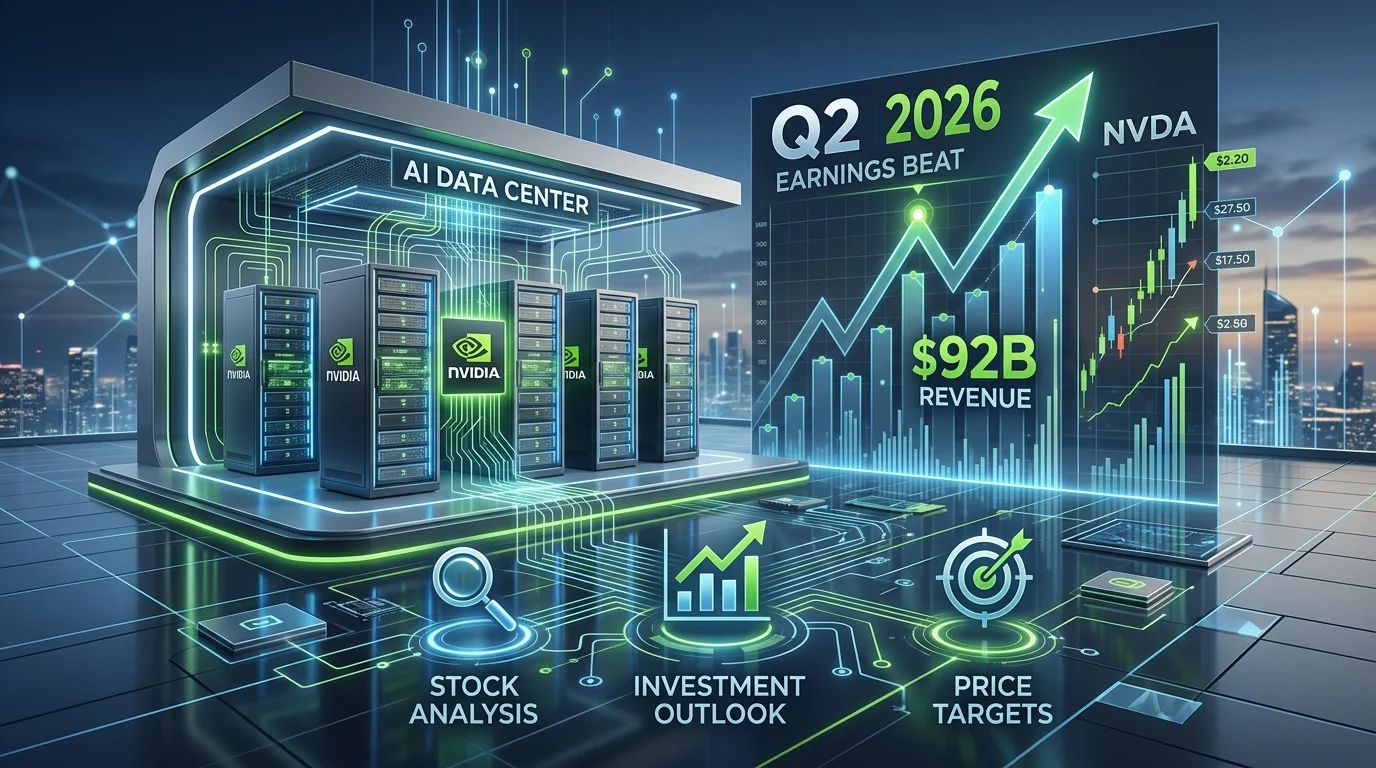
Nvidia’s fiscal Q2 2026 results have, for the fifteenth consecutive quarter, beaten analyst forecasts, with revenue expectations around $92 billion representing roughly 95% year-over-year growth. The data center segment now accounts for approximately 87% of total revenue, driven by hyperscaler demand from Amazon, Google, Microsoft, and Meta. The Blackwell architecture is supply-constrained, not demand-constrained, which is a meaningful distinction. Nvidia holds an estimated 75-81% share of the AI accelerator market, with AMD a distant second at 5-7%.
What this means for your business
The number that should stop CTOs mid-scroll isn’t the revenue figure, it’s the supply constraint. When Blackwell availability limits purchases rather than customer appetite, the organizations that locked in procurement relationships early are pulling ahead on compute capacity, and the ones still deciding whether to standardize on Nvidia’s CUDA ecosystem, the proprietary software layer that makes switching costs punishing, are falling behind on a curve that doesn’t pause while they deliberate.
AMD’s 5-7% share is less a competitive threat than a negotiating tool. Hyperscalers aren’t deploying AMD at scale because it matches Nvidia’s performance; they’re qualifying it to avoid being completely captive in a supply-constrained market. For enterprise CTOs who aren’t hyperscalers, that same leverage mostly isn’t available. The custom silicon plays at Google, Amazon, and Microsoft are designed around their own inference workloads, not yours. The practical competitive landscape for enterprise AI infrastructure is narrower than the headline market-share numbers suggest.
The geopolitical exposure buried in the risk section deserves more weight than it typically gets in earnings coverage. Export controls on China already cost Nvidia real revenue, and any expansion would tighten a supply chain that’s already stretched. If your AI infrastructure roadmap runs through 2027 and beyond, the variable isn’t whether Nvidia maintains its technology lead, it almost certainly will. The variable is whether the chips you need are available when your deployment timeline demands them. That’s the procurement bet worth stress-testing now, not after Blackwell Ultra allocations are spoken for.
Concept deep-dive: CUDA ecosystem lock-in
CUDA is Nvidia’s programming platform, the software layer developers use to write code that runs on Nvidia GPUs. Because the AI research and engineering community spent roughly fifteen years building tools, libraries, and workflows on top of CUDA, switching to a competitor’s hardware means rewriting or revalidating that entire stack. It’s less like changing a vendor and more like changing the operating system your entire development culture runs on. That accumulated switching cost is why hardware performance gaps alone don’t erode Nvidia’s position.
Based on reporting from Nvidia Q2 2026 Earnings: Record-Breaking Results Signal Continued AI Dominance, originally published 2026-08-31 00:24:00.