

Share with your CTO
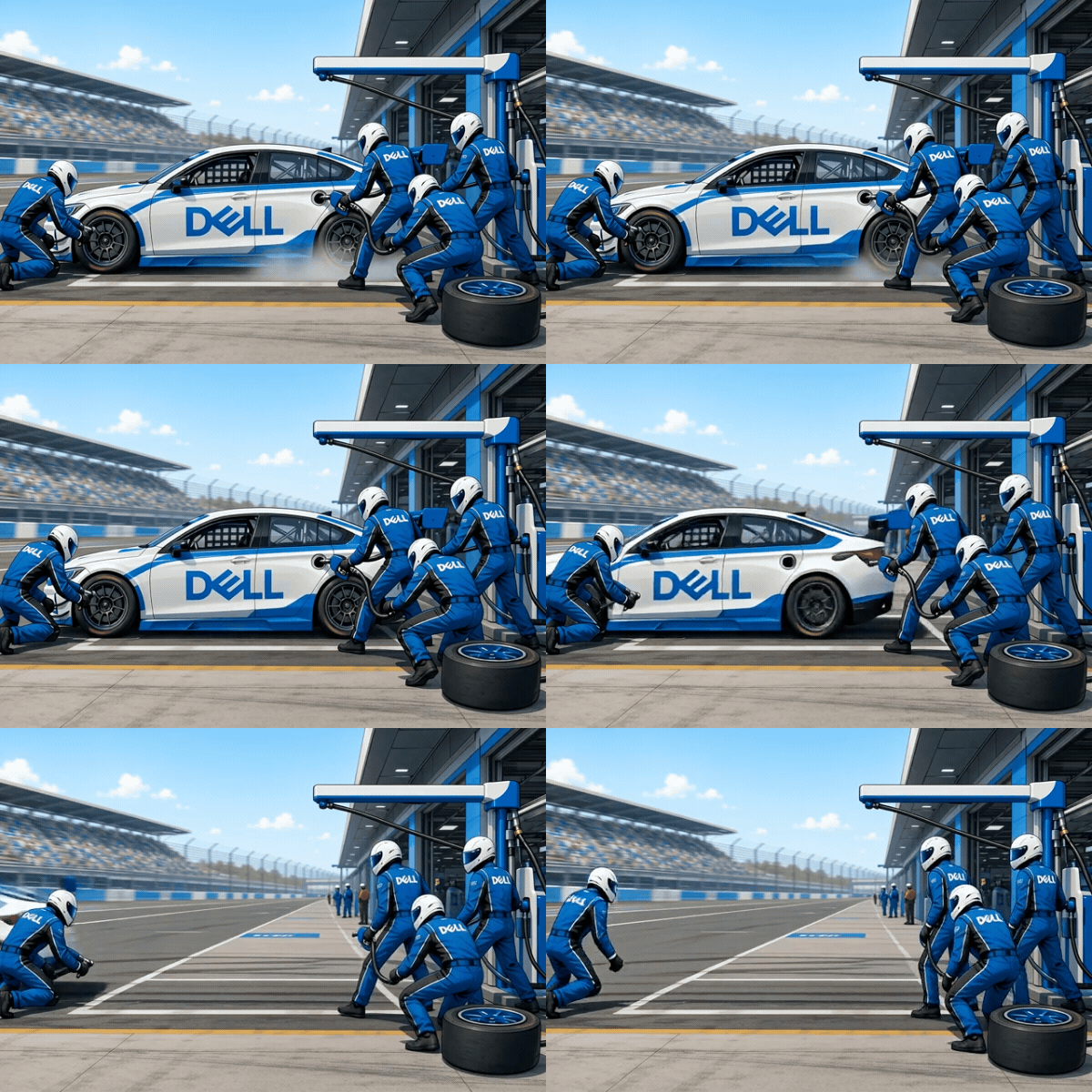
Dell Technologies is betting that agentic AI, software systems that can plan and execute multi-step tasks with minimal human input, is about to drive a second infrastructure wave on top of the generative AI buildout already underway. The company posted record fiscal Q2 2027 results, with revenue rising 58% year over year to $47 billion, as demand for AI servers, storage, and networking continues to accelerate well past what most analysts projected even a year ago.
What this means for your business
A 58% revenue jump at Dell is not a brand story, it is a demand signal. The companies driving that number are buying infrastructure now, which means if your organization is still in proof-of-concept mode on AI, you are already competing against peers who have committed capital and are accumulating operational experience. The split that matters is not large versus small enterprise, it is who has moved from experimentation to production workloads, because that gap compounds faster than most refresh cycles allow you to close.
Agentic AI changes the infrastructure calculus in a specific way. A generative AI deployment typically involves a user prompting a model and receiving a response, a relatively contained compute event. An agentic system runs continuously, calls external tools and data sources, checks its own outputs, and retries failed steps, all without a human in the loop for each action. That operational pattern demands higher sustained compute throughput, lower-latency storage, and more resilient networking than a standard inference workload. Dell’s results suggest enterprise buyers have internalized this, and are sizing infrastructure for the agent tier, not just the model tier.
The number worth watching is not the headline revenue figure but whether Dell’s infrastructure services attach rate is climbing alongside hardware. If customers are buying servers and also buying Dell’s managed services and software layer, that signals they lack internal capacity to operate the infrastructure they are purchasing, which is a meaningful indicator of where enterprise AI skill gaps actually sit. CTOs who assume their teams can absorb agentic workloads on top of existing responsibilities, without either new tooling or new headcount, are the ones most likely to find themselves with expensive hardware running at a fraction of its potential by mid-2027.
Based on reporting from Agentic AI Adds Fuel to Dell’s Infrastructure Growth, originally published 2026-09-02 12:45:00.