

Share with your CHRO
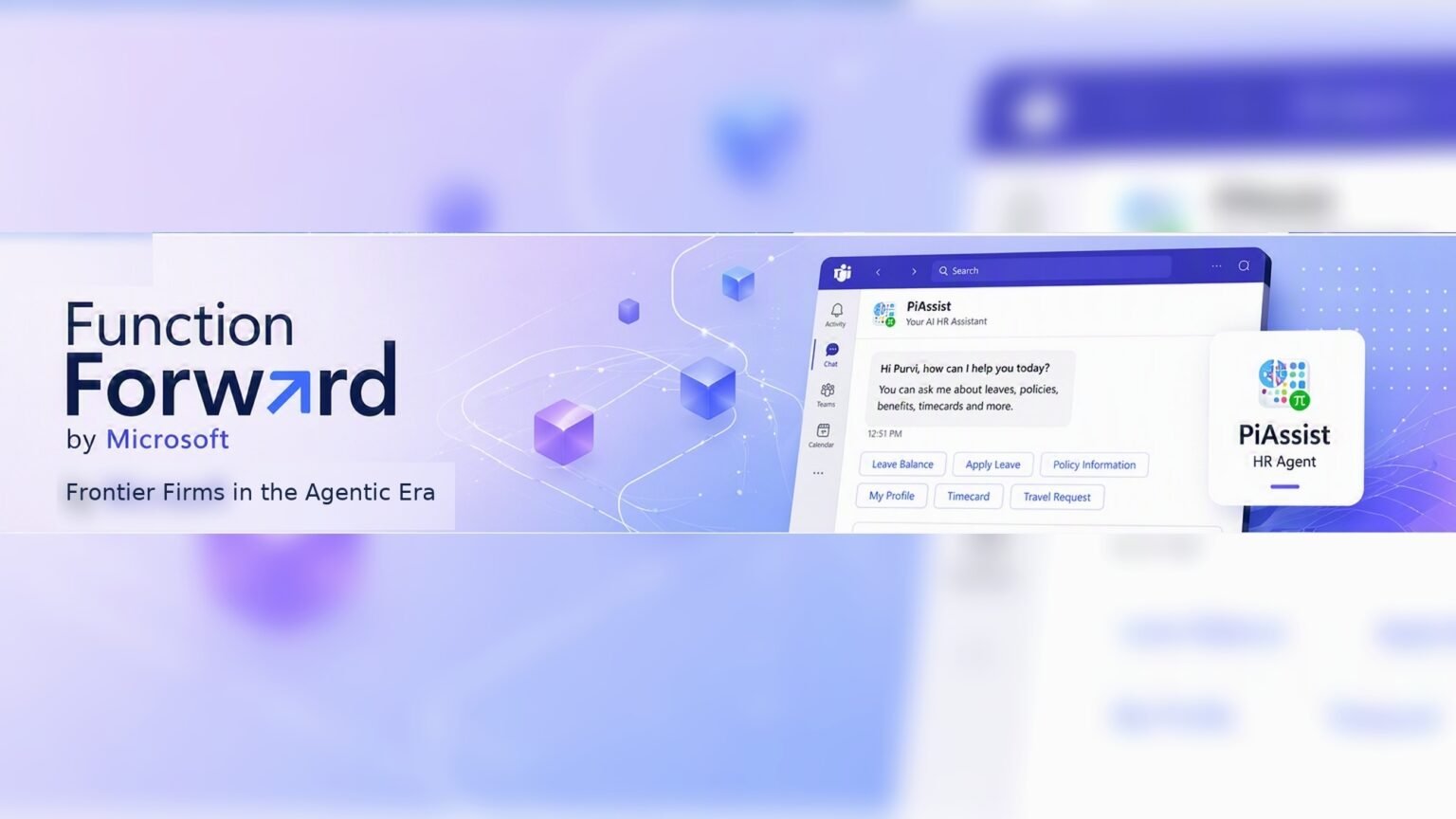
Persistent Systems built PiAssist, its AI-powered HR assistant, on Azure OpenAI, Microsoft Teams, and Semantic Kernel to replace the traditional HR helpdesk model entirely. Running inside tools employees already use, it handles leave balances, timesheet reminders, Mediclaim queries, and policy questions in under four seconds. About 8,000 employees use it actively, with strong repeat usage across routine tasks. It operates under an ISO 42001-certified AI governance framework, meaning every transaction is logged and human approval remains mandatory for sensitive decisions.
What this means for your business
The story that matters here isn’t the chatbot. It’s the architectural choice to treat the HR helpdesk as a process that can be replaced wholesale rather than augmented. Most enterprise HR AI deployments bolt a layer onto the existing ticket queue; Persistent eliminated the queue for roughly two-thirds of query volume. If your HR team is still triaging repetitive questions that an AI could resolve instantly, the question isn’t whether to pilot something, it’s whether your current vendor relationship allows you to move that fast.
The governance structure is worth examining on its own terms. ISO 42001 is the international standard for AI management systems, roughly analogous to ISO 27001 for information security, and Persistent’s choice to certify against it signals something deliberate about enterprise trust-building. Published audit trails across the ERP, API gateway, and web server aren’t just compliance theater; they’re the mechanism that lets HR leaders defend every AI-touched transaction to employees, regulators, and auditors. Any CHRO evaluating AI vendors who can’t answer questions about audit logging at that level of specificity is buying a governance liability alongside the productivity gain.
The deployment pattern here, embedding the agent inside Teams and Outlook rather than building a separate app, is becoming a meaningful differentiator in HR AI outcomes. Adoption data consistently shows that tools requiring context-switching get abandoned; tools that live where work happens don’t. If your organization is already deep in the Microsoft ecosystem, this model is harder to ignore at your next renewal. If you’re not, the relevant question is whether your existing productivity suite can support the same embedded model, and what it would cost to find out.
Based on reporting from From HR tickets to intelligent assistance: How Persistent’s PiAssist works with Microsoft AI, originally published 2026-08-12 03:00:00.