

Share with your CTO
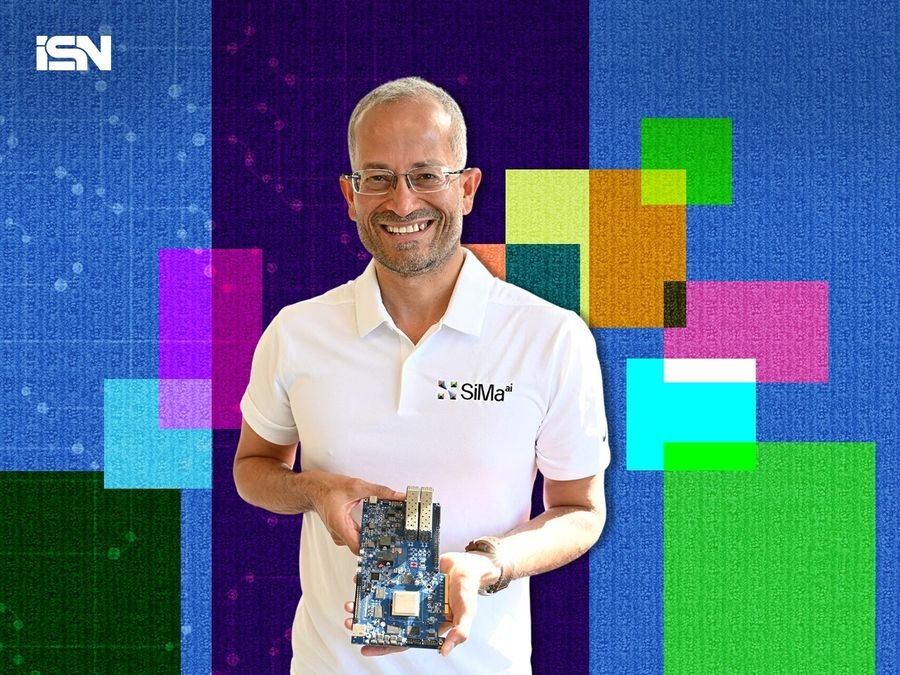
SiMa.ai is betting that the next decade of AI compute happens at the physical edge, not in the cloud, and it just raised $150 million at a $1.45 billion valuation to prove it. The Series C round, co-led by Fidelity and Amplify with participation from Dell Technologies Capital and others, brings total funding to $500 million. The capital goes toward scaling its agentic software environment and building a third-generation chip targeting 1,000 dense TOPS, a 20x jump from its current Gen 2 platform, with hardware planned for the first half of 2028.
What this means for your business
The question this round forces isn’t whether physical AI is real. It’s whether the GPU-centric infrastructure your team is already standardizing on will still be the right call when your autonomous systems roadmap hits the edge. CTOs whose organizations are building for drones, robotics, ADAS, or industrial automation are the ones this directly touches. Those with purely cloud-bound AI workloads can watch from a distance, for now.
SiMa.ai’s core argument is an architecture one, and it’s worth taking seriously. GPUs are power-hungry, general-purpose chips designed to train and run large models in data centers. Deploying that same compute paradigm inside a drone or a humanoid robot is physically and economically impractical. Purpose-built edge silicon, where the chip is co-designed with the software stack from the ground up, is a legitimate technical response to that constraint. The 1,000 TOPS target puts Gen 3 in serious contention for workloads that today require stitching together multiple chips with all the integration pain that entails.
The more consequential signal here is the investor mix. AllianceBernstein, Baron Capital, and J.P. Morgan joining alongside the State of Michigan pension capital suggests this round is being priced as a pre-IPO institutional accumulation play, not a venture bet on an unproven thesis. That changes the competitive dynamic. SiMa.ai isn’t just racing to ship silicon; it’s racing to lock in design wins with automotive and robotics OEMs before Qualcomm, Mobileye, and Nvidia’s Jetson line can close the software-ease gap that SiMa.ai currently owns. I’d revisit this assessment if Gen 3 slips past mid-2028 without a named production customer in automotive or humanoids.
Concept deep-dive: TOPS (Tera Operations Per Second)
TOPS measures how many arithmetic operations an AI chip can perform every second, where one TOPS equals one trillion operations. Think of it as the chip’s throughput rating for the kind of multiply-and-add math that neural networks run on constantly. A higher TOPS number means the chip can run more complex AI models faster without shipping results to a remote server. For edge devices that must react in milliseconds, that local processing ceiling is often the binding constraint on what the system can actually do.
Based on reporting from Physical AI startup SiMa.ai raises $150 million in Series C funding at $1.45 billion valuation, originally published 2026-09-29 05:39:00.