
Share with your CIO
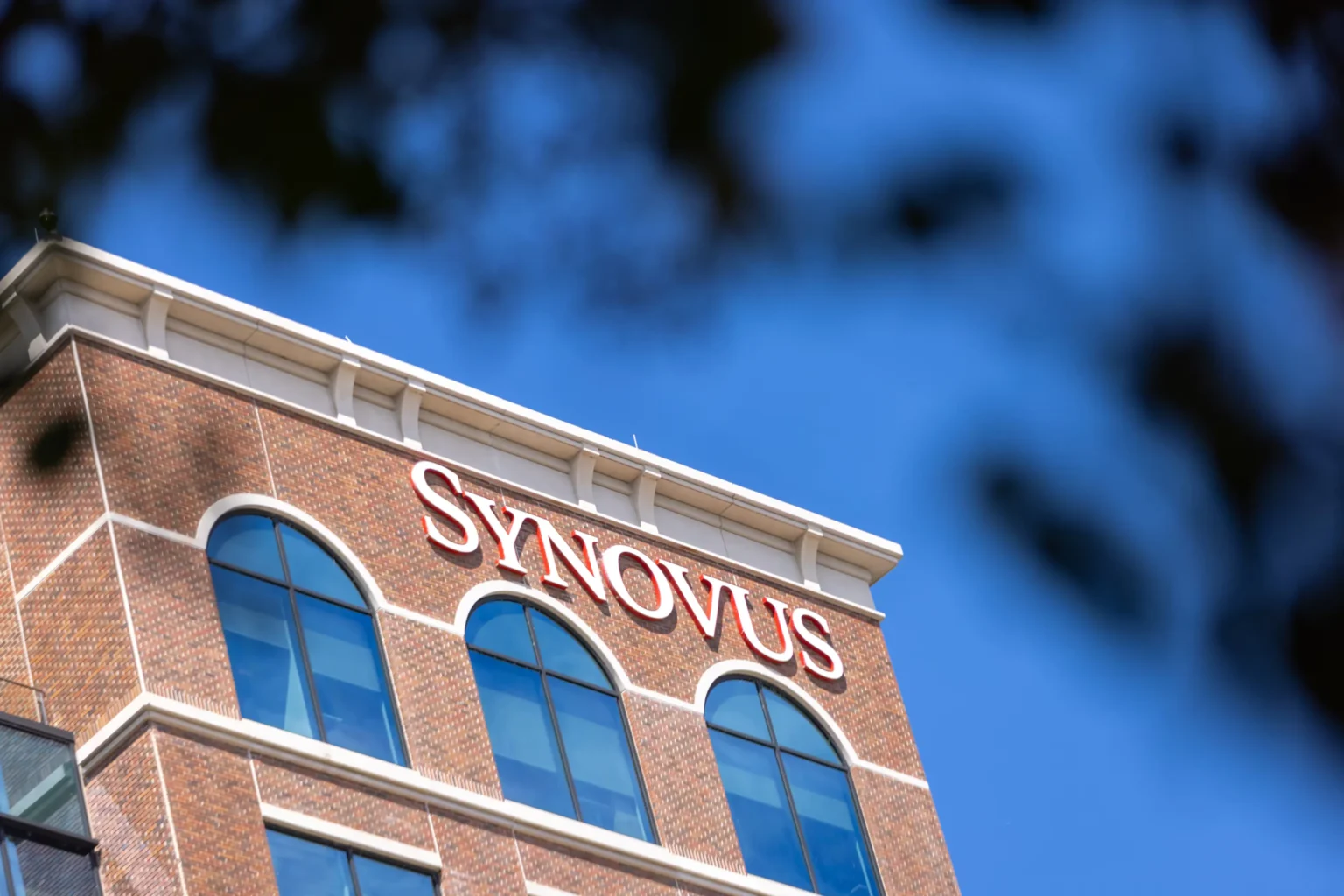
Synovus is hiring an in-house agentic AI engineer while absorbing Pinnacle Financial Partners in a merger that created a $117 billion regional bank. The hire, posted by enterprise architect Vincent Clover, targets someone who can build production-grade agent systems with orchestration frameworks and retrieval-augmented generation, the technique of grounding AI answers in a bank’s own documents and data. Systems consolidation under the Pinnacle brand is scheduled for early 2027, meaning any agent built now runs on infrastructure that will change within months.
What this means for your business
The build-versus-buy calculus in banking AI is splitting along a fault line that this hire exposes cleanly. Banks that believe workflow knowledge is proprietary, that the judgment embedded in a lending decision or a KYC check can’t be replicated by a vendor’s generic agent, are choosing to own the engineering. Banks on the other side are buying Fiserv’s agentOS or signing deals like Goldman’s with Anthropic. If your institution has already committed to a platform vendor for agent infrastructure, this hire is not your story. If you’re still deciding, Synovus is betting that insourcing creates durable differentiation rather than just cost.
The job description problem here is more than an HR footnote. Clover is recruiting for a role that commands roughly $177,000 at market rate for agentic AI engineers, according to Draup data, but the formal posting reads like an IT operations position, complete with incident runbooks and a note about lifting 10 pounds. That gap typically means the pay band follows the written description, not the LinkedIn pitch. Lloyds alone is targeting 300 agentic AI hires in 2026, and every major money-center bank is fishing the same shallow pool. A regional bank mid-merger that underpays on paper will lose candidates before the first screen.
There is a regulatory wrinkle that sharpens the in-house bet in a specific way. The Fed, FDIC, and OCC updated model risk guidance this April under SR 26-2, but explicitly carved out generative and agentic AI as outside the framework’s scope. Pinnacle, well above the $30 billion threshold the guidance targets, is therefore building agents in a compliance vacuum, writing its own model-risk rules as it goes. That reality, not competitive ambition, is probably what governance skills outnumbering model-building skills two to one in bank job ads reflects. If your AI roadmap includes agentic systems and you don’t have a model-risk owner named for them, SR 26-2’s silence is your problem, not your cover.
The leading indicator worth watching is whether this Columbus hire becomes a team or stays a single position. Pinnacle promised to maintain a Columbus presence post-merger, and an AI engineering function there would be the concrete form of that commitment. A lone engineer asked to build agents on Synovus systems that convert in under 18 months is likely to spend most of that time on migration support, not agent development. A team of three or more signals genuine intent. I’d revise the build-side case significantly if the next 12 months show no follow-on hires and the agent work migrates entirely to Pinnacle’s vendor stack after conversion.
Concept deep-dive: Agentic RAG
Retrieval-augmented generation, or RAG, grounds an AI model’s answers in a specific document set rather than relying on training data alone, think of it as giving the model a searchable filing cabinet instead of asking it to remember everything. Agentic RAG takes that further by letting the model decide which documents to retrieve, in what order, and whether to loop back for more information mid-task. In banking, that loop is what enables an agent to move through a multi-step loan review rather than answering a single question.
Based on reporting from Synovus Is Building Its Own AI Agents in the Middle of a $117 Billion Merger, originally published 2026-10-24 14:15:00.