

Share with your CTO
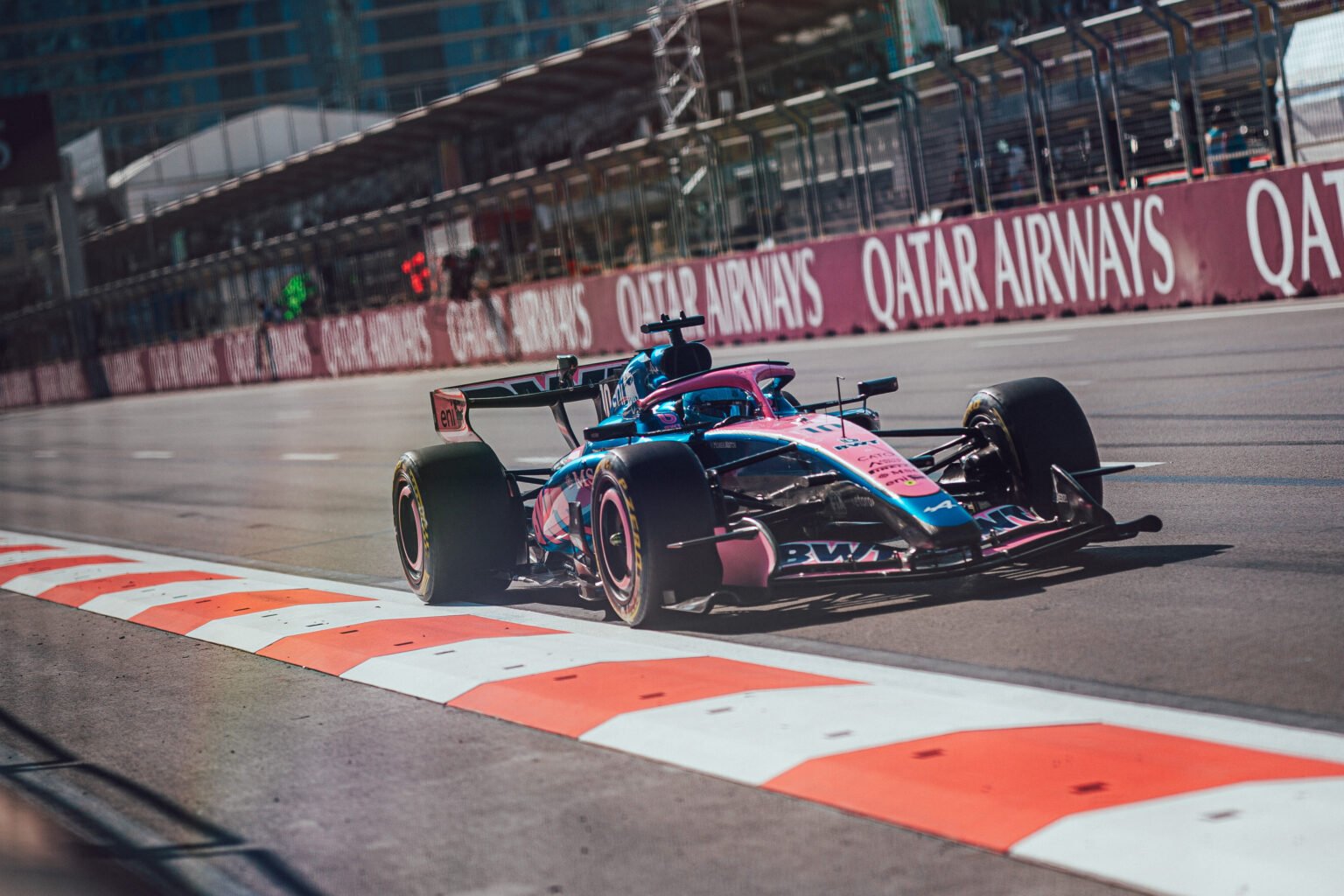
Alpine F1 is betting that AI-assisted engineering can compress design iteration cycles that previously consumed expert weeks into days. The team signed a multi-year deal with Apex Ultra’s “Engineering Superintelligence” platform, integrating it into existing Enstone workflows to help engineers evaluate more design options, validate simulation against track data, and assess manufacturability. Alpine claims early case studies cut specific complex workflows from over two weeks to two days, though the team has not published methodology or scope data to confirm how representative that result is across a full F1 development program.
What this means for your business
The pattern here is not motorsport-specific. Any engineering-intensive organization, aerospace, automotive OEMs, industrial hardware, medical devices, faces the same bottleneck: expert review cycles that throttle how many design variants actually get evaluated. When AI compresses that loop from weeks to days, you don’t just go faster. You explore design space that was previously uneconomical to touch. That is the actual competitive gain, not automation of existing work but expansion of the work that was never done.
Alpine’s framing that engineers “retain the final decision” is politically necessary but analytically incomplete. The real organizational shift happens upstream, in which options ever reach human review. If the AI filters and ranks design candidates before any expert sees them, the system is already making consequential choices. CTOs deploying similar tools in product engineering need to instrument that filtering layer explicitly, because the ideas that never surface to your engineers are invisible failures, and you won’t see them in your output metrics.
The signal worth watching: Alpine still has to demonstrate that faster iteration produces parts that survive race conditions and close ground on Red Bull and McLaren, both of which run sophisticated simulation programs of their own. Speed of iteration is an input, not an outcome. If faster cycles produce more promising-looking parts that underperform on track, the workflow compression is a local optimization that masks a deeper modeling fidelity problem. That dynamic runs in enterprise engineering programs too.
Concept deep-dive: Manufacturability analysis in AI design loops
Manufacturability analysis checks whether a designed part can actually be built given real-world constraints: material properties, tooling limits, tolerances, and production cost. It exists because simulation environments have no physical constraints, so they routinely produce optimal shapes that cannot be machined or cast at scale. Think of it as the gap between a perfect blueprint and a factory floor. When AI integrates this check earlier in the design loop rather than at final review, it eliminates entire classes of rework and keeps iteration cycles from producing ideas that look good in software but fail in production.
Based on reporting from Alpine brings AI engineering partner into Enstone development work, originally published 2026-10-01 11:12:00.