
Share with your CTO
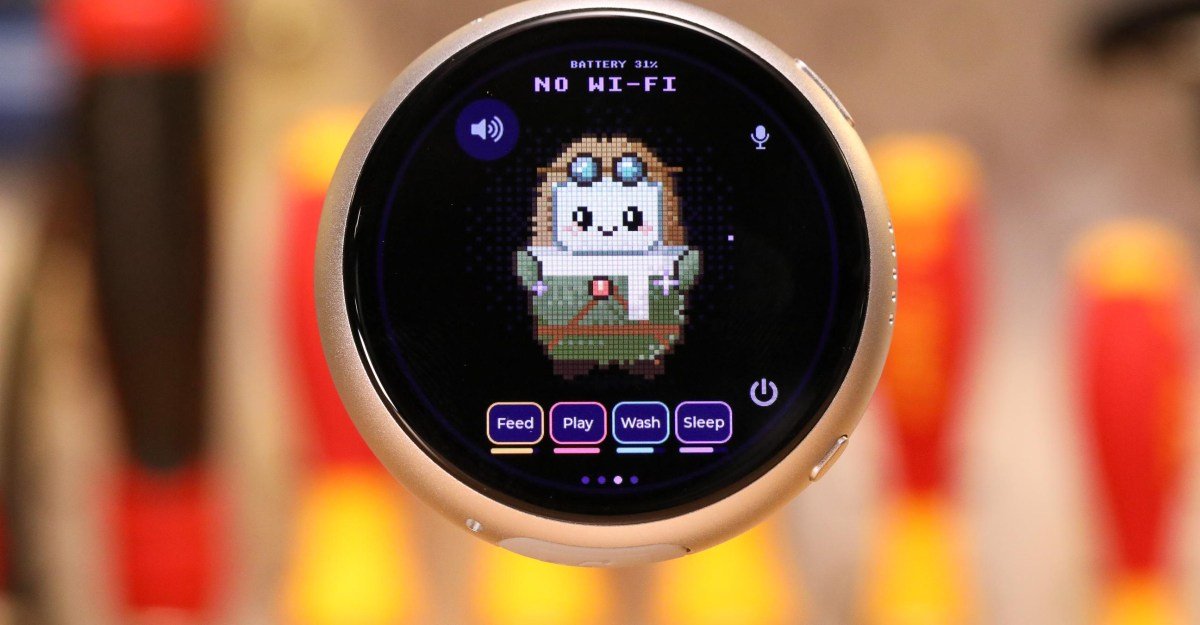
A non-coder at The Verge built a functional Meta Muse AI pendant for $50 using a Waveshare ESP32-S3 microcontroller, Claude Code as the programming agent, and Meta’s own open-source Muse Gadget SDK. The result talks to Meta’s AI cloud, displays custom avatars, acts as a remote camera shutter, and reads responses aloud via ElevenLabs. Meta itself recommends the Waveshare hardware for third-party Muse device builders. The key finding: Claude handled every firmware modification on request, with no coding knowledge required from the human directing it. The full build diary is a live demo of what agentic coding tools can now hand to people who have never written a line of code.
What this means for your business
The relevant audience here isn’t hobbyists. It’s every technology leader who still mentally files “custom embedded firmware” under “requires a specialist.” What this experiment demonstrates is that the specialist bottleneck is collapsing faster than most engineering roadmaps have priced in. If a gadgets journalist with zero coding experience can instruct Claude to add Bluetooth preview, fix camera orientation, build a Tamagotchi game loop, and wire in a third-party voice API across several sessions, the friction protecting your in-house embedded and firmware teams from scope creep just dropped significantly.
The more precise signal is about the nature of the remaining friction. The Verge’s build stalled on Meta’s server latency, a security posture concern real enough that the author put the device on guest Wi-Fi after Meta AI leaked a reviewer’s home address. Those aren’t problems Claude Code solved or can solve. They are platform-layer risks: the AI cloud the device phones home to, the data it surfaces, the network it sits on. For CTOs evaluating any AI hardware ecosystem, whether Meta’s or a competitor’s, the build-versus-buy calculus on the device itself is now almost trivially solved. The unresolved question is whether you trust the cloud endpoint the device depends on, and that’s a procurement and security architecture conversation, not an engineering one.
Vibe coding, where a non-programmer describes desired behavior in plain language and an AI agent writes, tests, and flashes the code, is about to become a standard capability expectation rather than a party trick. The leading indicator to watch isn’t whether your developers use it. It’s whether your product managers, operations leads, and line-of-business owners start requesting it directly, bypassing engineering queues entirely. When that happens at scale, the engineering org’s value shifts from execution to judgment: deciding which AI-generated code is safe to ship, not whether to write it.
Concept deep-dive: Vibe coding
Vibe coding describes the practice of directing an AI coding agent through plain-language requests rather than writing code directly. Think of it as the difference between telling a contractor what room you want and drawing the blueprints yourself. The agent handles syntax, debugging, and iteration; the human handles intent and review. The business consequence is that the barrier to custom software drops to whoever can articulate a clear requirement, which is a much larger population than whoever can write C++ for a microcontroller.
Based on reporting from We have Muse Charm at home., originally published 2026-10-31 12:05:00.