
Share with your CISO
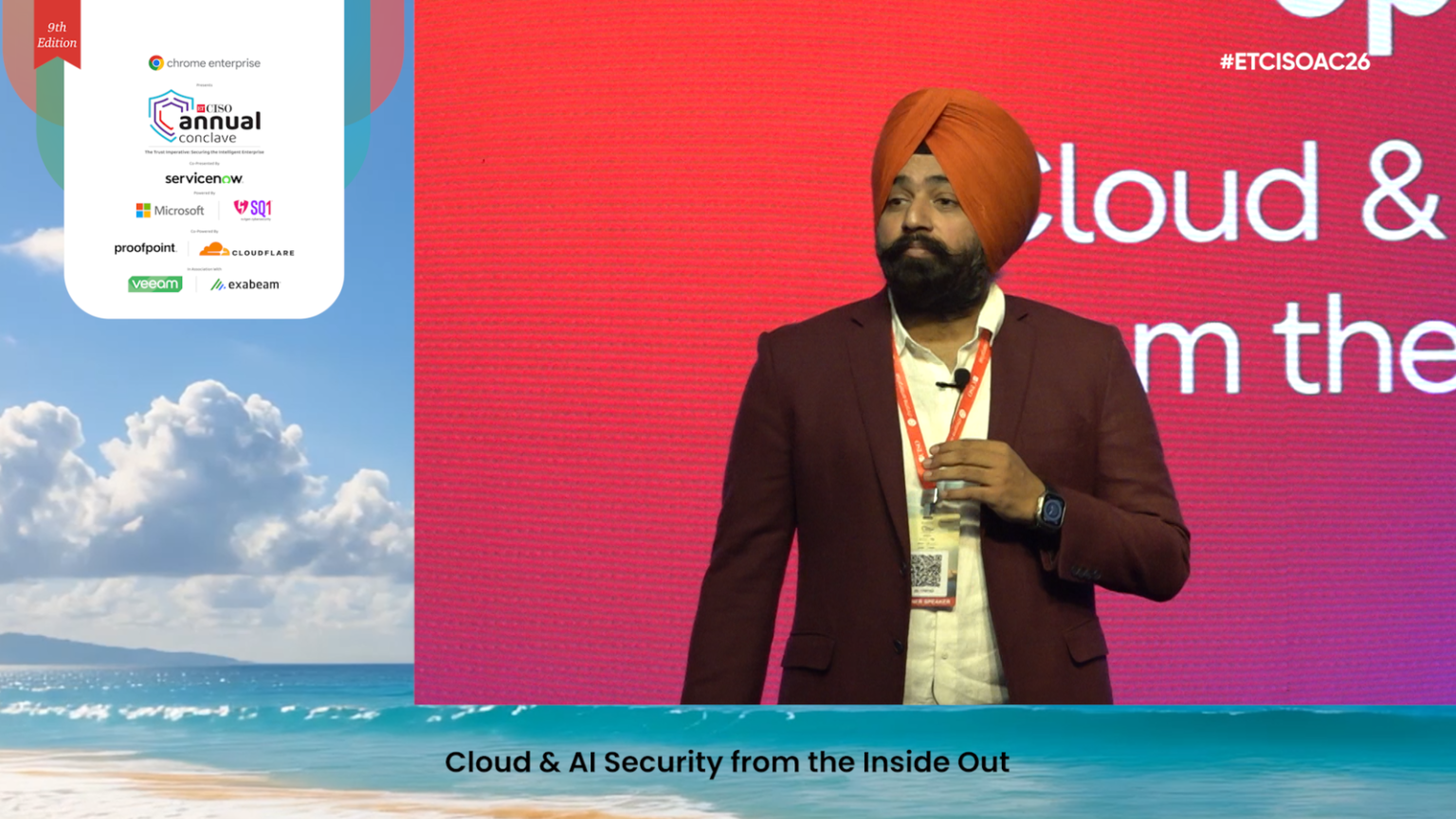
Based on limited public information from ET CISO, cloud and AI security vendor Upwind is positioning its platform around what it calls “inside-out” protection for enterprise cloud environments. The session, featuring Upwind’s India and SAARC Country Manager Simarpreet Singh, centers on how security teams can maintain visibility, identity control, and workload protection across distributed architectures as cloud and AI adoption accelerates faster than most security programs can absorb.
What this means for your business
The core tension Upwind is selling against is real, even if the session is thin on specifics: organizations are adding AI workloads to cloud infrastructure at a pace that consistently outstrips their ability to instrument and control those environments. CISOs who’ve already rationalized their cloud security posture management tools are the audience here, because the question isn’t whether to secure AI workloads but whether existing tooling can actually see inside them, covering runtime behavior, identity chains, and east-west traffic between services.
Upwind’s “inside-out” framing, runtime-first rather than configuration-first security, is a deliberate contrast to the dominant posture management approach that most enterprises bought into between 2019 and 2023. That older generation of tools is good at flagging misconfigured storage buckets but largely blind to what a running AI workload is actually doing once deployed. The vendor’s incentive to overstate that gap is obvious, but the gap itself is structurally accurate: static policy checks don’t catch compromised model inference pipelines or lateral movement through service-to-service credentials at runtime.
The renewal or replacement decision this reframes is whether your existing cloud security platform has a credible roadmap for AI workload runtime visibility, or whether it’s patching that gap with marketing. If your current vendor acquired a runtime security capability after 2022 and hasn’t yet unified it into a single data plane, you’re likely paying for two partial views of the same environment. That’s the budget line worth pressure-testing before your next contract cycle, not a new vendor evaluation.
Concept deep-dive: Runtime workload protection
Runtime workload protection means monitoring and enforcing security policy on a running application, not just its configuration before it starts, similar to a flight recorder that captures what the plane is actually doing versus a pre-flight checklist. For AI specifically, it matters because model serving infrastructure can be misconfigured in ways that look fine at deployment but expose sensitive data or allow privilege escalation once real traffic flows through it. Static tools miss this class of exposure entirely.
Based on reporting from Cloud AI Security from the Inside Out, originally published 2026-10-09 06:45:00.