
Share with your CHRO
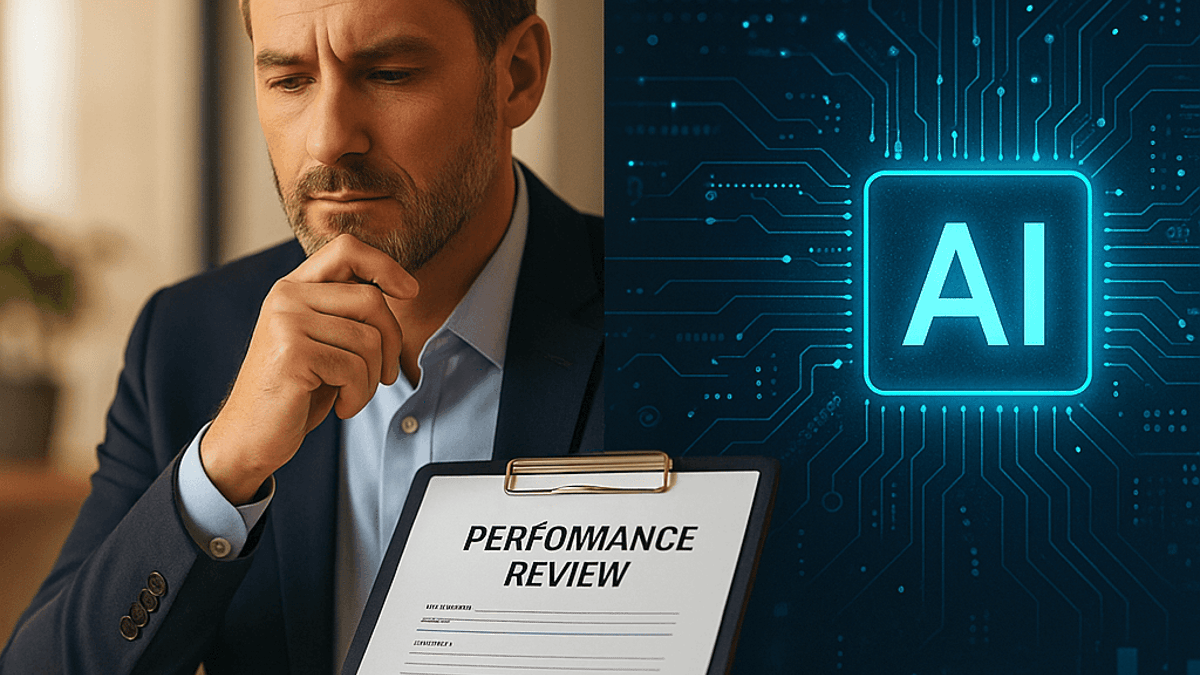
Managers are quietly offloading AI-assisted performance reviews to tools like Microsoft Copilot and Google’s Workspace AI, and the output is becoming recognizable: polished, consistent, and oddly generic. New survey data confirms the practice is widespread enough that employees and HR professionals are noticing a flattening in review quality. No concrete adoption figures are cited, but the directional signal is clear. The use case has emerged organically, not from top-down HR policy, which is exactly what makes it a governance problem rather than a productivity story.
What this means for your business
If your organization hasn’t explicitly addressed AI use in performance evaluations, it almost certainly already has AI-written reviews in circulation. The CHRO’s exposure here isn’t hypothetical. Managers under review-cycle deadline pressure are making individual tool choices that aggregate into an undisclosed organizational practice, and that practice carries legal and cultural weight that no one has formally accepted. The question isn’t whether to permit AI assistance, it’s whether you’re the one setting the terms or discovering them after the fact.
The deeper risk isn’t bias in the traditional algorithmic sense, it’s what you might call feedback homogenization: when AI smooths out the idiosyncratic observations that distinguish a useful review from a compliance checkbox, you lose the developmental signal that justifies the entire performance management investment. Companies spend real money on talent management platforms, calibration sessions, and manager training, and AI-generated boilerplate can quietly hollow out the ROI on all of it without triggering any obvious failure mode. The reviews look fine. They just don’t do anything.
Disclosure policy is the decision this story actually forces. Organizations that get ahead of it, by publishing clear guidelines on what AI assistance is permissible and what human judgment must remain intact, will be in a materially better position if a contested termination or promotion decision gets scrutinized. I’d revise this risk assessment if adoption stays concentrated among managers with large direct-report spans, where the efficiency argument is strongest and the personalization loss is smallest, but the survey data suggests the behavior is spreading well beyond that narrow use case.
Based on reporting from Managers Turn to AI for Performance Reviews – And It Shows, originally published 2026-10-07 03:00:00.