
Share with your CTO
Washington’s AI chip export restrictions are redirecting capital toward the equipment makers that supply allied fabs, and three Japanese and US names sit directly in that flow. Disco (TSE:6146), with roughly $3.3 billion in revenue from wafer cutting and grinding tools, and Kokusai Electric (TSE:6525), targeting 70% high-value-added tool mix by FY27, are the clearest beneficiaries if Japan and the US accelerate advanced fab investment. Kulicke and Soffa (KLIC) is the riskier bet, expanding Singapore packaging capacity toward $400 million in segment revenue while general semiconductor capex remains uncertain. The full onshoring equipment thesis covers 45 companies across the allied chip supply chain.
What this means for your business
The companies building your AI infrastructure depend on a supply chain most enterprise technology leaders never see, and the Nvidia export restrictions just made that invisible layer visible. If your organization is mid-cycle on a data center build or evaluating GPU procurement timelines, the real exposure isn’t Nvidia’s pricing. It’s whether the allied fabs that produce next-generation chips can actually scale fast enough to absorb demand that China-bound shipments no longer serve. CTOs running multi-year AI infrastructure roadmaps are on the downstream side of whatever equipment order cycle these suppliers are entering now.
Kokusai Electric’s margin story is the most analytically interesting of the three, and it carries a structural lesson worth internalizing. The shift toward atomic layer deposition tools for NAND and single-wafer advanced node systems is a product mix rotation, not just a volume play. When a supplier’s revenue quality improves because its customers are building more demanding chips, the supplier’s pricing power typically arrives before the volume does. That’s the bet the upgraded margin guidance reflects. If allied fab investment holds, Kokusai captures both. If capex cools, the high-value mix won’t be enough to protect earnings, because the base volume disappears first.
Kulicke and Soffa is where the thesis gets genuinely fragile, and enterprise infrastructure planners should notice why. Back-end packaging, where bare wafers become the chips that go into servers, is the last step before delivery and the first to feel a demand pause. KLIC is adding Singapore capacity on the assumption that AI-related orders fill it fast. If the broader semiconductor capex cycle softens before that capacity is absorbed, the company absorbs the fixed cost with no offsetting volume. The leading indicator to watch isn’t Nvidia’s quarterly guidance. It’s hyperscaler capex commentary from Microsoft, Google, and Amazon over the next two earnings cycles. That’s what actually sets the floor for packaging tool utilization.
Concept deep-dive: Back-end semiconductor packaging
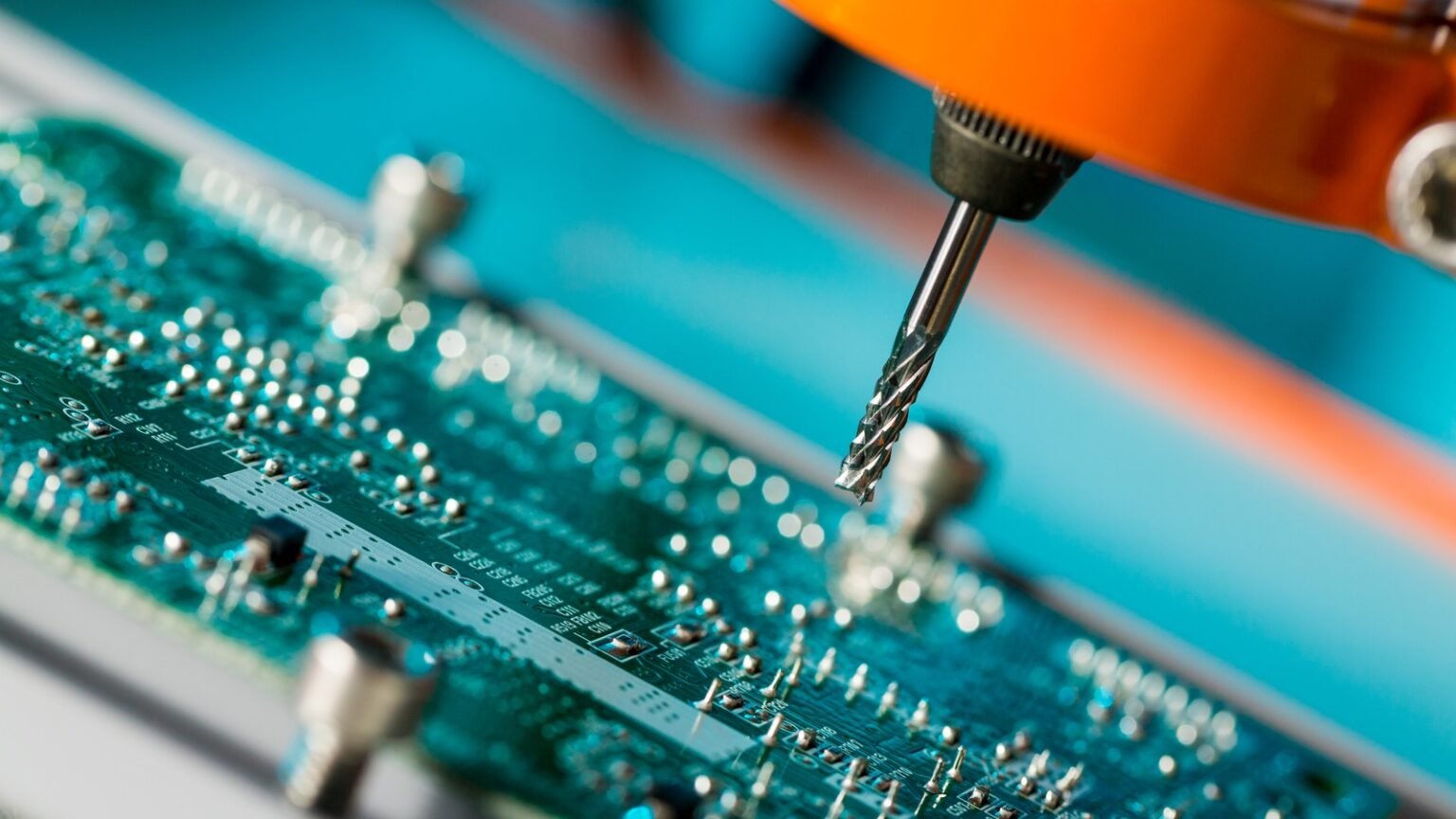
Front-end fabrication builds the circuitry onto a silicon wafer. Back-end packaging cuts that wafer into individual chips and encases them in protective housings with electrical connections, turning a fragile sliver of silicon into the component a server motherboard can accept. For AI chips specifically, advanced packaging now includes stacking multiple dies together to increase performance, which means back-end equipment like KLIC’s wire bonders and advanced assembly tools are no longer commodity steps. They are performance-determining, which is why packaging capacity is a genuine infrastructure constraint, not just a finishing operation.
Based on reporting from Nvidia Export Curbs Put AI Chip Onshoring Stocks Back In Focus, originally published 2026-11-13 18:37:00.