
Share with your CIO
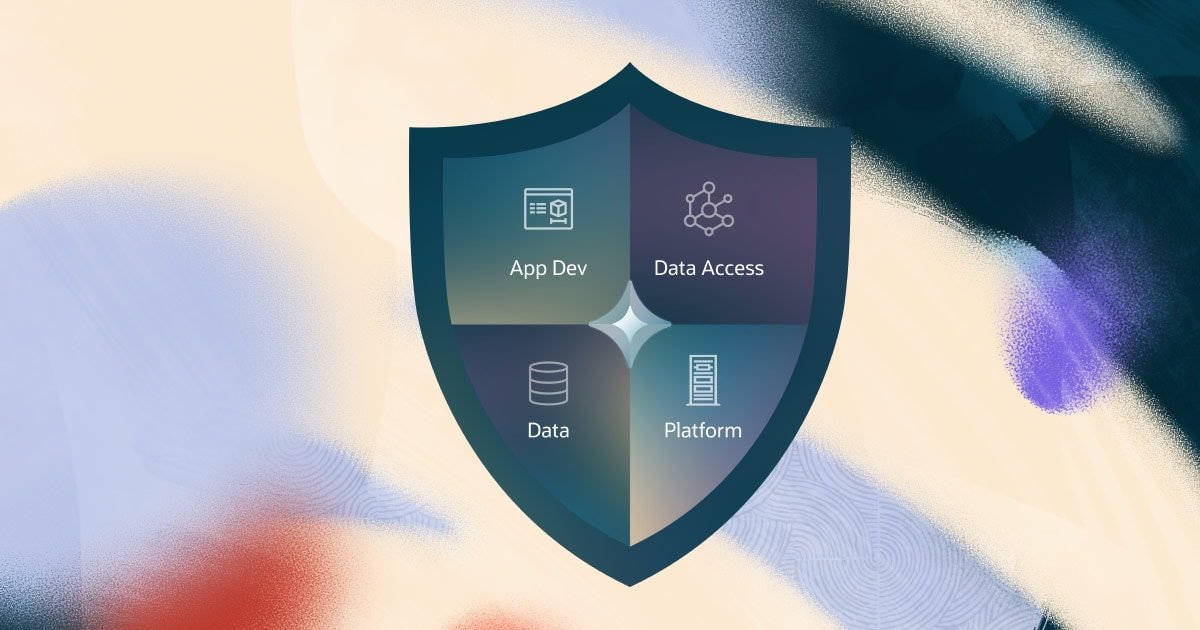
Oracle is betting that enterprise AI adoption stalls not on model quality but on trust, and its answer is the Deep Trust AI Architecture, announced at Oracle AI World in Las Vegas. The blueprint embeds security, privacy, and business-rule enforcement directly into four stack layers (software platform, data, data access, and application development) so that every AI agent or generated application inherits those controls automatically, rather than each one needing to implement them correctly on its own. The centerpiece capabilities are Oracle Deep Data Security, Deep NL2SQL for accurate natural-language querying, and the APEX AI Application Generator.
What this means for your business
The story is most immediately about organizations that are already running Oracle databases and are now being pressured to deploy AI agents against production data. If that describes your environment, Oracle is arguing that the biggest risk in your current architecture is not the model sitting on top but the gap between the application layer, where access rules typically live, and the database layer, where agents can reach data directly through interfaces like MCP servers. That gap is real, and it is widening as agentic AI bypasses traditional application-layer controls entirely.
Oracle’s core architectural claim is worth taking seriously even though Oracle has every incentive to frame database-layer enforcement as the only credible answer. The recurring failure mode in enterprise AI deployments is that governance gets bolted on at the application level, which means every new agent or generated application has to re-implement the same controls and every one of them is a potential compliance breach waiting to happen. Pushing identity verification, row-level access policy, and business rules (like spending-limit checks) down into the database engine so they fire on every SQL request regardless of caller is genuinely sound architecture. The question is not whether the principle is right; it clearly is. The question is whether Oracle’s specific implementation, particularly SQL Assertions and Deep Data Security, matures faster than organizations accumulate agents built on non-Oracle data stores.
The APEX AI Application Generator deserves separate attention. By having AI produce a declarative application definition in APEXlang rather than executable code, Oracle is making a structural argument that AI-generated code debt, the mounting cost of auditing and maintaining code written by models that will confidently produce plausible-looking but insecure logic, is the next infrastructure problem CIOs have not yet budgeted for. If that argument proves correct, organizations running mixed stacks with heavy reliance on AI coding agents will feel it first. The falsification condition is simple: if large enterprises successfully govern AI-generated application code at scale through code review and static analysis tools alone, the declarative runtime model loses its urgency.
The analogy Oracle is reaching for, comparing Deep Trust AI Architecture to its Maximum Availability Architecture blueprint, is doing real strategic work here. MAA gave customers a vendor-blessed reference design that reduced architectural second-guessing and accelerated procurement decisions. Oracle wants Deep Trust AI Architecture to play the same role, making “are you on the blueprint?” a question that shortens vendor evaluations and deepens platform lock-in. CIOs who are mid-contract on Oracle infrastructure should weigh this announcement not just as a product update but as a signal that Oracle’s negotiating posture in upcoming renewals will center on whether your AI workloads are running inside or outside this architecture.
Concept deep-dive: NL2SQL
NL2SQL, short for natural-language to SQL, is the capability that lets a user ask a data question in plain English and receive a database query in response, much like asking a skilled analyst who then writes the technical query for you. The chronic failure of earlier NL2SQL systems was that they understood language but not business context, producing syntactically correct queries that returned wrong answers. Oracle’s Deep NL2SQL layers in an organization’s own terminology, data definitions, and a feedback loop so errors get corrected and validated before they propagate into the corporate knowledge base.
Based on reporting from Oracle Announces Deep Trust AI Architecture to Help Enterprises Innovate with Confidence, originally published 2026-10-26 08:41:00.