
Share with your CIO
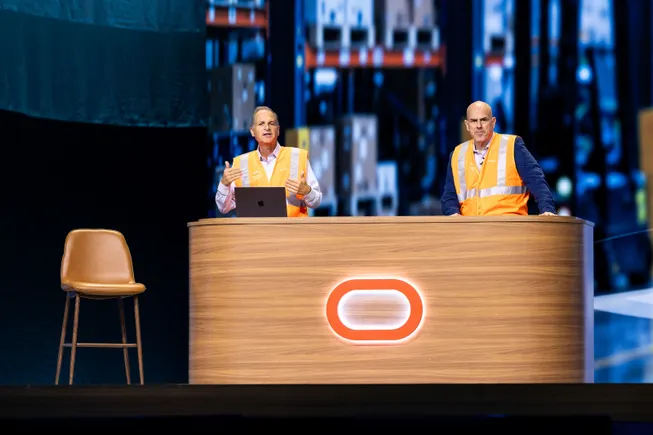
Oracle is betting its application business on agentic AI built into its Fusion ERP platform, announcing Fusion Companion, Fusion Agentic Home, and a setup tool that uses AI agents to automate ERP implementation itself. The honest admission came from Oracle’s own EVP of applications: most customers are six months behind the products already shipped. SAP, Infor, and NetSuite are running the same play, with nearly identical AI UX layers, agent runtimes, and industry-specific workflows, prompting one analyst to coin the term “sameness as a service.”
What this means for your business
If your organization is still evaluating which ERP vendor has the best AI story, that question has largely collapsed. The differentiation that mattered, proprietary AI workflows embedded in the ERP data model, now looks table-stakes across the major players. What actually separates organizations right now isn’t which vendor’s roadmap is longer; it’s whether your internal processes, governance structures, and change management capacity can absorb what’s already been shipped. The gap between product availability and organizational readiness is where your real risk lives.
Oracle’s two-track approach, fully autonomous agents running transactions in the background versus supervised “research mode” where humans review agent recommendations before anything executes, maps almost exactly onto the trust maturity curve most enterprises are climbing. The instinct to start in research mode is correct, but it carries a hidden cost. Human-in-the-loop oversight (humans approving each agent action before it commits) preserves control at the price of negating the throughput gains that justify the investment. The organizations that move fastest to autonomous operation won’t necessarily be the ones with the most sophisticated AI teams; they’ll be the ones that built clean SOPs (standard operating procedures) and audit trails before they turned the agents loose.
Analyst Brian Sommer’s critique, sharpened by the incentive of someone who sells transformation advisory work and therefore has reason to raise the bar on vendor claims, is nonetheless correct on the ROI arithmetic. Automating invoice matching or trucking optimization with AI does not re-earn the original ROI from digitizing that process in the first place. The incremental gain is real but narrow. The CFO conversation your team needs to have isn’t about total AI ROI; it’s about which specific workflows have manual labor embedded today that AI can displace, and how quickly you can redeploy that capacity. If you can’t name three of those workflows before your next budget cycle, the vendor’s keynote is getting ahead of your own readiness in the same way Oracle’s roadmap is getting ahead of its customers.
Concept deep-dive: Agentic AI runtime
An agentic AI runtime is the governance layer sitting between AI agents and the ERP systems they operate inside, think of it as the air traffic control system for autonomous software actions. It decides which agent handles which task, enforces security and compliance rules, logs what each agent did and why, and can pause or escalate when confidence is low. Without it, agents operating inside financial systems create audit and control failures. Every major ERP vendor now ships one because regulators and auditors will eventually demand the receipts.
Based on reporting from Oracle’s agentic AI outpacing customers’ ability to adopt it, originally published 2026-10-27 15:51:00.