
Share with your CTO
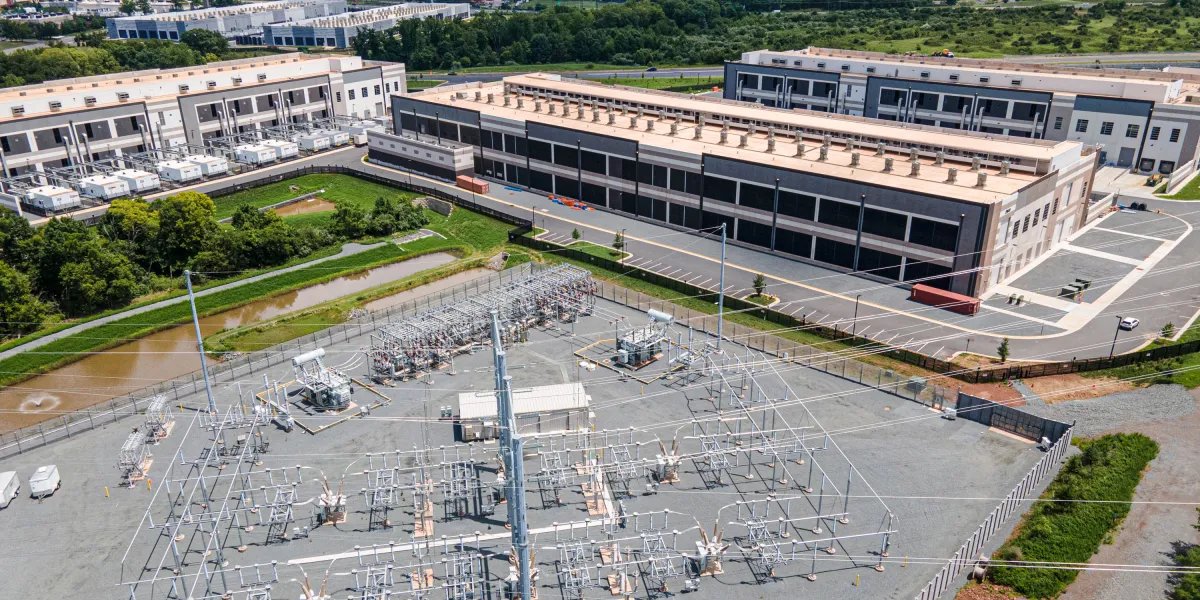
The data center backlash gaining momentum in Virginia and beyond isn’t primarily a culture war about Big Tech’s power and influence, despite what OpenAI’s Chris Lehane argued two days after the midterms. The average facility in Loudoun County, Virginia’s “Data Center Alley,” draws 54 megawatts, more than Denver International Airport pulls from the grid. That physical appetite for electricity, mostly sourced from Dominion Energy’s natural gas plants, is what’s driving organized opposition, not abstract anxieties about corporate consolidation.
What this means for your business
If your infrastructure roadmap includes new data center capacity, the question you’re probably framing as a siting or permitting problem is actually an energy sourcing problem wearing a siting costume. Companies that treat community opposition as a PR variable to manage will keep losing to it. The operations that have built at a steadier pace in Loudoun, connecting to existing grid infrastructure rather than racing to generate power onsite, have faced measurably less friction. The trait that decides your exposure here is how visibly you’re straining local grid capacity.
The industry’s instinct to reframe opposition as culture war is understandable, and OpenAI’s Lehane isn’t wrong that some protesters are animated by broader anti-tech sentiment. But activist Elena Schlossberg’s framing cuts closer to the operational truth. When a single facility draws more power than a major international airport, the community complaint isn’t symbolic. It’s a load calculation. AI infrastructure teams that have been treating electricity procurement as a downstream logistics question need to move it upstream, into site selection criteria, before the permit fight begins rather than during it.
The two-path structure described here, grid connection versus onsite generation, is where the real strategic decision sits. Onsite generation at scale means diesel or gas turbines, which trade grid dependency for direct emissions and local air quality fights. Grid connection means joining a queue for capacity that utilities like Dominion are already struggling to expand fast enough. Neither path is clean, and the companies that win the next build cycle won’t be the ones with the best community messaging. They’ll be the ones that locked in power purchase agreements with renewable generators before those agreements got expensive and contested.
Concept deep-dive: Power Purchase Agreement (PPA)
A power purchase agreement is a long-term contract between a large electricity buyer, like a data center operator, and an energy generator, typically a wind or solar farm, locking in a fixed price for power over 10 to 20 years. It functions like a mortgage on electricity supply. For AI infrastructure, PPAs matter because they let companies claim renewable sourcing on paper while the grid fills actual demand, but regulators and communities are increasingly scrutinizing whether that claim reflects physical reality or accounting convenience.
Based on reporting from The backlash about data centers might really just be about electricity, originally published 2026-11-09 14:35:00.