


Share with your CTO
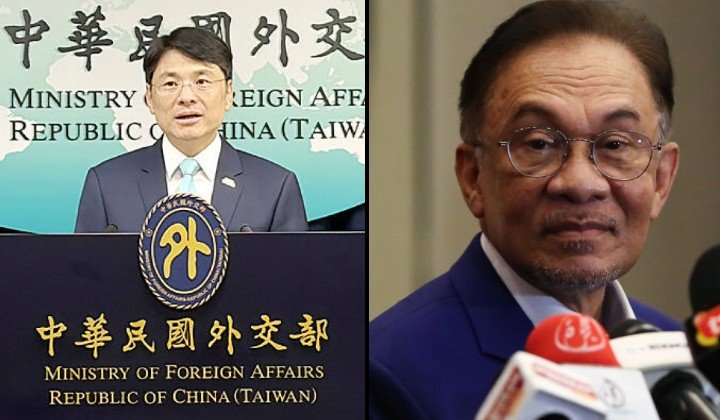
Taiwan has frozen bilateral investment treaty negotiations with Malaysia, officially citing Prime Minister Anwar Ibrahim’s public statement that Taiwan is “part of China.” But the diplomatic freeze is cover for a deeper supply-chain security crisis: shipping manifests show that Megaspeed International’s Malaysian subsidiary, Speedmatrix Sdn Bhd, funnelled roughly US$4.8 billion in restricted Nvidia AI chips into data centres serving Chinese customers between mid-2024 and early 2026. Nvidia’s stock dropped 4.27% on the disclosure, erasing US$192 billion in market value in a single session.
What this means for your business
If your AI infrastructure roadmap runs through Southeast Asian data centre capacity, the Speedmatrix case is the scenario your legal and procurement teams have been underweighting. The pattern here is familiar: a legitimately credentialed cloud partner (Megaspeed held official Nvidia partner status since 2023) becomes a transhipment conduit for restricted hardware. Any enterprise sourcing GPU compute from regional providers in Malaysia or Indonesia now faces a pointed question about whether that capacity was built with compliant supply chains, because U.S. export-control liability can travel upstream to customers.
Taiwan’s real message to Kuala Lumpur isn’t about Anwar’s geopolitics. It’s that Taiwanese semiconductor fabricators, who manufacture for U.S. chip designers under strict compliance frameworks, can’t afford to have their output traced to export-control violations in a partner country. That’s not diplomatic posturing, it’s regulatory self-preservation. For CTOs evaluating where to anchor AI workloads in ASEAN, this dynamic reframes the risk calculus: a country’s geopolitical neutrality offers no protection if its trade enforcement is perceived as porous by Western regulators and their allied supply chains.
The falsification condition worth watching is MITI’s next move. Malaysia’s investment minister has said no domestic laws were broken and no investigation is open, which is technically defensible since Malaysia isn’t a U.S. export-control signatory. But if the U.S. Commerce Department issues a formal referral or entities on these manifests get added to the Entity List, that posture collapses fast. Any enterprise with Malaysian data centre contracts tied to Megaspeed-adjacent infrastructure should already be pulling compliance documentation, not waiting for a formal determination.
Concept deep-dive: Export-control transhipment risk
Export controls restrict the sale of advanced technology, like high-end AI chips, to specific countries or end-users, typically for national security reasons. Transhipment risk arises when a neutral third country becomes the routing layer: a chip sold legally to a Singapore or Malaysian entity ends up in a Chinese data centre, bypassing the restriction entirely. Think of it as a customs lane that looks compliant at every individual checkpoint but delivers a prohibited destination at the end. For enterprises procuring cloud GPU capacity, the vendor’s partner status is not the same as a clean compliance chain.
Based on reporting from Taiwan Freezes Investment Talks With Malaysia Amid US$4.8 Billion Nvidia AI Chip Leak, Silicon Valley Espionage Scandal, originally published 2026-11-11 20:27:00.