
Share with your CTO
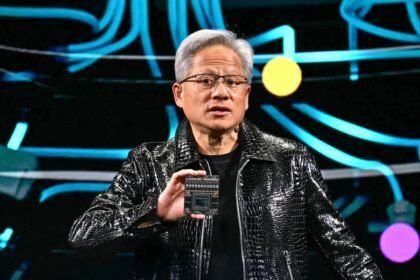
Jensen Huang’s resignation from Nvidia has left the open-source AI movement without its most credible Washington voice, and the timing couldn’t be worse. Ex-OpenAI researcher Will DePue published findings suggesting Chinese AI startups had far greater access to Nvidia’s restricted Blackwell chips than export controls were supposed to allow. Simultaneously, the US Department of Commerce announced new restrictions. US Treasury Secretary Scott Bessent has signaled that even an internal Nvidia successor is off the table, narrowing the path back for Huang and complicating the policy environment for open-source AI infrastructure broadly.
What this means for your business
If your AI infrastructure roadmap is built on the assumption that open-source models, think Meta’s Llama family or the Chinese-origin models like DeepSeek that American enterprises have been quietly adopting, will remain both accessible and politically safe, that assumption just got shakier. The DePue findings haven’t been independently verified, but they don’t need to be confirmed to do damage. In Washington, an unverified allegation that lands during a leadership vacuum at Nvidia moves policy faster than a peer-reviewed paper.
The more structurally important dynamic here is what you could call credibility arbitrage collapse. Open-source AI’s policy defense has rested on a two-part argument: that open models democratize access and that they strengthen American competitiveness. Huang was the rare figure who could make that case to both a Senate committee and a startup founder. Without him, those two arguments have to find separate champions, and they may not hold together. The VC-funded open-source advocates whom the article accurately notes stand to profit from cheap AI have far less standing to make the national-security framing stick.
The practical risk for a CTO isn’t regulatory capture tomorrow. It’s that the next export control rule, or the one after that, starts treating open-weight model weights the way it treats advanced chips, as something that can be restricted at the distribution layer. If that happens, every internal deployment built on a freely downloadable model faces a compliance review it wasn’t designed for. The leading indicator to watch isn’t Nvidia’s next CEO pick. It’s whether the Commerce Department’s new rule includes language about model weights, not just silicon.
Concept deep-dive: Open-weight models
An open-weight model is one where the trained parameters, the numerical values that encode everything the model learned, are publicly released for anyone to download and run. Think of it as the difference between getting a recipe versus getting a finished meal: you control the kitchen. This matters for enterprise CTOs because open-weight deployment means no API dependency, no per-token cost, and no third-party data exposure, but it also means no vendor absorbing the regulatory and security liability if the rules change.
Based on reporting from The open-source movement wants Jensen Huang back, originally published 2026-11-16 13:38:00.