

Share with your CTO
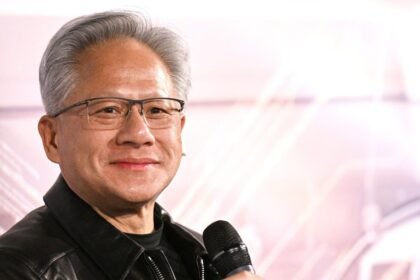
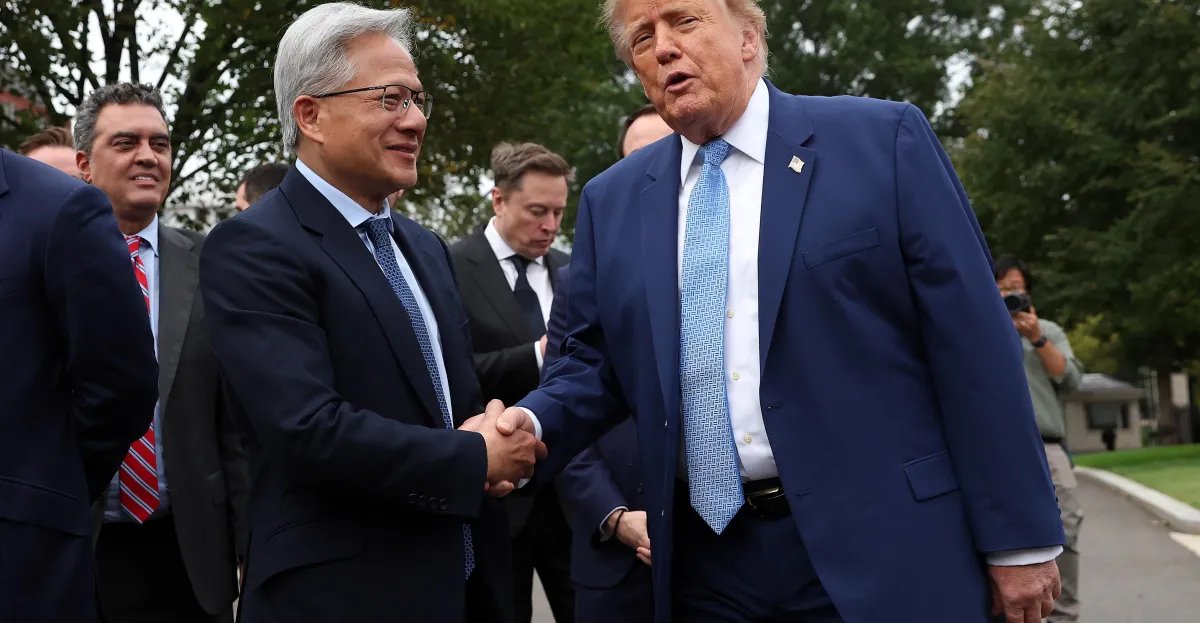
President Trump personally engineered Jensen Huang’s reinstatement as Nvidia CEO, dialing into a Sunday board meeting and deploying JD Vance as a liaison to flip a board that had publicly committed, just days earlier, to keeping Huang out. The board cited “input from senior levels of the United States government” as its rationale. Analysts at Yorkville Ives put the valuation gap at roughly $75 per share between a Huang-led and a post-Huang Nvidia comeback story, attributing it to his irreplaceable TSMC supply relationships and AI deal-making position.
What this means for your business
If your enterprise AI roadmap runs through Nvidia silicon, which describes most serious AI infrastructure bets right now, you have just watched the company’s continuity risk get traded for a different kind of risk entirely. Huang is back, the Rubin GPU cycle proceeds with its architect in place, and supply relationships with TSMC stay warm. The tradeoff is that Nvidia is now entering a Democratic-majority Congress with open investigations on two fronts: export control compliance and whether the company misled investors. Neither closes because Huang has his job back.
The pattern here is worth naming: call it presidential keystone protection, the dynamic where an executive becomes so embedded in a national industrial strategy that normal governance mechanisms, including a board vote, become negotiable. Trump applied the same logic to Musk and Tesla. The governance architecture Nvidia announced alongside the reinstatement, a new National Security and Export Control Committee, a chief compliance officer reporting to the board, cooperation pledges on ongoing investigations, reads less as a voluntary upgrade and more as the price of admission for Trump’s cover. That architecture will face its first real test at Huang’s December 1st Congressional testimony.
The vendor relationship that CTOs and CIOs need to price differently now is not Nvidia’s technology position, which is unchanged, but Nvidia’s political exposure. Bipartisan export control legislation is moving, Tom Cotton and Elizabeth Warren agree on the direction even if not the details, and Huang has historically lobbied hard against chip sale restrictions to China. Any enterprise whose AI strategy depends on Nvidia’s ability to maintain broad global chip distribution, whether that’s a hyperscaler supply agreement or a sovereign AI deal, is now holding an asset whose policy ceiling is actively contested in both chambers. I’d revise that assessment if the Congressional investigations produce nothing actionable by mid-2027, but the alignment of Republican China hawks with Democratic critics makes that the low-probability outcome.
Based on reporting from Trump engineered a risky comeback for Jensen Huang, originally published 2026-11-23 17:25:00.