

Share with your CMO
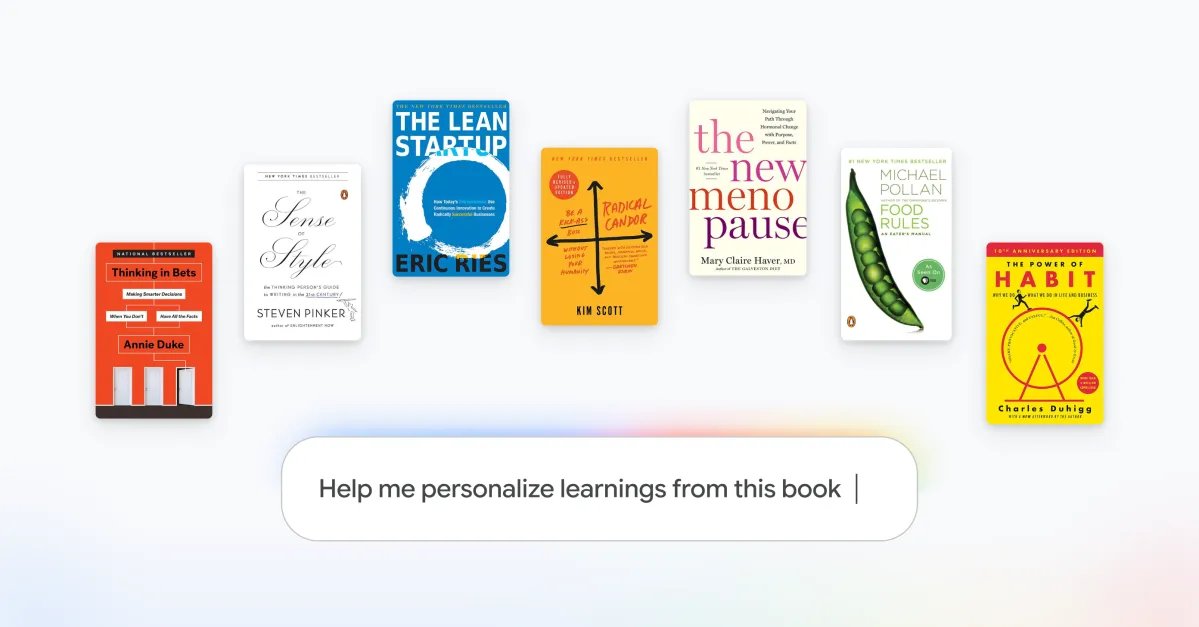
Google is betting that books can become interactive knowledge assets inside Gemini Notebook’s new Expert Intelligence feature, which lets users pull purchased Google Play Books titles directly into the AI workspace to query, synthesize, and remix their contents. More than 100,000 titles from Penguin Random House, Macmillan, and O’Reilly are supported at launch. Google has also partnered with 15 authors, including Michael Pollan and Kim Scott, to build curated “Featured Notebooks.” The feature is planned to extend into AI Mode in Search and the broader Gemini app.
What this means for your business
The sharpest read on this feature isn’t about books. It’s about whether your organization’s purchased intellectual property, frameworks, playbooks, and expert methodologies, can become queryable assets rather than documents that sit unread after a leadership offsite. Teams already paying for O’Reilly subscriptions or licensing business books for learning programs should ask whether those investments are producing any behavioral change, or whether a conversational AI layer would get the ideas closer to actual decisions.
Google’s DRM-aware sharing model, where a shared Notebook reveals the source title but withholds the content until the recipient purchases it, is a quiet but consequential design choice. It turns every shared Notebook into a distribution channel for the book itself, which is why publishers signed up. For enterprise buyers, it means Google is threading the needle that has historically killed every “AI plus copyrighted content” deal: the author gets a revenue signal, the user gets the utility, and the platform avoids the liability exposure that has made generative AI and publishing a litigation minefield.
The pattern this fits is “context window commerce,” where the value of a platform is increasingly measured by what curated, high-trust content it can pull into a reasoning session on demand. If Google expands Expert Intelligence to scholarly articles and industry reports as planned, the question for a CMO running content strategy or a sales enablement function shifts from “which books should we assign” to “which licensed knowledge sources should we anchor our AI workflows to.” The vendors who own those content relationships, O’Reilly, Gartner, vertical trade publishers, gain surprising new leverage as AI context providers rather than just information sellers. I’d revisit this if the expansion to non-book sources stalls, because that’s the step that makes it enterprise infrastructure rather than a consumer reading app.
Based on reporting from Google’s AI note-taking app now allows you to interact with books, originally published 2026-08-27 15:30:00.