

Share with your CTO
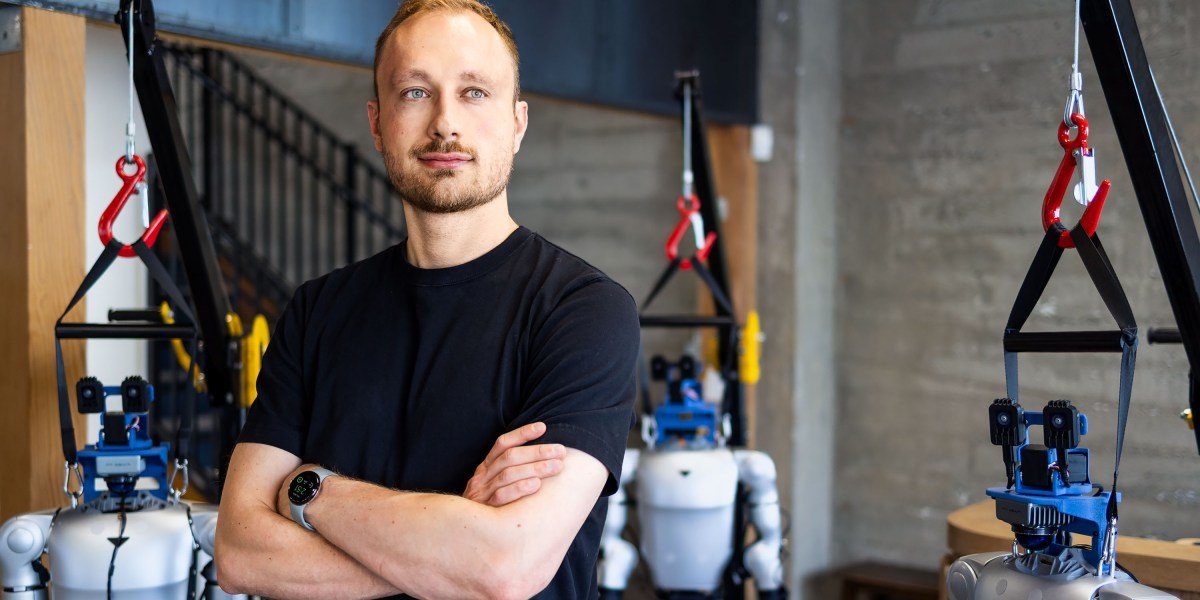
Danijar Hafner, a researcher now building his own venture, is betting that model-based reinforcement learning, specifically the technique of training AI agents inside learned “world models” (physics-mimicking simulations the AI itself constructs), is the path to robots and autonomous agents that handle genuinely novel situations without exhaustive real-world trial runs. Hafner cut his teeth at Google Brain and Google DeepMind alongside Geoffrey Hinton and transformer co-architect Ashish Vaswani. His approach to anticipatory AI agents sidesteps the brittle, repetition-heavy training loops that have constrained industrial robotics for decades.
What this means for your business
The relevant fault line here isn’t between companies that have robots and those that don’t. It’s between engineering and operations leaders who’ve quietly written off autonomous agents for unstructured tasks because the training cost was prohibitive, and those who are about to discover that assumption is being dismantled. If your roadmap still treats physical automation as a five-years-out problem because of real-world training overhead, Hafner’s work is directional evidence that the constraint is moving faster than the roadmap.
The core technical claim deserves scrutiny. Standard reinforcement learning for robots requires thousands of physical trials, and that cost has historically kept genuinely adaptive robots out of everything except tightly controlled factory lines. World-model approaches let the agent run those trials inside a learned simulation, then transfer the resulting intuitions to the real environment. The recurring failure mode with sim-to-real transfer has been that the simulation is wrong in the ways that matter most, and the agent learns to exploit the gap rather than generalize. Hafner’s published work on DreamerV3 showed meaningful progress on this brittleness problem, which is what separates this from the long line of sim-to-real pitches that quietly died in the lab.
Timothy Lillicrap’s endorsement from DeepMind places Hafner credibly in the top tier of active researchers on this problem, but the honest signal for enterprise buyers isn’t the pedigree, it’s the deployment question: can the world model stay accurate enough when real-world conditions drift from what the agent learned? That’s the variable that will decide whether this becomes a procurement conversation in your logistics or manufacturing org within two years or stays a research story for five. Watch for announced partnerships with robot hardware makers or warehouse operators as the falsification condition worth tracking.
Concept deep-dive: Model-based reinforcement learning
Standard reinforcement learning teaches an AI to act by rewarding it for good outcomes across thousands of real attempts, expensive and slow. Model-based reinforcement learning adds a middle step: the agent first builds an internal model of how the world works, then runs its trial-and-error practice inside that mental simulation rather than reality. Think of it as the difference between a surgeon learning only in the OR versus spending thousands of hours on a simulator first. The business payoff is dramatically lower real-world training cost for autonomous systems.
Based on reporting from This AI entrepreneur is developing agents that can plan ahead for the unexpected, originally published 2026-09-08 06:34:00.