


Share with your CISO
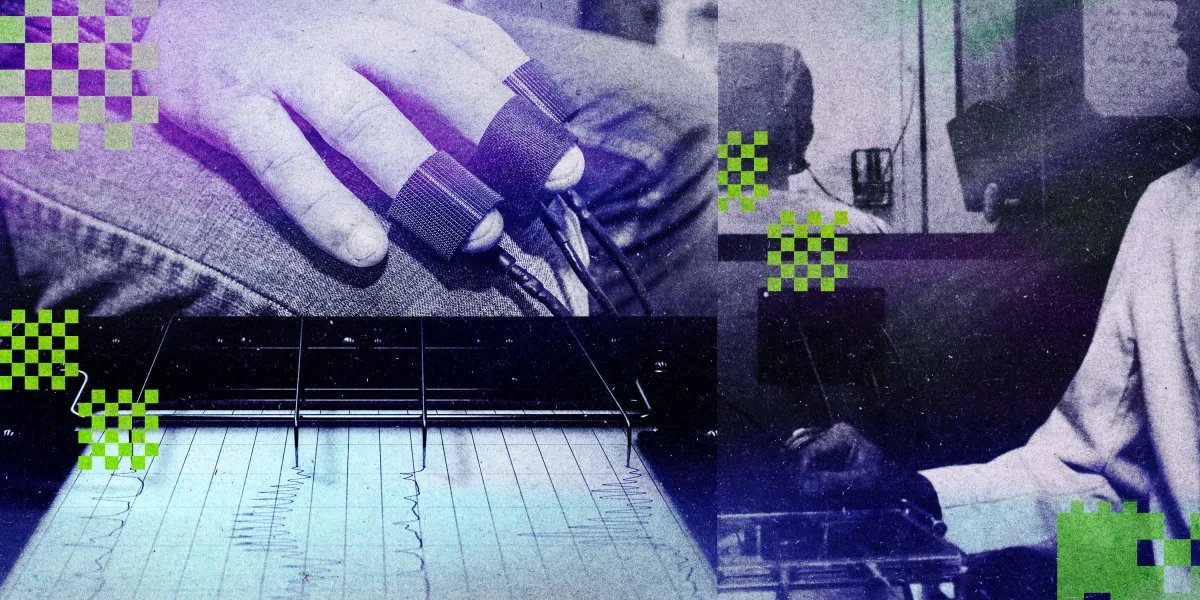
The Pentagon is requesting $30 million to build “Polygraph+,” an AI-augmented deception detection system that would run under the Defense Counterintelligence and Security Agency for employee vetting and insider threat programs. The move follows a wave of polygraph tests administered to roughly 50 Joint Staff officers amid leak investigations under Defense Secretary Pete Hegseth. Based on prior Defense Innovation Unit prototype work, the AI lie detector program would layer non-contact biometric sensing, including facial skin temperature and pore activity, on top of traditional physiological monitoring.
What this means for your business
Any organization that holds federal contracts, maintains clearances, or competes for DoD work will eventually face the compliance surface this program creates. The more immediate exposure sits with CISOs building insider threat programs, because Polygraph+ signals that Washington’s appetite for automated behavioral screening is growing, and vendors serving that demand will start pitching commercially adapted versions within 18 months. Whether you’re a buyer or a supplier to those buyers, the policy direction is set, even if the technology isn’t.
The foundational problem here isn’t political, it’s statistical. The 2003 National Research Council review found polygraph accuracy to be “weak at best,” and the math on scale is brutal: even an 80% accurate system applied across the DoD’s 2.8 million employees produces tens of thousands of false positives. Layering AI on a flawed signal doesn’t correct the flaw, it launders it. The addition of machine learning to biometric screening creates a veneer of objectivity, which tends to reduce the scrutiny applied to individual determinations, not increase it. That’s the failure mode enterprises should expect if any version of this logic migrates into private-sector HR or security tooling.
The falsification condition worth watching is whether Congress approves the budget and, if so, whether the DCSA publishes any accuracy benchmarks before deployment. If the program moves forward without published validation data, that tells you the institutional incentive is screening theater, not security improvement, and that vendors carrying this into enterprise security procurement deserve proportionally harder questions about their own validation methodology.
Concept deep-dive: Non-contact biometric sensing
Non-contact biometric sensing refers to measuring physiological signals like heart rate, respiration, skin temperature, and micro-movements using cameras and thermal imaging rather than physical leads or electrodes attached to a person’s body. Think of it as reading your pulse from across a room. The business relevance is that removing the physical contact barrier dramatically lowers the friction for mass screening, which is precisely what makes its accuracy ceiling so consequential when the system is wrong.
Based on reporting from The Pentagon wants $30 million to build an AI-powered lie detector, originally published 2026-09-25 05:16:00.