


Share with your CHRO
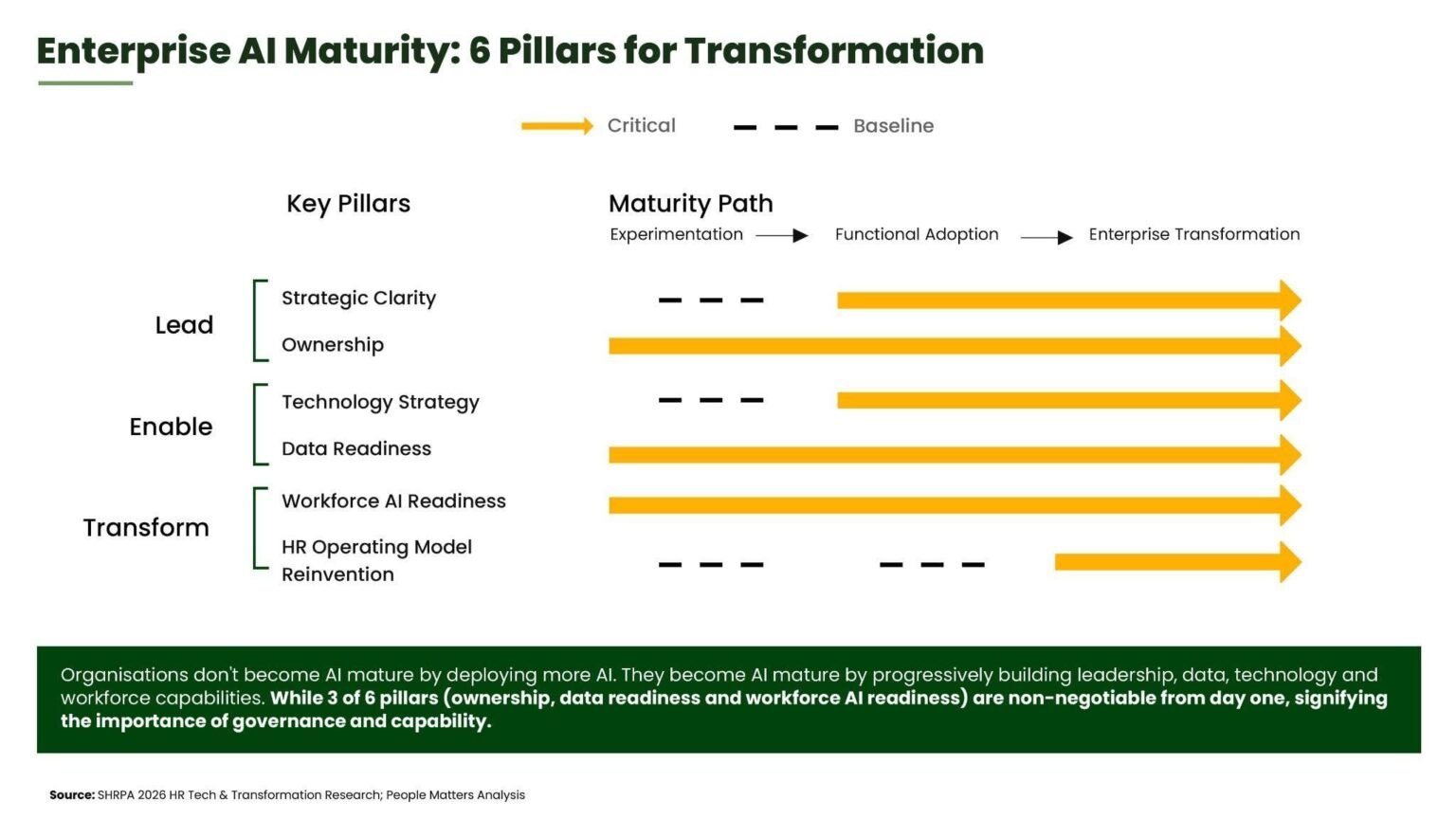
Southeast Asia’s HR AI rollout is stalling at the pilot stage, and the SHRPA 2026 research makes the structural reason clear: HR leaders are sequencing investments by what’s easiest to automate rather than what’s strategically important. Hiring and HR operations capture the bulk of AI adoption, while talent development and performance management sit largely untouched. The SHRPA 2026 executive insights report puts six foundational gaps, from data readiness to operating model design, at the center of why AI investments in the region consistently fail to scale.
What this means for your business
The pattern here is recognizable across enterprise AI rollouts globally: organizations mistake deployment activity for transformation progress. If your AI portfolio skews heavily toward hiring automation and HR ops ticketing, you’re probably measuring success by adoption rate, which tells you how many people clicked the tool, not whether the business changed. The 65% of SEA HR leaders who report inadequate understanding of AI’s business impact aren’t suffering from a training gap. They’re suffering from a strategy gap that training won’t fix.
The supply-demand mismatch flagged in the research is worth taking seriously. HR leaders want HR data fabric capabilities (meaning integrated data infrastructure that connects people data across platforms and makes it queryable in one place), GenAI-powered learning, and manager self-service dashboards. Vendors aren’t building toward those priorities. That gap doesn’t resolve itself through procurement pressure alone. It means that the HR tech stack most organizations are assembling right now is being optimized for what vendors sell, not what transformation actually requires. A CHRO renewing contracts with major HCM platforms in the next 12 months should be asking directly which of these three capability categories appears on the vendor’s 2026 roadmap, with named release dates, not just product vision slides.
The 51% of HR leaders still planning structural changes in the next 12 months is the number to watch. Organizations that get operating model redesign right before scaling AI will compound the productivity gains. Those that scale AI into an unredesigned HR function will automate the wrong work faster. The falsification condition for the whole SHRPA framework is simple: if data readiness scores don’t improve before the next funding cycle, none of the six pillars deliver, because every other pillar runs on data quality as its substrate.
Based on reporting from SHRPA 2026 Executive Insights SEA: From Quick Wins to Enterprise Transformation, originally published 2026-09-28 08:08:00.